
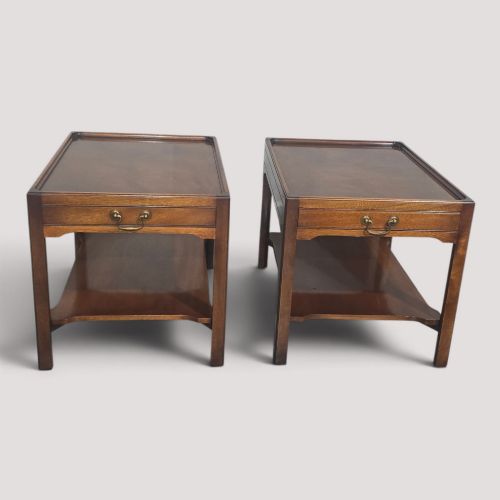
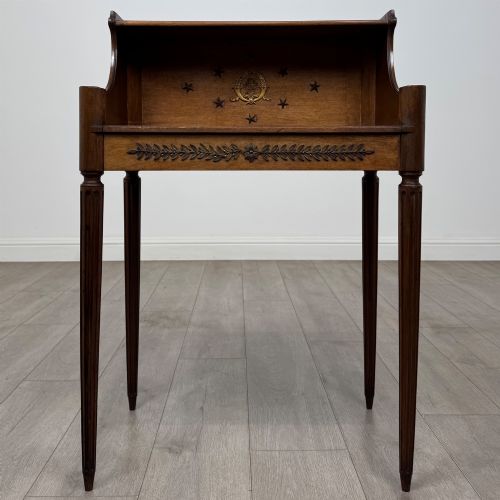
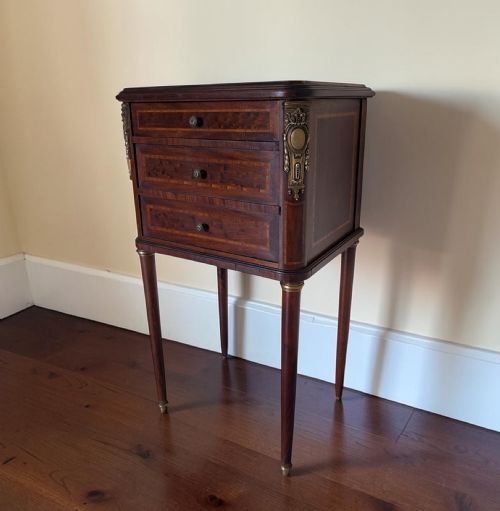
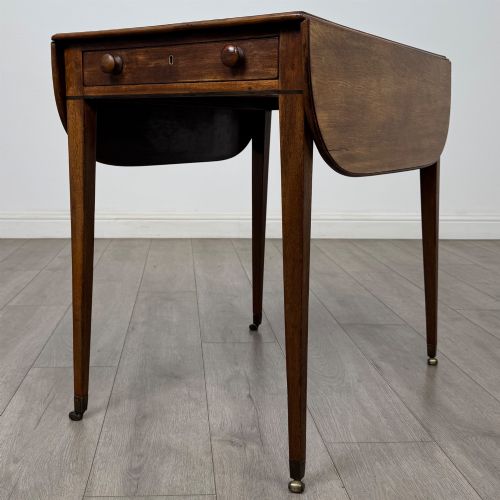



Brass Mahogany Nightstands
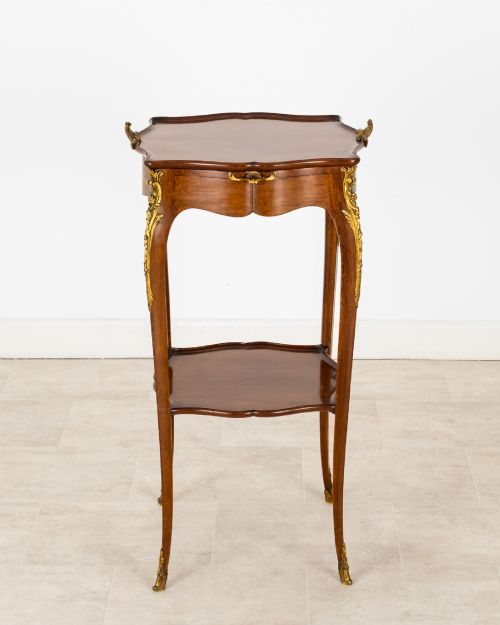
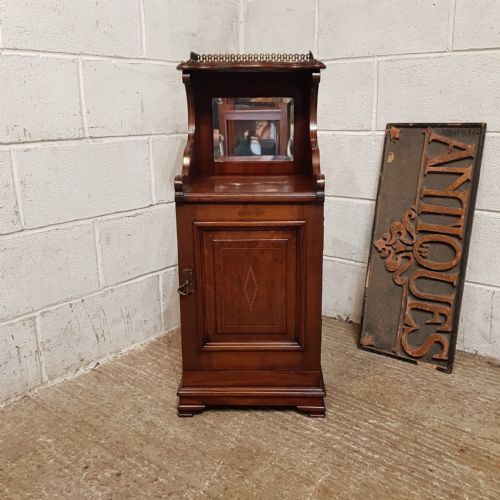
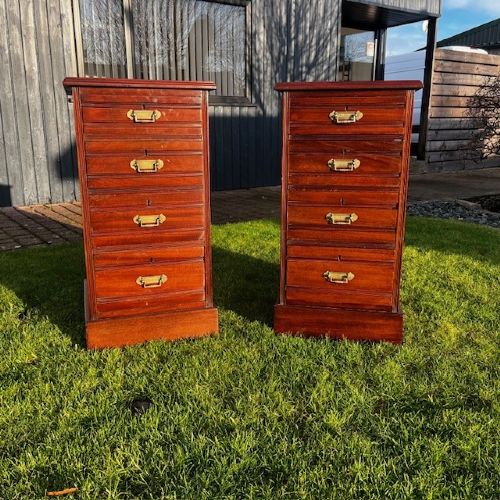
Brass mahogany nightstands are functional bedside pieces combining timber and metal mounts, offering practical surface space alongside period character.
Brass Mahogany Nightstands
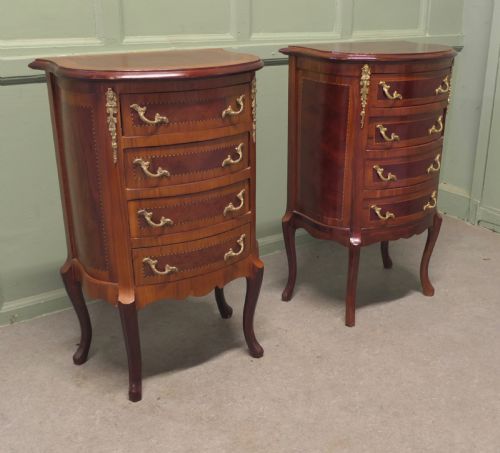
Brass mahogany nightstands encompass bedside tables, cabinets, and chests spanning Georgian, Regency, Victorian, and Edwardian periods.
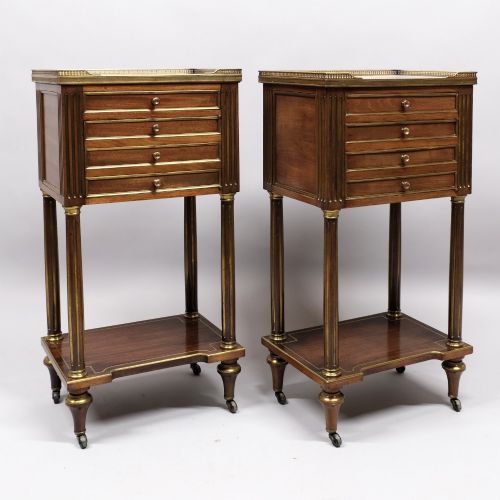
You are most likely to encounter French Empire and Louis XVI Revival bedside cabinets featuring mahogany construction alongside brass or ormolu mounts.
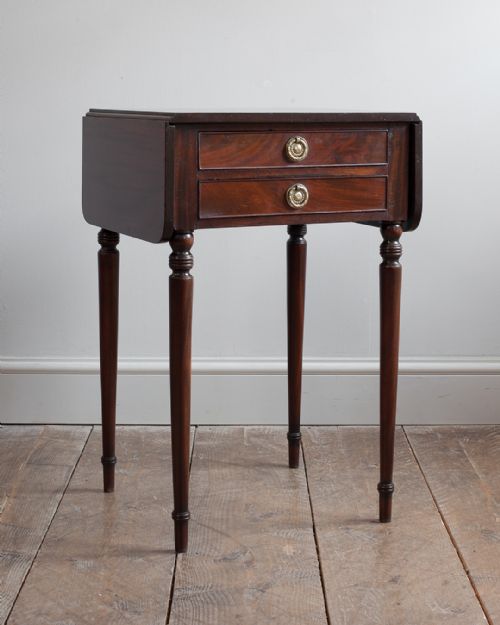
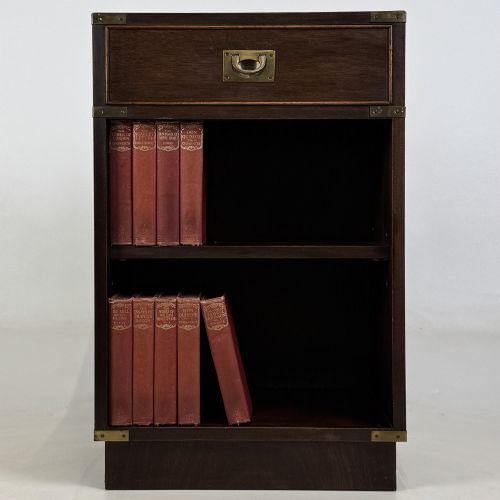
The selection also includes compact lamp tables, pembroke tables, and campaign style units designed for domestic convenience.
Standard and Execution
Quality separates through the crispness of the brass casting and ormolu chasing, where sharper, more defined metalwork indicates superior workshop output.
Joinery execution in the mahogany drawers and carcase construction dictates longevity, alongside the selection of finely figured timber veneers.
Listings feature pieces spanning the Georgian, Regency, Victorian, and Edwardian eras, constructed from mahogany, brass, marble, and ormolu.
François Linke
The Brass Mahogany Nightstands Glossary
- Ormolu
- Gilded bronze mounts applied to furniture. This technique provides decorative metallic highlights against the dark mahogany timber.
- Pembroke table
- A small table with hinged drop leaves on either side. These versatile pieces often feature single or double drawers.
- Campaign style
- Portable furniture designed for travel, typically fitted with recessed brass handles and reinforced corners. These units offer robust modular storage.
- Pot cupboard
- A small bedside cabinet originally designed to house a chamber pot. They frequently incorporate enclosed lower compartments and marble tops.
Brass Mahogany Nightstands: Frequently Asked Questions
What is a brass mahogany nightstand?
These pieces are compact bedside tables or cabinets constructed from mahogany and accented with brass handles, galleries, or mounts.
They provide enclosed storage or surface space next to a bed while displaying the stylistic traits of their manufacturing period.
How do I date a nightstand?
Dating relies on observing structural forms, timber types, and decorative motifs consistent with periods like Regency or Edwardian design.
Hardware styles and construction methods inside the drawers also offer clues regarding the decade of manufacture.
Are these pieces stable for daily use?
Most antique bedside tables and cabinets remain sturdy enough for routine domestic placement, provided the joints and veneer are secure.
Placing items on marble tops or using drop leaves requires simple care to protect the historic polished surfaces.
Where were these cabinets used?
They served primarily in domestic bedrooms as bedside storage for personal items, night lighting, and washing equipment.
Pembroke and occasional variants also functioned in drawing rooms and parlours as flexible side surfaces.