



Brass Mahogany Barometer
A brass mahogany barometer measures atmospheric pressure while bringing warm wood and gleaming metal to a hallway wall.
Brass Mahogany Barometer
A brass mahogany barometer combines scientific instrumentation with domestic cabinetmaking, serving to measure atmospheric pressure while adorning period interiors. When exploring this selection, buyers encounter instruments housed in rich tropical timber enclosures complemented by metal dials, bezels, and indicators.
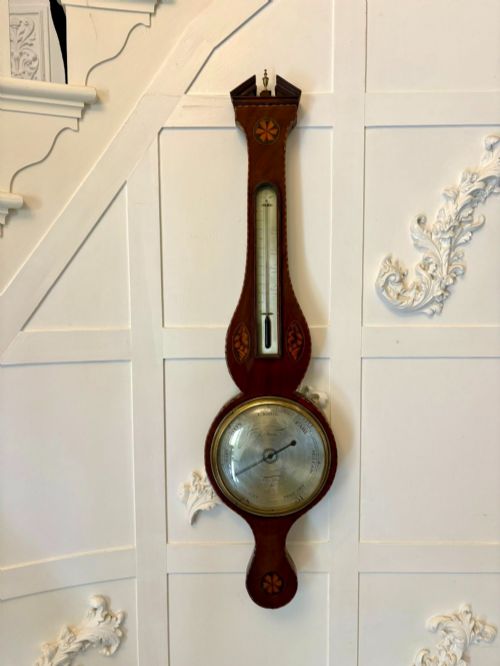
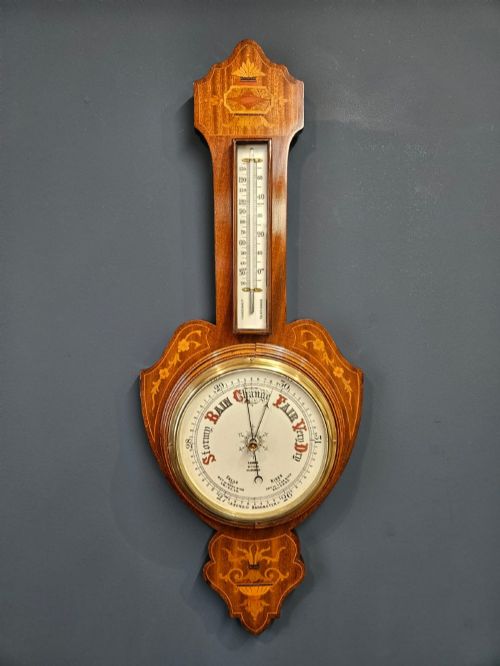
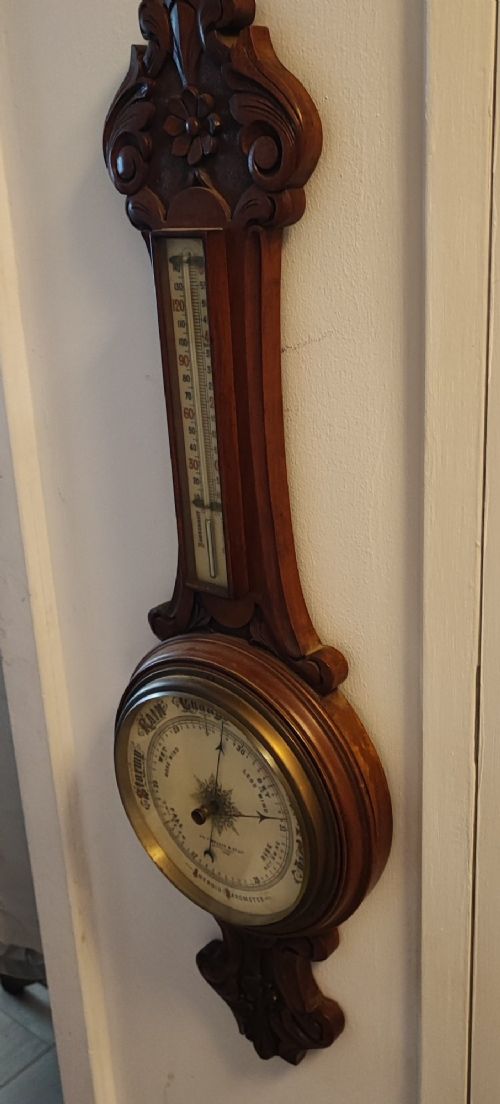
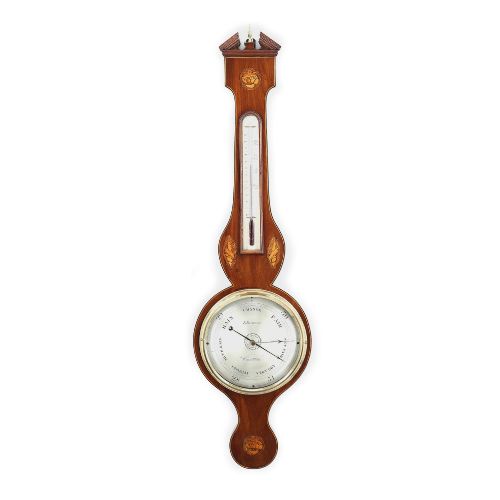
The specimens available span several distinct formats, from slender stick barometers to sweeping wheel variants and mechanical recording barographs. Banjo barometers stand out as the most common form met on this page, recognisable by their elongated bodies terminating in a circular dial at the base.
Origins trace across the Georgian, Victorian, and Edwardian eras, reflecting centuries of domestic meteorological observation. Makers utilised the dense grain of mahogany to provide a stable housing for sensitive internal movements operated by mercury or aneroid mechanism design.
How they were made
Cabinetmakers constructed the main housings from solid and veneered mahogany, frequently shaping the timber with scrolled pediments, boxwood stringing, or shell inlay. Selected pieces incorporate secondary timbers such as satinwood to create contrasting decorative panels along the spine and dial surrounds.
Metal components, including bezels, indicators, and cistern covers, were cast and turned in brass, then polished or lacquered to prevent tarnishing. Dials were commonly executed in silvered metal or engraved paper, featuring fine scale graduations alongside auxiliary alcohol or mercury thermometers.
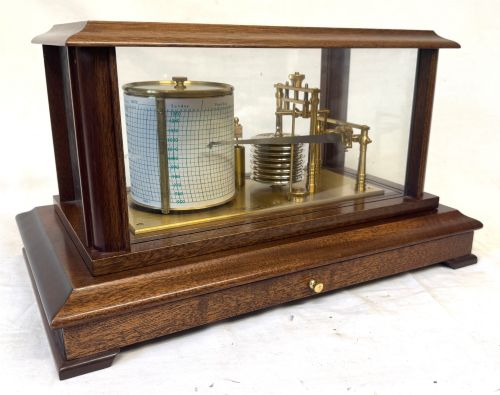
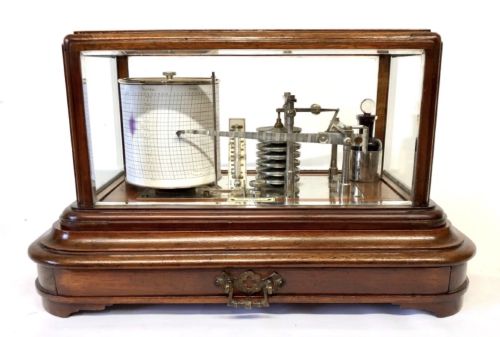
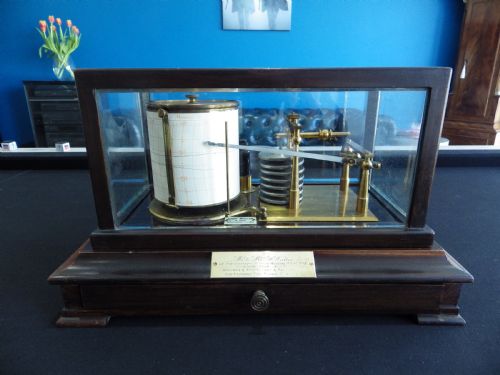
Recorded examples incorporate specialised scientific instruments alongside domestic wall pieces, featuring auxiliary thermometers and paper chart drawers.
What varies in quality
Quality rests upon the crispness of the cabinetwork and the legibility of the engraved dial plates. Superior examples display finely executed shell inlay, well-proportioned pediments, and intact original glass bezels protecting the indicator hands.
The reputation of the maker inscribed upon the dial or backplate heavily influences distinction. Instruments signed by established instrument makers retain sharper mechanical execution and cleaner divisions on their silvered brass scales than anonymous workshop output.
Negretti and Zambra·Short and Mason·B. Besozzi·Blunt
The Brass Mahogany Barometer Glossary
- Banjo barometer
- A domestic weather glass featuring an elongated vertical body that widens into a circular dial at the lower end. This distinctive silhouette became popular during the Georgian and Victorian periods.
- Stick barometer
- A tall, narrow wall instrument that exposes the long glass tube containing the mercury column directly to view. These pieces offer precise barometric readings without the gearing found in wheel variants.
- Aneroid barometer
- A mechanism that measures air pressure using a sealed, flexible metal box rather than liquid mercury. The expansion and contraction of this chamber moves the dial pointer.
- Barograph
- A self-recording meteorological instrument that draws a continuous pressure line onto a rotating drum holding a paper chart. They are typically housed in five-glass mahogany cases with clockwork movements.
- Silvered metal
- A brass or copper alloy surface treated with a silver compound to produce a bright, matte finish suitable for engraved scales. This treatment ensures high contrast against black-filled numerals.
Brass Mahogany Barometer: Frequently Asked Questions
How do I read a mercury barometer?
Observe the height of the column within the glass tube, using the movable brass pointer or indicator hand to mark the current pressure level. Rising levels indicate fair weather ahead, whilst falling columns suggest approaching rain or wind.
Compare the position of the indicator against the engraved weather words on the dial face, such as stormy, rain, change, fair, or very dry. Tapping the instrument gently before reading ensures the mechanism settles accurately against the true pressure.
Where should I hang a wall barometer?
Select an interior wall away from direct sunlight, central heating radiators, and damp draughts. Rapid temperature fluctuations can affect the internal mechanism and distort the wooden mahogany case over time.
Ensure the hanging point is secure and stable, as these instruments require a vertical plumb to operate correctly. Hallways and libraries provide traditional environments that protect the timber and glass from extreme atmospheric shifts.
Are these barometers still accurate today?
Most historic instruments retain their operational capability when calibrated correctly against local meteorological readings. Adjusting the small screw at the base aligns the pointer with current barometric pressure.
Older mercury and aneroid movements serve reliably for everyday forecasting, though they remain primarily valued as decorative historical objects. Regular maintenance by a specialist ensures the internal linkages move freely without binding.
What is the difference between stick and wheel barometers?
Stick barometers display the full vertical column of mercury, offering direct and uncompounded pressure measurement through a simple scale. They present a restrained, architectural silhouette designed for precise scientific observation.
Wheel barometers translate the movement of mercury using a float and pulley system to drive a rotating pointer around a circular dial. This layout allows for larger, more easily read numbers and accommodates decorative inlay work on the wider wooden frame.