



Edwardian Style Barometer
An Edwardian style barometer brings domestic meteorology and polished woodwork into a room, offering both practical weather tracking and period charm.
Edwardian Style Barometer
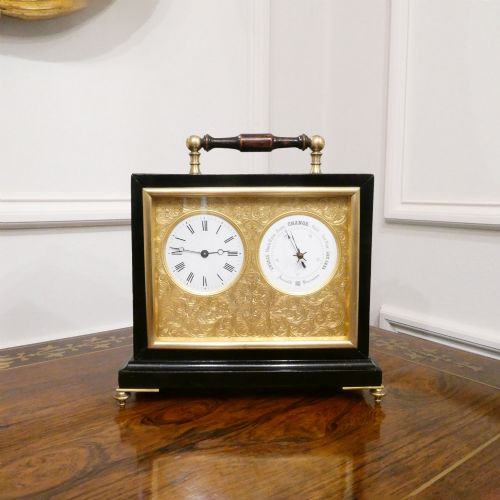
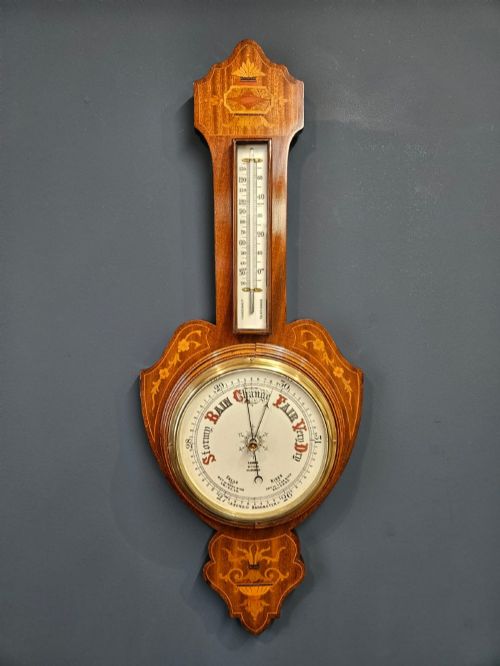
When you search for an Edwardian style barometer, you encounter domestic instruments designed to measure atmospheric pressure whilst adding architectural detail to a hallway or study. The selections available encompass banjo barometers, aneroid movements, and combination pieces that pair the gauge with a thermometer or clock.
The versions you meet most frequently on this page date from the Edwardian era and Victorian periods, alongside later Georgian Revival interpretations. These pieces take the form of wall-mounted banjo shapes or mantel instruments, constructed to serve as both scientific tools and decorative fixtures.
Makers of these instruments drew upon historical design idioms, resulting in Neo-Classical marquetry patterns and Sheraton style influences applied to domestic timber frames. A buyer selects one to anchor a wall scheme with traditional woodwork and functional brass dials.
How they were made
Makers constructed the housing for these barometers using dense hardwoods such as mahogany, rosewood, and ebonised wood, frequently embellishing the surfaces with satinwood inlay and marquetry. These wooden bodies were carved or veneered to create smooth banjo profiles and architectural pediments.
The functional interior incorporates glass faces protecting enamelled or metal dials, alongside mercury or aneroid barometer movements that respond to atmospheric shifts. Brass bezels and fixings frame the instruments, providing a contrast to the dark polished timbers.
Edwardian Style Barometer Retail Price Guide 2026
Typical asking prices for edwardian style barometer among the pieces listed under this phrase on Sellingantiques today, from the lower quarter to the upper quarter. They describe what is for sale here now, not the wider market.
One listed scientific instrument may have spent its early career observing the weather from inside a military observation balloon.
What varies in quality
Quality in these barometers rests upon the crispness of the marquetry and the fidelity of the wood inlay, where tighter geometric lines and balanced contrasting veneers distinguish finer workshop output. The depth of the timber polishing and the integrity of the carved mouldings reveal the original maker's investment of time.
The mechanical elements also set examples apart, with legible enamel dials, clean glass covers, and well-preserved brass bezels indicating a higher standard of manufacture. Pieces that retain their original thermometer tubes and balanced aneroid mechanisms hold greater cohesion as historical scientific objects.
The Edwardian Style Barometer Glossary
- Aneroid barometer
- An instrument that measures atmospheric pressure using a flexible metal box rather than liquid mercury. It expands and contracts with air pressure changes to move a needle across a dial.
- Banjo barometer
- A wall-mounted instrument housed in a tall, curving wooden case shaped loosely like a banjo. This form typically accommodates a dial at the base and a thermometer tube along the stem.
- Marquetry
- Decorative woodwork where small pieces of tinted wood, shell, or ivory are fitted into a veneer to form pictorial or geometric patterns. It appears across the wooden panels of Neo-Classical pieces.
- Sheraton style
- A neoclassical furniture and decorative design idiom characterised by straight lines, contrasting wood inlays, and classical symmetry. It heavily influences the mahogany barometer cases from the Edwardian period.
- Mercury thermometer
- A temperature-measuring glass tube containing liquid mercury mounted alongside the barometer scale. It records ambient room or outdoor temperature changes.
Edwardian Style Barometer: Frequently Asked Questions
How do aneroid barometers work?
An aneroid barometer uses a sealed, corrugated metal capsule that compresses or expands as the external air pressure rises and falls. A system of delicate levers connects this capsule to the pointer on the dial.
This mechanical movement allows the instrument to register weather shifts without relying on liquid columns. It provides a direct visual guide to impending rain or fair skies inside a home.
Where should I hang a banjo barometer?
These instruments suit interior walls in hallways, studies, or reception rooms away from direct heat sources and dampness. Hanging them at eye level ensures the dial and thermometer remain easy to read.
Because the timber cases respond to severe environmental changes, stable indoor humidity helps preserve the wood veneer and internal mechanical linkages.
How do I tell an Edwardian barometer from a Victorian one?
Edwardian examples often display lighter satinwood inlays, cleaner lines, and Sheraton style influences reflecting a turn-of-the-century preference for elegance. Victorian pieces tend towards heavier carved oak or darker rosewood frames with denser ornamentation.
Examining the timber selection and the style of the dial typography helps clarify the likely manufacturing period.
Did these barometers replace mercury barometers?
Aneroid movements gradually supplemented traditional mercury tube barometers because they offered a more compact and portable design. Without a spillable glass column of liquid, the banjo format became practical for domestic wall hanging.
Many makers continued to include a thermometer tube alongside the aneroid dial, retaining traditional multi-function capabilities.