




Vintage Mahogany Barometer
These vintage mahogany barometers are dependable weather instruments housed in rich timber cases, offering both domestic utility and classic period decoration.

Vintage Mahogany Barometer
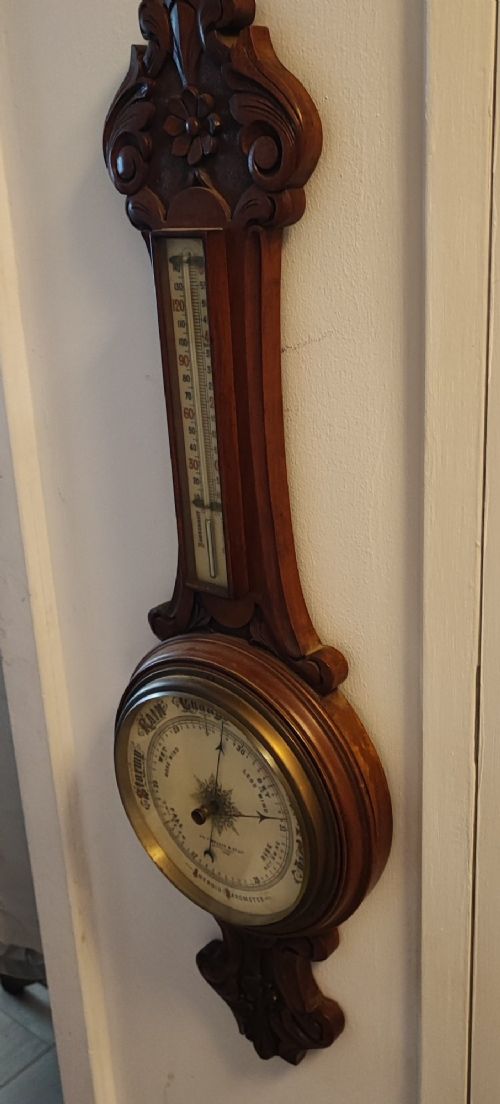
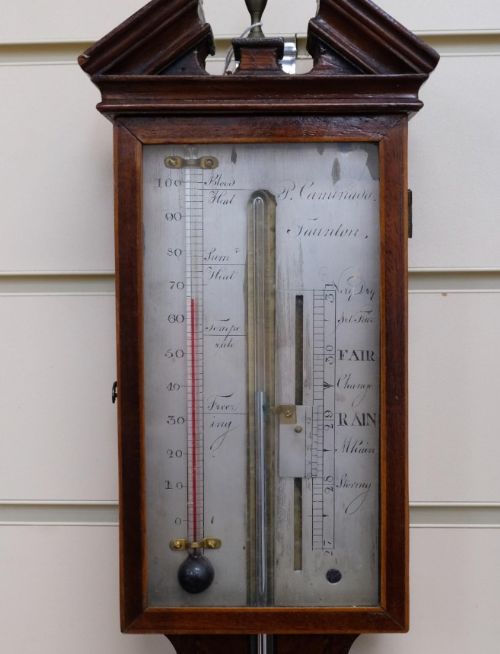
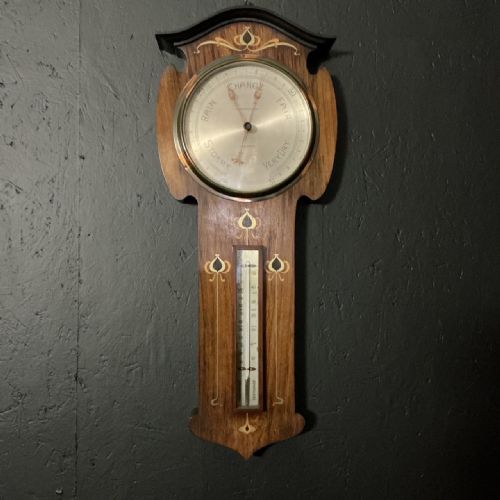
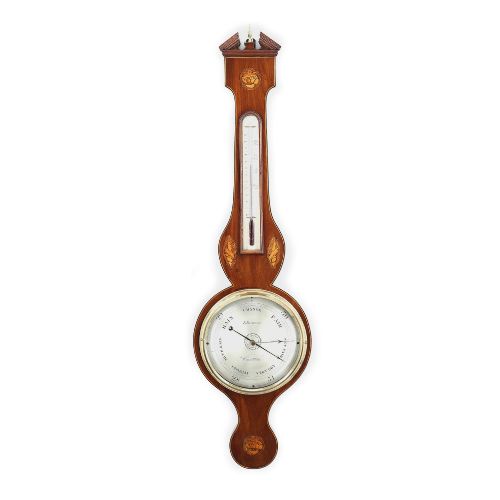
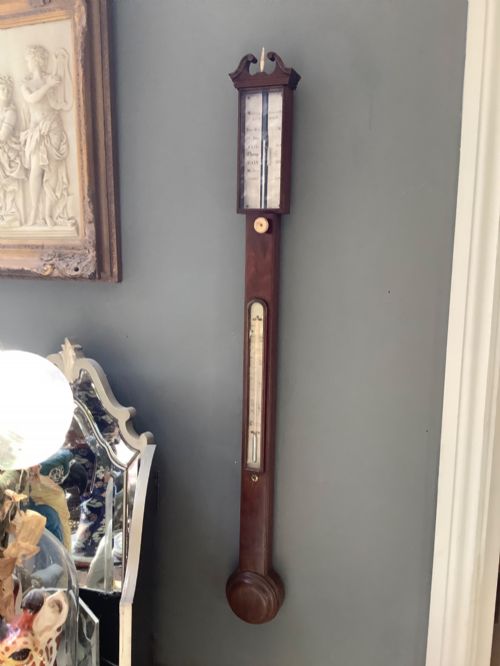
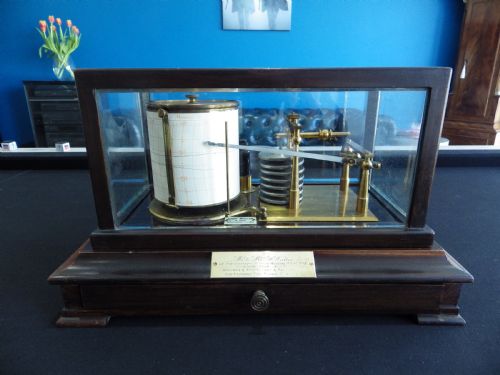
A vintage mahogany barometer is a domestic weather glass designed to measure atmospheric pressure, taking the form of upright stick barometers, wheel or banjo barometers, and mechanical barographs housed in timber boxes. Buyers seeking these pieces encounter examples spanning the Georgian, Regency, Victorian, and Edwardian periods.
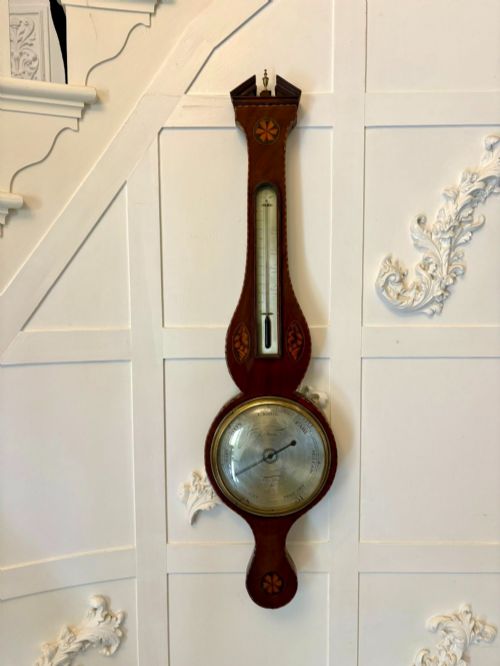
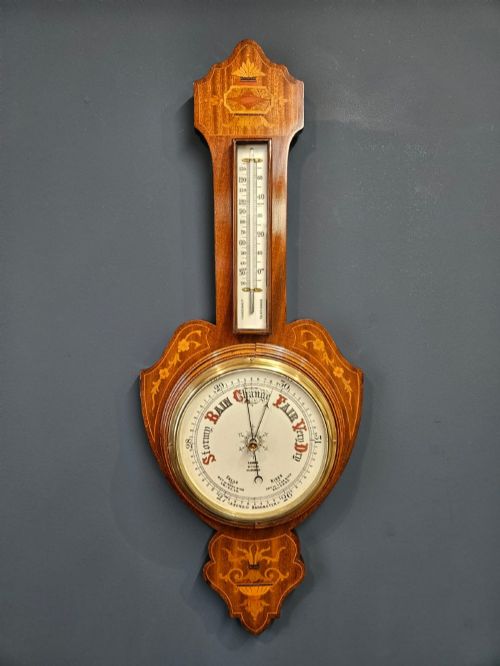
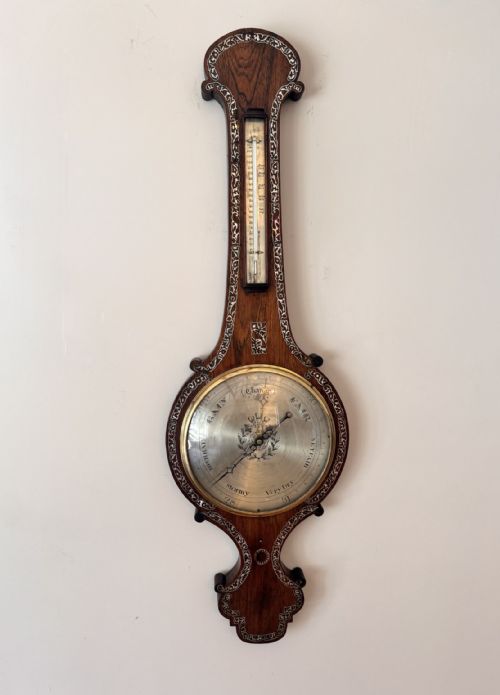
The banjo and wheel formats dominate the selection, often featuring silvered metal dials and decorative string inlay, whilst stick barometers present a more slender silhouette. These instruments trace atmospheric changes through mercury columns or aneroid movements enclosed within mahogany housings.
Origins range from provincial English makers in towns like Norwich and Weymouth to established London instrument houses. The selection includes both domestic wall-hanging models and specialised marine or desk pieces.
Materials and construction
Makers utilised solid and veneered mahogany for the structural cases, frequently embellishing the timber with contrasting satinwood stringing, shell marquetry, or mother of pearl inlay. Glass panels protect the delicate paper recording charts of barographs and the silvered brass indicator dials of wheel barometers.
Dial faces incorporate engraved silvered metal or brass plates with delicate pointer needles, occasionally accompanied by subsidiary thermometers and adjustment knobs in bone or brass. Mechanical movements rely on precision brass gears, steel arms, and vacuum chambers or mercury columns.
Listings feature mahogany barometers from the Georgian, Regency, Victorian, and Edwardian eras, alongside later 20th-century barographs.
Assessing quality and craftsmanship
The distinction between standard production and top-tier pieces rests upon the fineness of the cabinetwork and the reputation of the instrument maker. Superior examples exhibit crisply carved pediments, delicate shell inlay, and perfectly fitted brass bezels.
Makers who signed their dials with script engraving indicate higher workshop standards than unsigned provincial pieces. The crispness of the silvered engraving on the brass register plates and the retention of original glass and paper charts elevate the standing of an instrument.
Negretti & Zambra·Short & Mason·Dollond of London·Alexander Wright·P. Caminada
The Vintage Mahogany Barometer Glossary
- Banjo barometer
- A domestic wall instrument named for its characteristic bulbous shape resembling the musical instrument. It typically houses a hygrometer, thermometer, and spirit level alongside the main dial.
- Stick barometer
- A tall, narrow wall instrument containing a vertical tube of mercury. This form provides a direct and precise reading of barometric pressure.
- Barograph
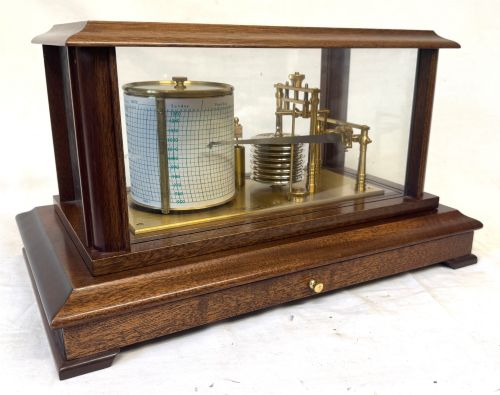
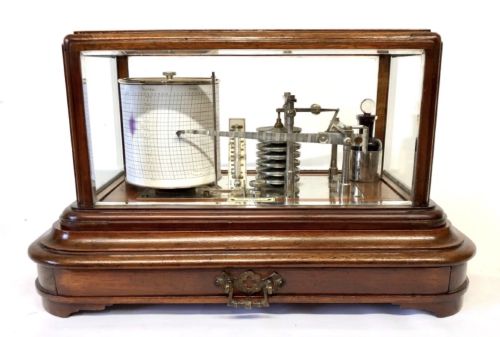
- A mechanical recording instrument that traces atmospheric pressure onto a revolving paper chart over the course of a week. It is usually housed in a glazed mahogany case with a brass-handled drawer for spare charts.
- Aneroid barometer
- An instrument that measures pressure via a flexible metal box rather than liquid mercury. It allows for more compact casing designs such as the wheel barometer.
- Silvered brass
- A metal dial plate treated to achieve a bright, reflective finish before being engraved with weather scales and maker details. The process creates clear black-filled lettering against a pale ground.
Vintage Mahogany Barometer: Frequently Asked Questions
How do I hang a vintage barometer?
Select an interior wall away from direct sunlight, central heating radiators, and draughty doorways to protect the timber case and internal mechanism. Use a secure wall fixing suited to the weight of the mahogany housing.
Ensure the instrument hangs plumb against the wall surface, particularly for mercury stick barometers that require a vertical orientation to function correctly.
Do these barometers still work?
Many aneroid movements and barographs remain fully operational and continue to record daily weather changes accurately. Mercury stick barometers also function when the column remains intact.
Transporting these instruments often requires locking the mercury column or securing the internal mechanical levers to prevent damage to the delicate brass components.
How do I clean the mahogany case?
Maintain the timber surface by applying a modest amount of quality beeswax polish using a soft, lint-free cloth. Buff gently along the grain to preserve the natural lustre of the mahogany.
Avoid using liquid cleaners, chemical sprays, or water near the dial face, glass, and paper charts to prevent staining and corrosion.