


Brass Lamp Stand
A brass lamp stand brings height, weight and a warm metallic gleam to a room, offering both adjustable reading light and traditional presence.
Brass Lamp Stand
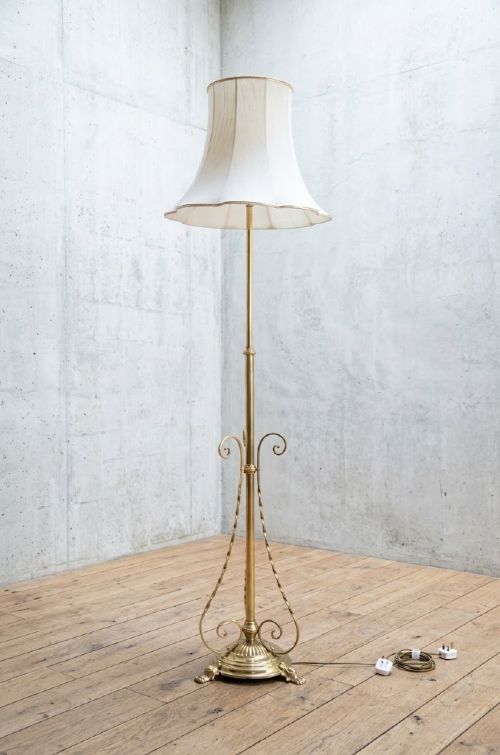
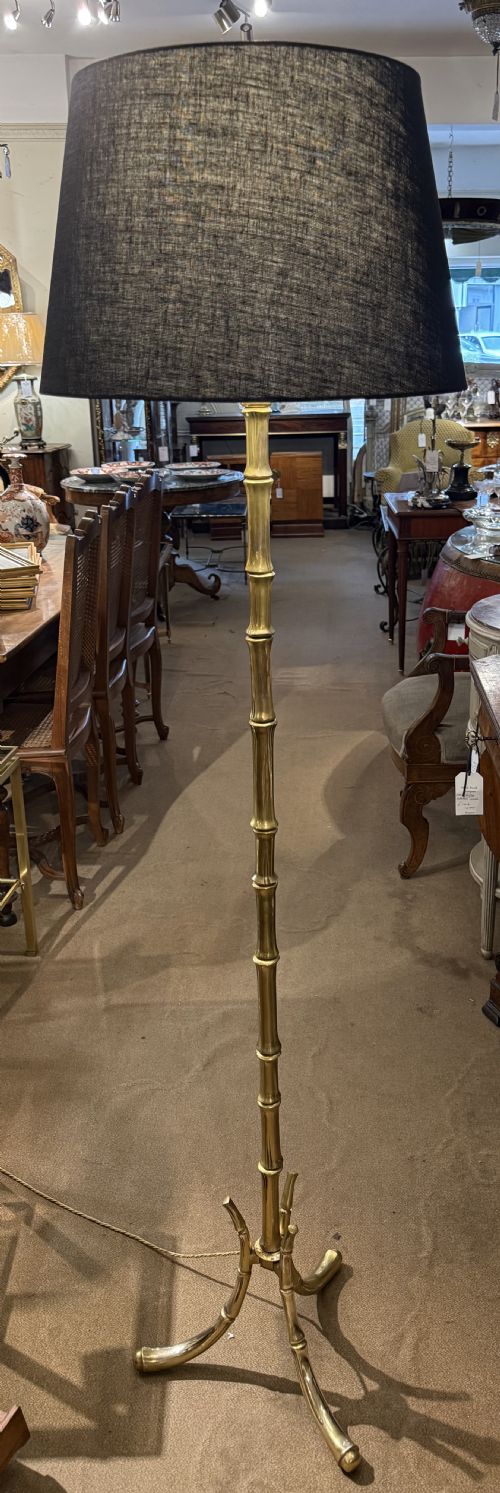
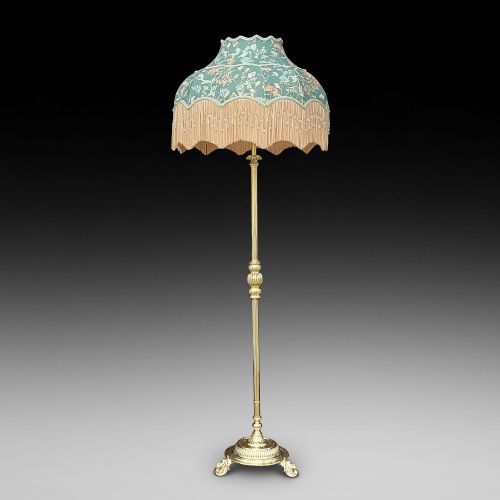
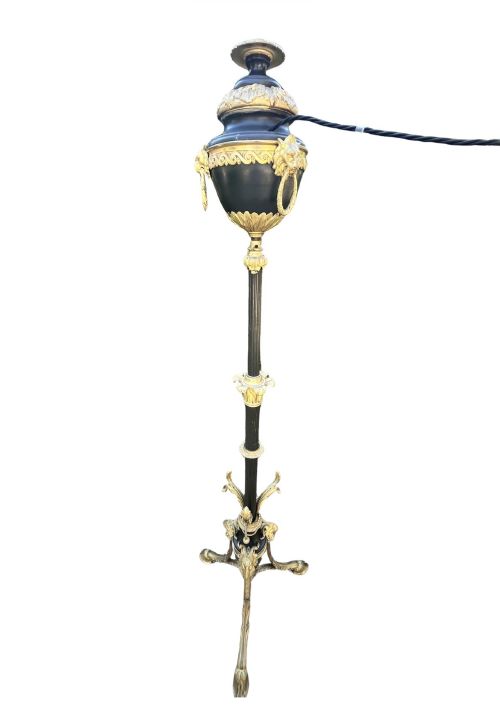
A brass lamp stand is a tall lighting fixture designed to illuminate a room from floor height, frequently featuring an upright metal shaft supported by a weighted base. These pieces appear across Victorian, Edwardian, Arts and Crafts and early twentieth-century periods, capturing styles from simple utilitarian forms to ornate classical revivals.
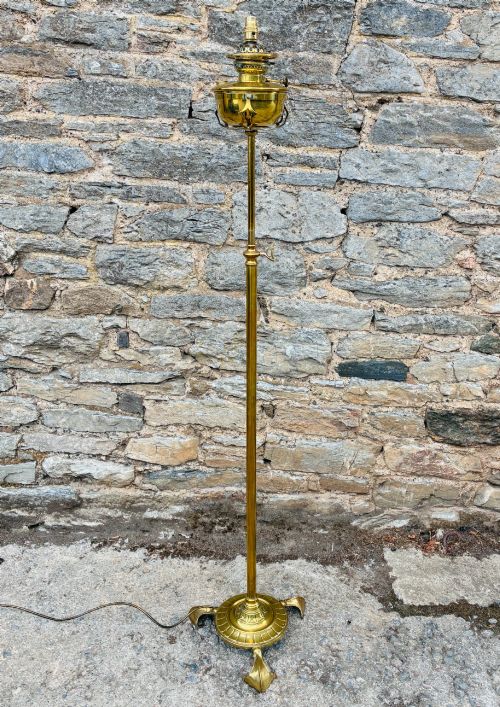
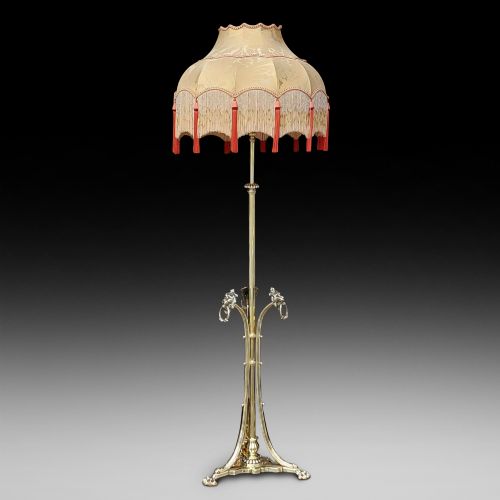
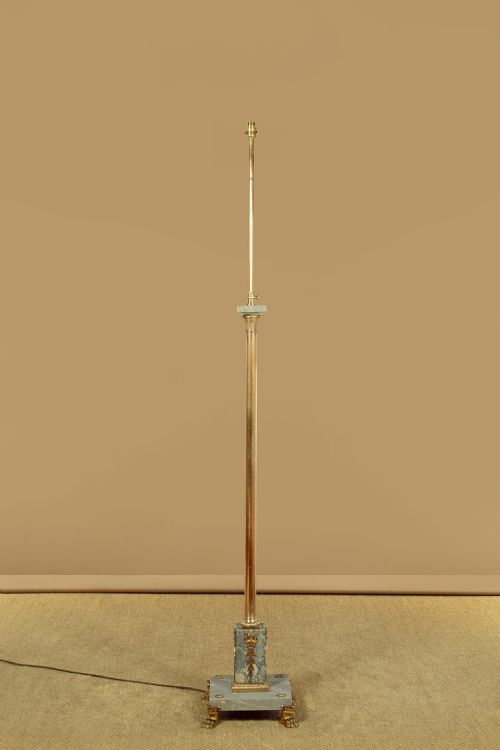
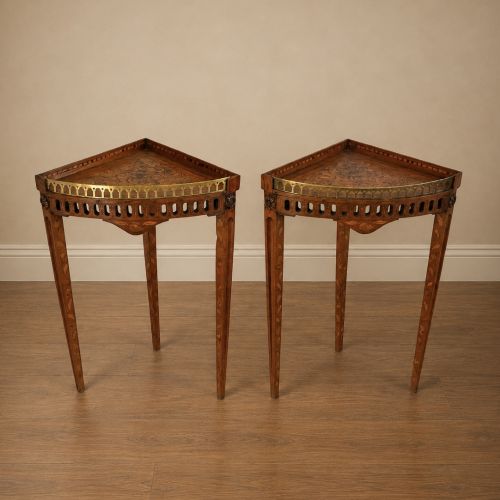
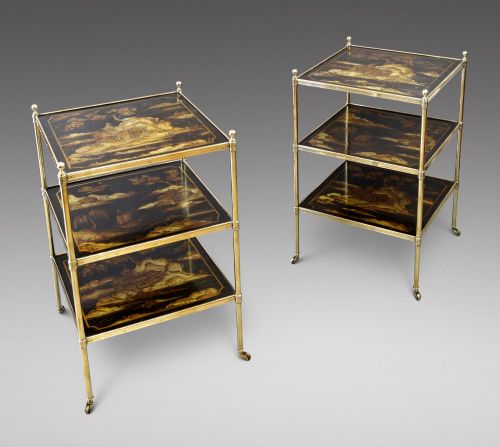
The most common version met on this page is the Corinthian column standard lamp or adjustable telescopic design in solid or cast brass, often adapted from an original oil-burning reservoir to electric wiring. Alongside these tall standards, buyers encounter smaller table-height variations incorporating brass galleries, alongside mixed-material combinations featuring mahogany, rosewood or copper.
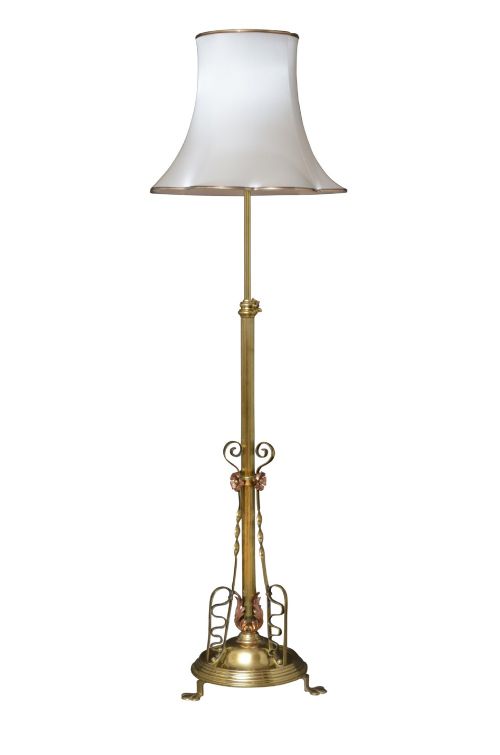
Many examples record functional mechanisms such as rise-and-fall adjustments, extending stems and swinging arms, showing how these objects were engineered for domestic reading and task lighting. Makers and workshops constructed them to anchor corners of drawing rooms and libraries, providing targeted illumination before overhead electric lighting became universal.
How they were made
Makers fashioned these stands using cast, spun and turned brass components, joining heavy weighted bases to vertical columns with threaded fittings or internal rods for stability. Many taller standards incorporate telescopic height adjustment mechanisms, allowing the central shaft to rise and lock with a key or screw.
Surface treatments and secondary materials define the construction, with workshops combining polished brass alongside hammered copper accents, patinated metal surfaces, or porcelain and marble inserts. Craftspeople frequently paired the metallic standards with timber tiers, rosewood columns, or glass oil fonts in contrasting shades.
Conversion from oil combustion to electricity is a common manufacturing detail found in surviving examples, where original burners were replaced with internal wiring while retaining the heavy weighted tripod or stepped square bases.
Some Victorian standards were fitted with adjustable reading arms specifically designed to keep cigars and books illuminated simultaneously.
What varies in quality
The distinction between standard production and top-tier work rests on the weight of the metal casting and the crispness of decorative detailing, such as fluted columns, acanthus leaf capitals and stepped bases. Heavier gauge brass provides stability and prevents tipping, whereas lighter versions rely on hidden ballast within inferior hollow feet.
Complexity and execution of mechanical parts mark out superior examples, notably in smooth-operating telescopic rise-and-fall ratchets, neatly threaded joints, and secure adjustable collars that hold heavy shades without slipping. The integration of secondary materials, such as finely figured rosewood, inlaid mahogany or genuine marble tops, elevates the execution of the piece.
Attribution to documented makers or specific retail houses introduces another layer of distinction, where signed bases or specialised patent mechanisms separate workshop production from anonymous mass manufacturing.
Hinks of B'ham·W. Turner Lord & Co
The Brass Lamp Stand Glossary
- Corinthian Column
- A classical architectural column form featuring ornate acanthus leaves and scrolls at the capital, frequently adapted for tall lighting standards.
- Telescopic
- A shaft design composed of nested sliding tubes that allow the overall height of the standard to be adjusted up or down.
- Standard Lamp
- A traditional British term for a floor lamp, describing a tall vertical light fixture standing independently on the floor.
- Etagere
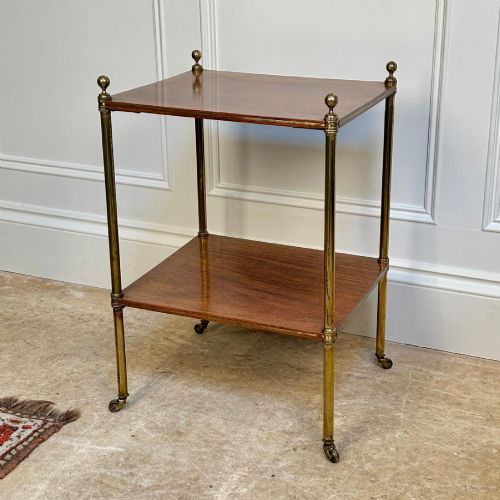
- A set of open shelves used for display or as a small side table, often incorporating brass galleries and framing.
- Bouillotte
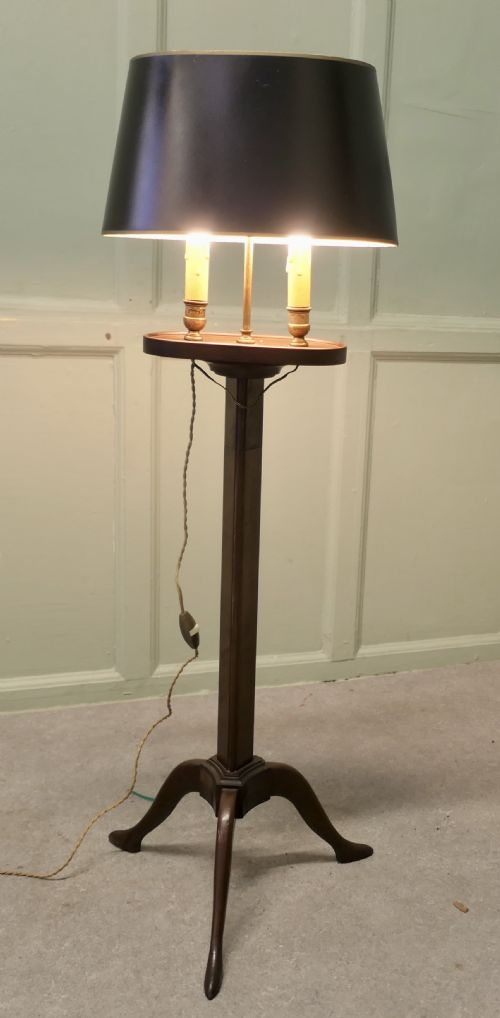
- A style of adjustable multi-armed candle or lamp stand, traditionally featuring a central column and a metal shade.
Brass Lamp Stand: Frequently Asked Questions
How do I choose the right height?
Consider where the lamp will sit in the room and whether you need fixed or adjustable illumination. Telescopic models allow you to raise or lower the light source depending on seating arrangements.
Ensure the proportions match nearby furniture, keeping in mind that tall Corinthian columns create a strong vertical accent in corners or beside armchairs.
How do I date a brass stand?
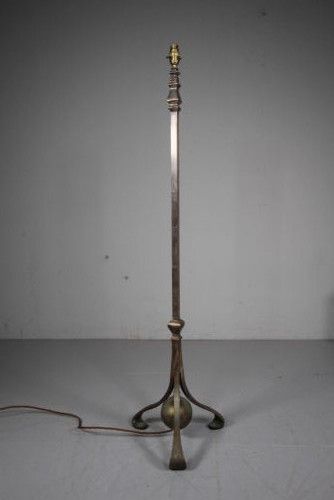
Dating relies on stylistic clues, manufacturing techniques and material combinations. Victorian pieces often favour heavy cast Corinthian columns, while Arts and Crafts examples display hand-hammered copper and brass surfaces.
Edwardian and 1920s designs introduce slimmer profiles, ebonised elements, or stepped art deco geometric bases.
Are these lamps heavy enough to be stable?
Period standards were engineered with substantial metal mass, frequently incorporating cast iron weights hidden beneath stepped brass or bronze bases. This heavy construction prevents tipping when extended to maximum height.
Smaller occasional table versions rely on solid hardwood tiers or marble slabs to provide a secure centre of gravity.