
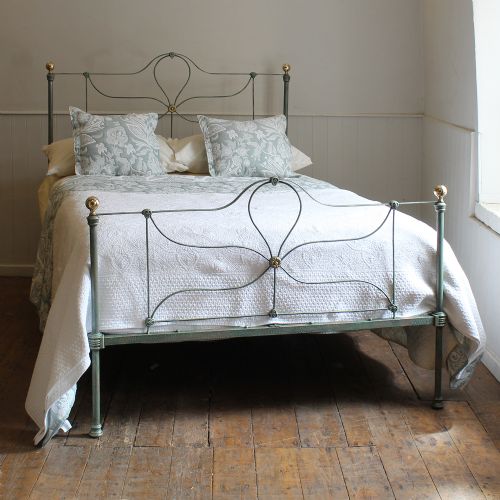
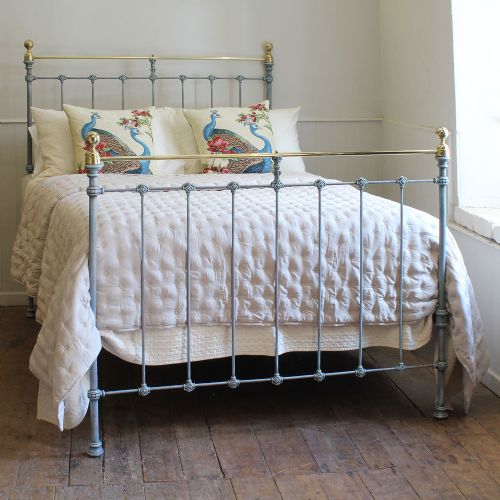
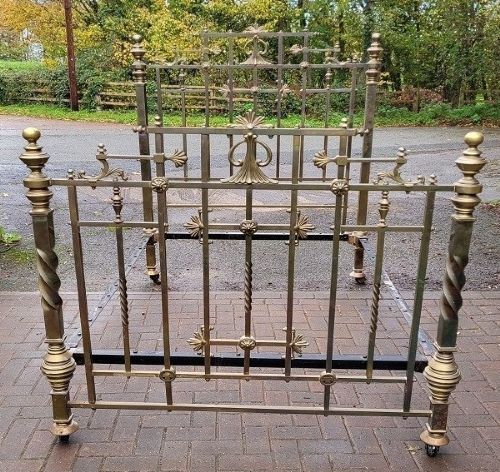
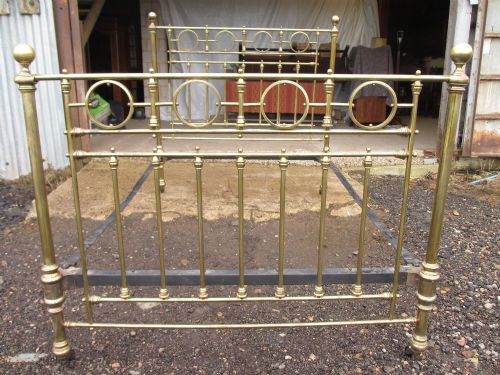
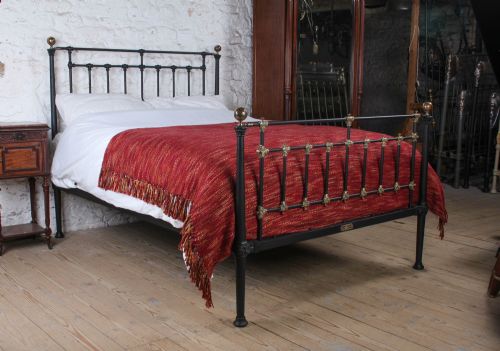


Brass Iron Double Bed
A brass iron double bed brings substantial nineteenth-century presence and robust metal framing into a modern bedroom.
Brass Iron Double Bed
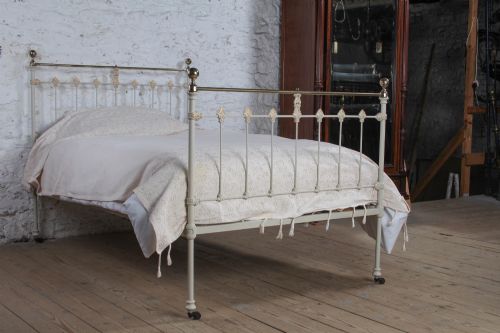
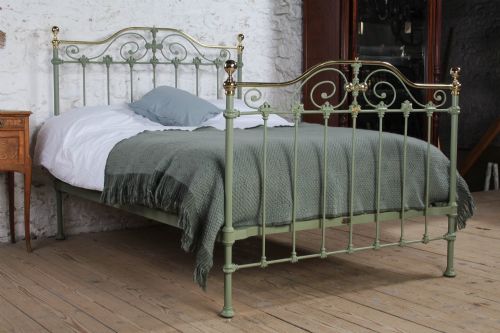
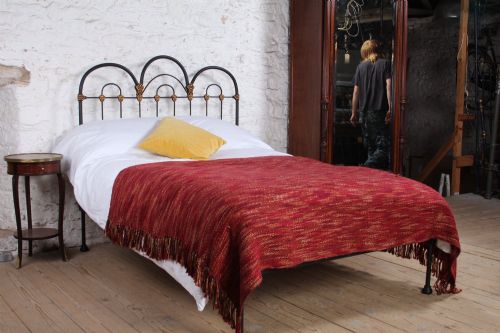
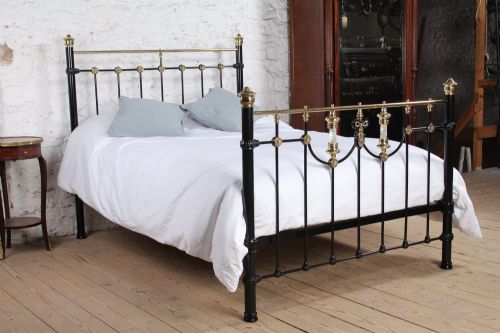
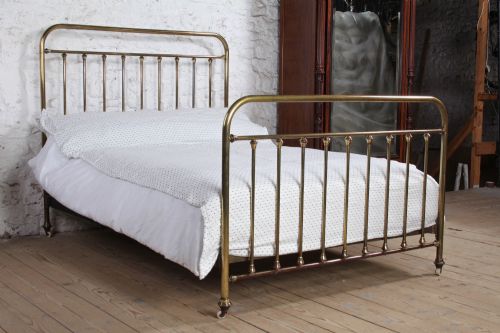
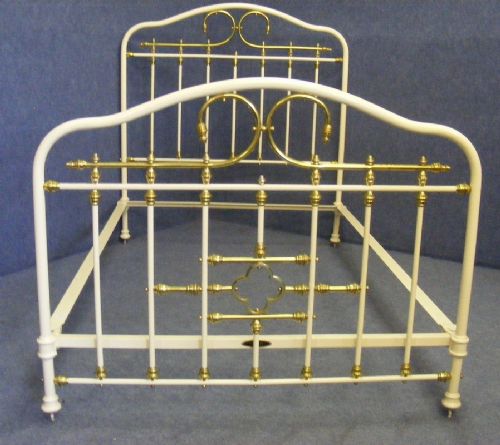
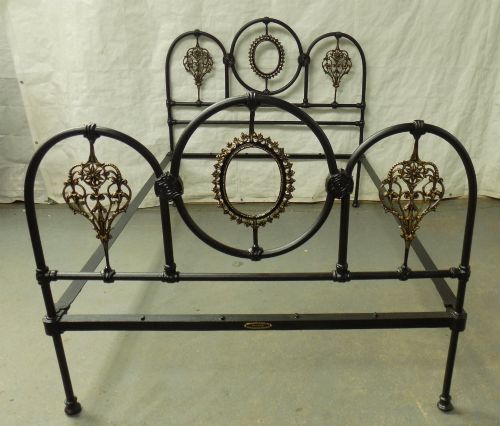
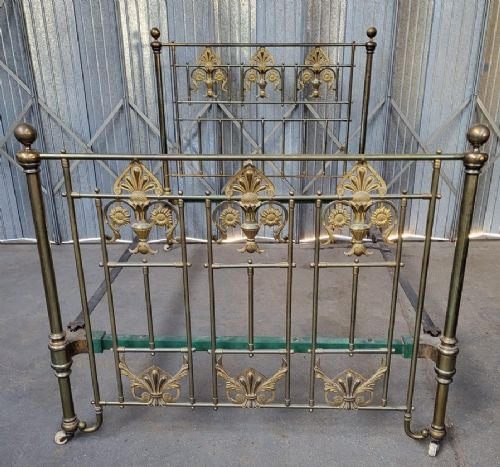
A brass iron double bed combines a rigid cast or wrought iron frame with gleaming brass finials, rails, and decorative castings. These pieces originate predominantly from the Victorian and Edwardian periods, stretching from the mid-nineteenth century into the early twentieth century.
Most examples encountered on this page take the form of standard double bedsteads, alongside variations such as small doubles, half testers, and French provincial styles. The construction typically integrates side irons designed to support a mattress base while displaying ornate footboards and headboards.
The aesthetic merges industrial metalwork with domestic decorative arts, showing influences ranging from classic straight rails to flowing Art Nouveau motifs and painted metal finishes.
Materials and Construction Techniques
Makers utilised heavy cast iron and wrought iron for the structural framework, providing the necessary strength and weight for a durable bedstead. Brass components, including spun brass tubes and detailed brass castings, were applied to the headboards and footboards for visual contrast.
Many frames incorporate slot-in iron side rails and original castors, allowing the bed to be assembled and moved with relative ease despite its substantial metallic mass. Additional decorative elements occasionally include mother of pearl inlays and applied paint effects over the metal surfaces.
Listings span the Victorian, Edwardian, and early twentieth-century periods, utilising cast iron, wrought iron, and brass.
Evaluating Quality and Detail
Quality in a brass iron double bed rests upon the crispness of the iron castings and the substantial gauge of the brass tubing used in the uprights. Finer examples display intricate detailing, such as ornate upstands, dip rails, and well-executed joinery where the metal components meet.
The integrity of the original finish, whether polished brass or painted iron, distinguishes better-preserved pieces from those that have undergone unsympathetic restoration. The inclusion of makers' stamps, sturdier framing, and complete original side irons further elevates the standing of a bedstead.
RW Winfield·Maple and Co
The Brass Iron Double Bed Glossary
- Bedstead
- The complete framework of a bed, including the headboard, footboard, and side rails, designed to hold a mattress base. This term is frequently used interchangeably with bed frame in nineteenth-century listings.
- Dip rail
- A headboard or footboard top rail that curves downwards in the centre. This configuration was popular during the Victorian and Edwardian eras.
- Half tester
- A bedstead featuring a partial canopy extending a short distance out from the headboard. It often supports drapery for decorative effect.
- Castor
- A small wheel attached to the base of the bed legs to facilitate movement. Original castors are typically made of brass or iron.
- Upstand
- An elevated decorative section rising above the main top rail of the headboard. It provides a focal point for intricate brass castings.
Brass Iron Double Bed: Frequently Asked Questions
How do I fit a modern mattress?
Most antique brass iron double beds require slats or a modern slatted base dropped into the side irons to support contemporary mattresses properly.
Checking the internal width and length against standard metric or imperial sizes ensures a secure fit within the original frame.
Are these beds easy to assemble?
These bedsteads typically use a simple slot-in iron frame system where the side rails wedge securely into the headboard and footboard brackets.
No complex tools are required, though having two people makes handling the heavy iron and brass components much safer.
How do I clean brass and iron?
Dust the metal regularly with a soft, dry cloth to prevent the accumulation of grime on the decorative castings and painted surfaces.
Avoid harsh chemical abrasives on polished brass or original painted metal to preserve the historic finish and patina.
How do I date a bedstead?
Dating relies on stylistic clues, such as the flowing organic curves typical of Art Nouveau pieces from the 1900s compared to stricter Victorian straight rails.
Maker stamps and structural details like dip rails or mother of pearl accents also point towards specific decades between 1860 and 1920.