


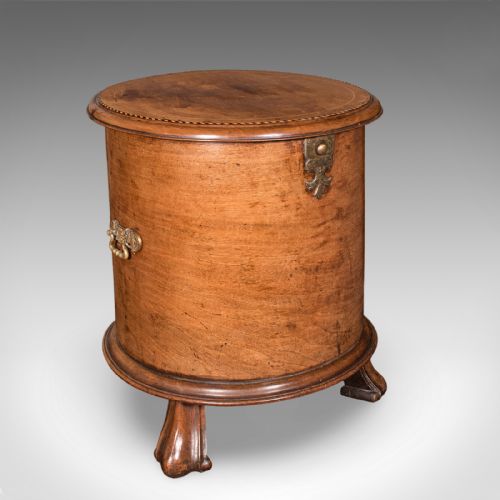


Brass Inlay Caddy
A brass inlay caddy is a timber box for storing dry leaf, decorated with bright metal lines that catch the light.
Brass Inlay Caddy
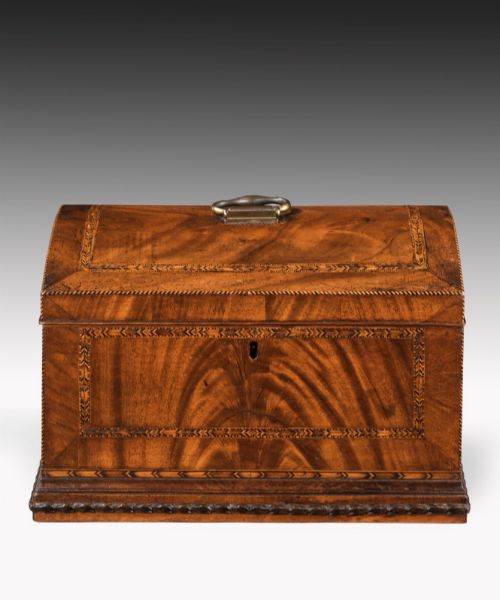
A brass inlay caddy takes several distinct shapes across the Georgian, Regency, and Victorian periods, ranging from sarcophagus forms to octagonal and rectangular chests. Tea storage drove the design of these lidded vessels, which often contain internal compartments or canisters for distinct leaf varieties.
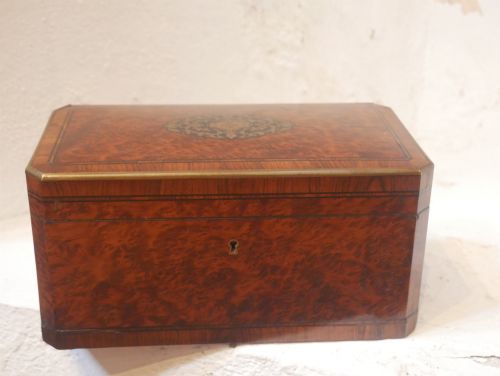
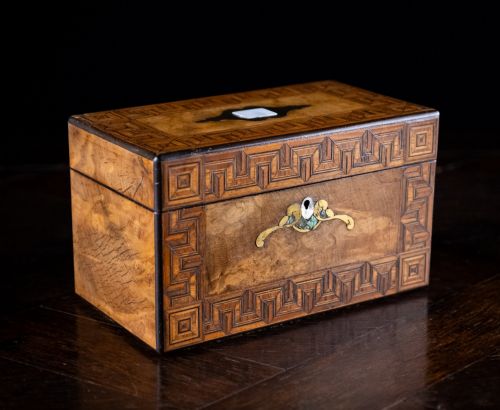
Rosewood and mahogany form the primary carcasses for these objects, frequently augmented with boxwood, ebony, and occasionally tortoiseshell or mother of pearl. Examples span the late eighteenth century through the nineteenth century, reflecting changing tastes in domestic joinery and surface ornament.
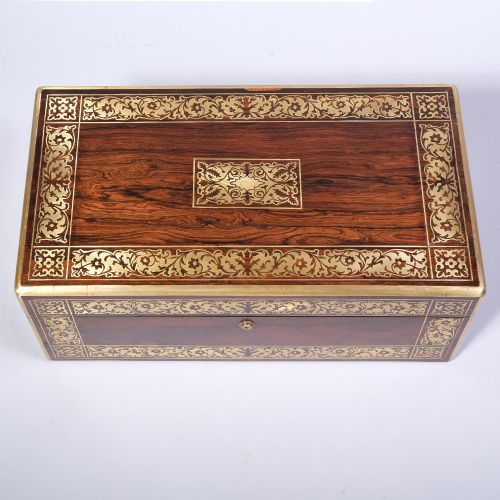
While many survive as tea caddies, related forms such as teapoys, writing boxes, and sewing caskets also appear, sharing the characteristic metal stringing and inlay. The typical piece encountered here is a Regency or Victorian rosewood box featuring precise brass line work around the lid and key escutcheon.
Materials and Technique
Cabinetmakers constructed the carcass from dense tropical hardwoods like rosewood and mahogany, often veneered onto a secondary timber base to stabilise the structure. These surfaces received meticulous channels carved to receive thin strips of brass, which were tapped flush before scraping and polishing.
Contrasting woods such as satinwood, ebony, and boxwood supplemented the brass inlay through geometric parquetry, banding, or stringing. Internal fittings required precise joinery to create snug compartments, sometimes housing glass mixing bowls or metal canisters alongside the leaf storage.
Object forms range from small tabletop tea caddies and document boxes to heavy pedestalled teapoys and French liquor caskets.
Evaluating the Workmanship
Quality rests in the precision of the brass inlay work and the tightness of the timber joints around the lid and corners. Superior examples maintain perfectly flush metal lines with no gaps or lifting, whereas lesser pieces show uneven channels or poorly mitred corners where the metal strips meet.
The selection of the timber grain dictates visual success, with richly figured rosewood or burr veneers elevating the cabinet above plain mahogany. Original internal fittings, functional locks with keys, and intact multi-part canisters separate standard production boxes from exceptional surviving examples.
Tahan Paris
The Brass Inlay Caddy Glossary
- Brass Inlay
- The technique of embedding thin strips or cutouts of brass into the wood surface to form geometric patterns or decorative lines. This method defines the primary aesthetic of the pieces gathered here.
- Teapoy
- A freestanding pedestal table featuring a lidded storage box on top for holding tea leaves and mixing sugar. These larger pieces often incorporate elaborate brass inlay and internal compartments.
- Sarcophagus
- A box shape characterised by a rounded or domed lid and tapering sides reminiscent of classical stone tombs. Regency cabinetmakers favoured this silhouette for fine rosewood tea caddies.
- Escutcheon
- A small plate of brass placed around the keyhole to protect the surrounding wood from wear. On these boxes, the escutcheon often matches the linear inlay framing the lid.
- Boulle
- An elaborate form of marquetry using tortoiseshell and brass popularized in France and adapted on later nineteenth-century caskets. The technique creates a rich contrast of dark shell and polished metal.
Brass Inlay Caddy: Frequently Asked Questions
What is inside a brass inlay caddy?
These boxes typically contain two or three lidded wooden canisters or foil-lined compartments designed to keep different tea leaves dry and fragrant. Some examples also retain a central glass mixing bowl used to combine leaf grades before brewing.
Secondary inserts like removable trays or small wells for sugar and spoons also appear in larger Regency and Victorian pieces.
How do I date a brass inlay caddy?
Dating relies on timber choice, carcass shape, and the style of the brass ornamentation. Georgian and early Regency boxes often feature straight-sided mahogany with restrained stringing, while later Regency and Victorian examples lean towards rosewood sarcophagus forms with bold brass inlay.
Construction details, such as the type of hinges, lock mechanisms, and internal lining papers, provide further clues to the decade of manufacture.
Were these boxes locked?
Tea was an expensive and heavily taxed commodity in the eighteenth and nineteenth centuries, making security essential for domestic storage. Most boxes feature a functional brass lock on the front operated by a small key.
Servants were typically excluded from accessing the tea supply, so the mistress of the house kept the key on her person or in a safe place.
How do I care for rosewood and brass?
Keep the timber away from direct sunlight and steady heat sources to prevent the rosewood veneers from drying, warping, or cracking. Maintain a stable room humidity to stop the wood from expanding and causing the brass inlay to lift from its channels.
Dust gently with a dry, soft cloth and avoid commercial polishes that leave a silicone buildup over the timber and metal.