




Brass Inlaid Timepiece
A brass inlaid timepiece brings together precision engineering and decorative cabinetwork, offering a reliable domestic clock housed in richly figured timber.
Brass Inlaid Timepiece
When you search for a brass inlaid timepiece, you are looking at domestic clocks designed for mantelpieces, libraries, and walls, spanning the Georgian, Regency, Victorian, and Edwardian periods.
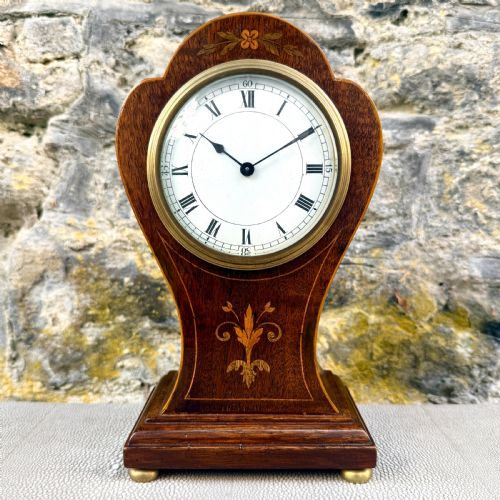
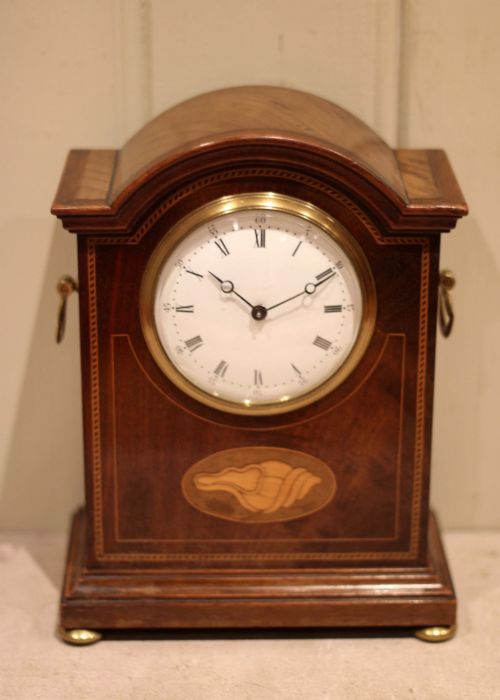
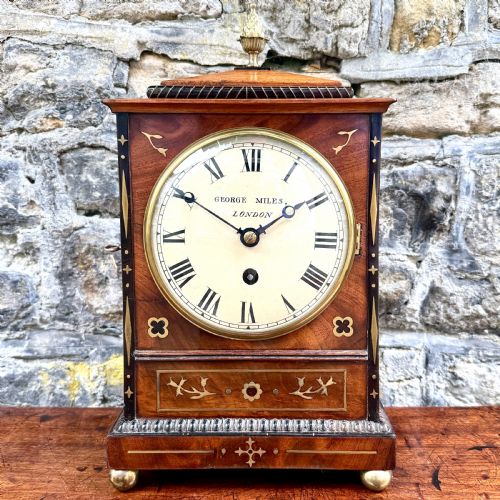
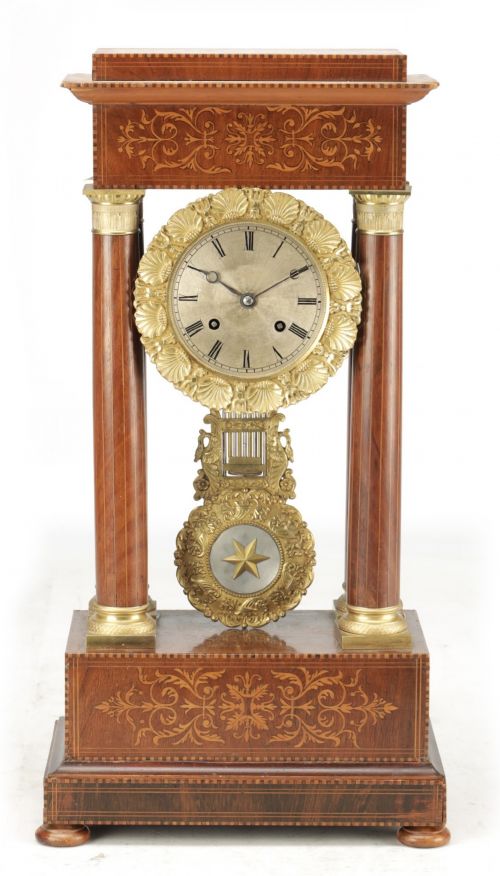
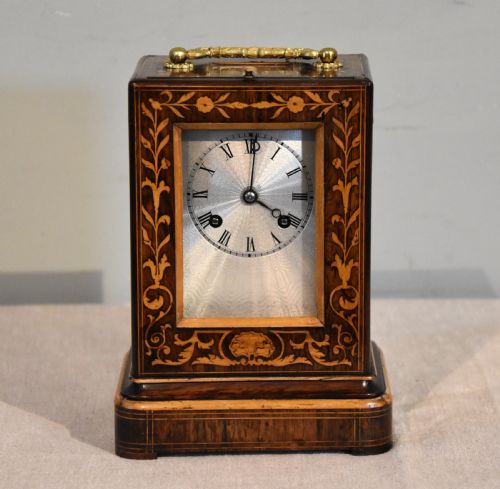
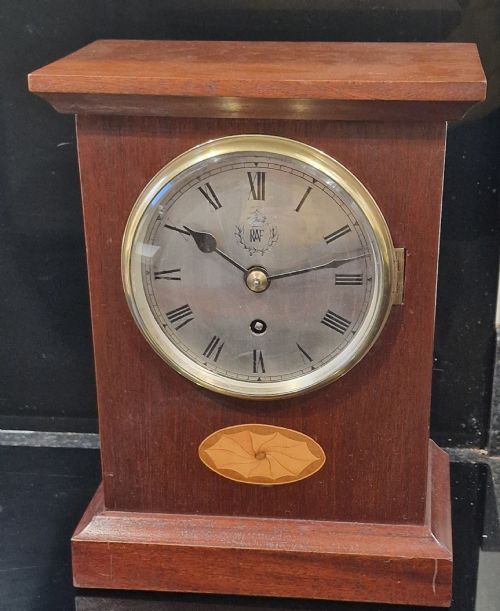
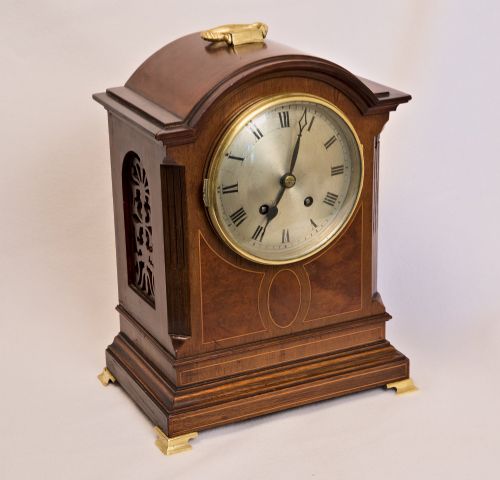
The version you are most likely to meet on this page is a mahogany or rosewood mantel clock, often carrying delicate stringing or brass scrollwork across the front panel.
These pieces originate from English workshops in London and provincial towns, alongside French makers who produced elaborate portico and bracket forms during the nineteenth century.
Materials and construction methods
Cabinetmakers constructed the main bodies from dense timbers such as mahogany, rosewood, and satinwood, frequently applying contrasting stringing in boxwood or lemon wood.
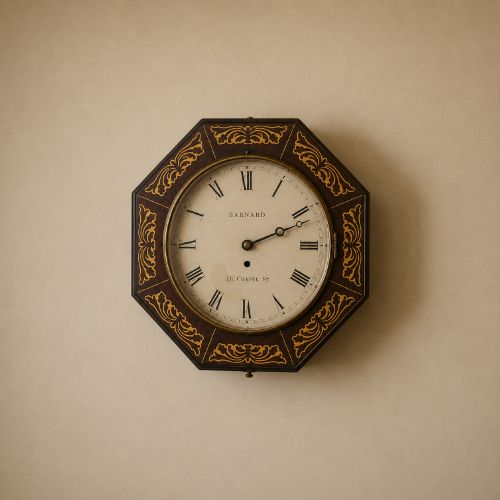
Brass was hand-cut and pressed into channels carved directly into the wooden case, creating crisp linear patterns or floral motifs that frame the enamelled dials and glass bezels.
Movements relied on mechanical gear trains, sometimes incorporating fusee mechanisms to maintain even tension as the mainspring unwound.
Cases employ contrasting woods including mahogany, rosewood, satinwood, and boxwood, embellished with brass inlay and glass bezels.
Distinguishing levels of quality
The distinction between standard production and superior work lies in the precision of the cabinetwork and the integration of the brass inlay into the timber grain.
Higher quality pieces feature finely engraved brass work, substantial mahogany or rosewood cases with rich natural patination, and signed movements by known makers rather than anonymous mass production.
The refinement of the dial execution, whether painted white enamel or set with individual cast brass numerals, further separates ordinary examples from exceptional ones.
Barnard·Bush of London·Bryson Edinburgh·John Bull of Bedford·Henry Marc·Hyde of Salisbury·Paul Garnier·Kleyser of London·Taylor of London·Haley and Milner London
The Brass Inlaid Timepiece Glossary
- Fusee
- A conical pulley connected to the mainspring by a chain or cord, designed to equalise the torque as the spring unwinds. This mechanical addition ensures the clock maintains a consistent driving force for better timekeeping.
- Bracket clock
- A portable table clock originally built with a carrying handle to rest on a bracket or table. Many later examples lost their wall brackets but retained the traditional designation.
- Portico clock
- A monumental architectural timepiece styled like a classical temple with columns supporting the movement housing. They frequently utilise rosewood veneers paired with ormolu mounts.
- Drop-dial clock
- A wall clock featuring a circular dial mounted above an extended wooden trunk that houses the pendulum. They are commonly found in public spaces and domestic halls.
- Boulle
- A form of marquetry employing cut brass and tortoiseshell developed in France. It creates a striking metallic pattern across the surface of the clock case.
Brass Inlaid Timepiece: Frequently Asked Questions
What is a timepiece clock?
A timepiece is a specific horological term for a clock that indicates the hours and minutes but lacks a striking mechanism or musical train. It contains only the going train required to keep time.
These models were popular in bedrooms and libraries where striking bells might prove intrusive. They require winding solely for the movement rather than any bellwork.
How do I wind a fusee movement?
Winding a fusee clock requires inserting the key into the dial aperture and turning it clockwise until the chain or gut line reaches the top of the conical drum. Care must be taken not to force the key once resistance is felt at full wind.
Most mechanical examples require attention once a week. Keeping to a consistent winding schedule helps preserve the tension of the historic mainspring.
Where should I place my mantel clock?
Mantel clocks function best on stable, level surfaces away from direct sunlight and damp conditions. Heavy timber cases respond poorly to rapid temperature fluctuations near active fireplaces.
Placing the clock on a firm shelf ensures the pendulum hangs plumb. Proper positioning prevents the escapement from going out of beat.
How do I distinguish Regency from Edwardian styles?
Regency cases from the early nineteenth century favour dark Cuban mahogany, architectural proportions, and bold brass inlay. Edwardian pieces from the early twentieth century often display lighter mahogany timbers with delicate marquetry flowers and satinwood banding.
Examining the interior construction, the style of the painted dial, and the type of brass fittings provides further chronological clues.