


Brass Inkwell and Stand
When you search for a brass inkwell and stand, you enter a world of desk accessories crafted to organise writing equipment.

Brass Inkwell and Stand
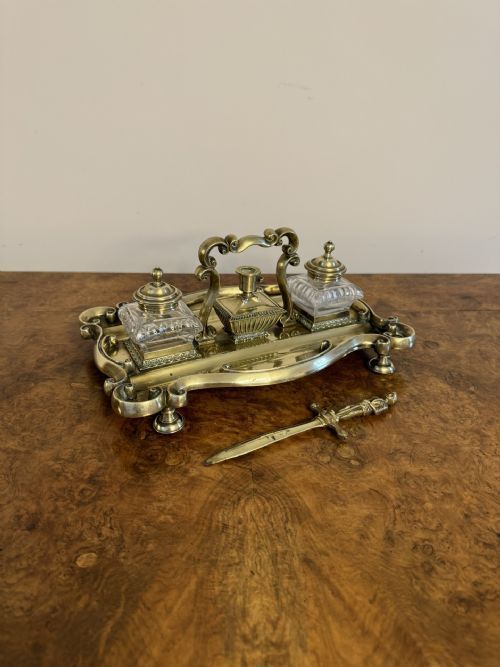
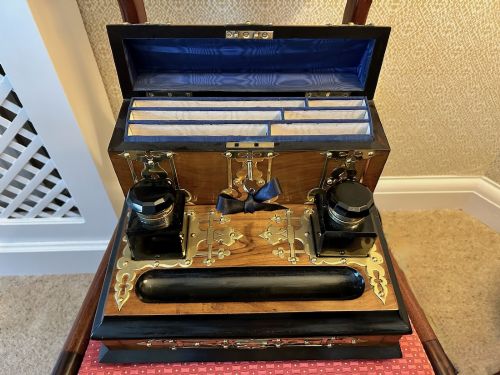
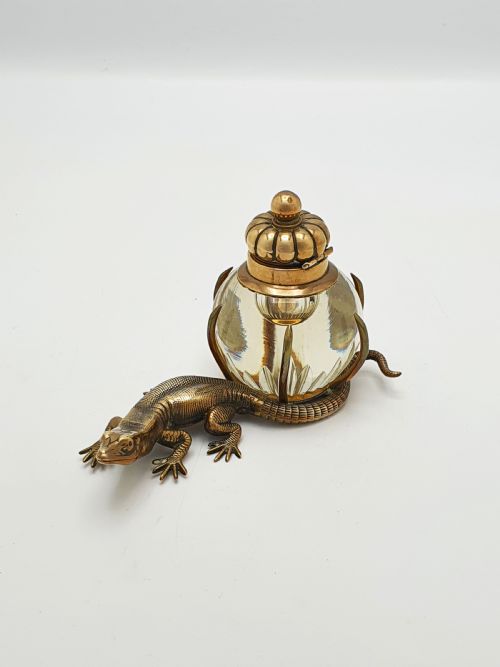
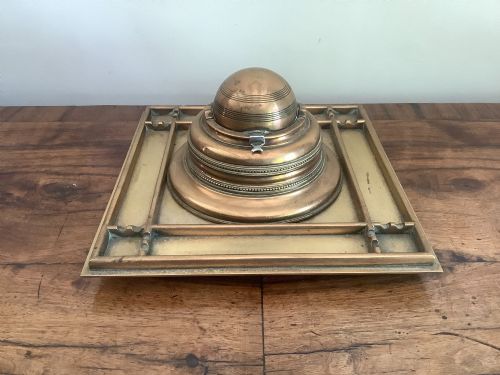
A brass inkwell and stand is a functional desk accessory designed to hold writing fluid and pens, ranging from simple brass bases to elaborate sets featuring integrated trays and matching glass inserts.
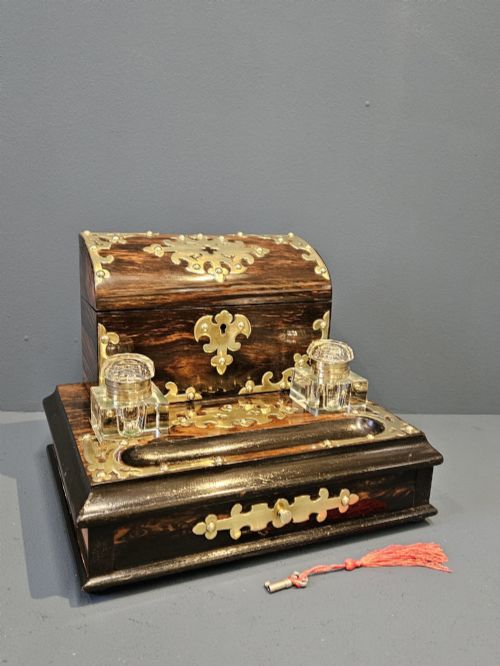
Most pieces seen here belong to the nineteenth century, Victorian, and Edwardian periods, frequently combining solid cast brass with rich timbers such as walnut, coromandel, and rosewood.
These items served as centrepieces for gentlemen's desks and writing tables, often incorporating stylistic influences like Art Nouveau, Gothic Revival, or French Empire design.
Materials and Construction
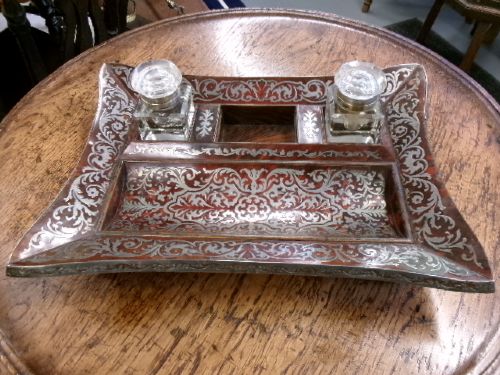
Manufacturers combined cast and chased brass mounts with fitted wooden bases, frequently employing exotic veneers like tortoiseshell, mother of pearl, and Boulle marquetry to embellish the surface.
Glass and cut crystal components were integrated to hold the ink securely, sometimes paired with hinged brass lids or screw tops to prevent evaporation.
Listings feature materials including brass, glass, marble, ormolu, walnut, tortoiseshell, and wood across Victorian and Edwardian periods.
Markers of Quality
Quality rests in the crispness of the metal casting, the weight of the stand, and the preservation of original fitted glass inserts rather than replacement bottles.
Superior examples demonstrate meticulous attention to detail in secondary materials, such as finely inlaid brass strapwork on timber bases or carefully articulated figural motifs.
James Cartland and Sons·William Tonks
The Brass Inkwell and Stand Glossary
- Inkstand
- A portable tray or stand fitted to hold one or more inkwells, pen rests, and sometimes a sander or bell. These desk accessories kept the writing desk tidy.
- Ormolu
- Gilded bronze applied to mounts and decorative elements. The technique gives a rich gold appearance to brass and bronze fittings.
- Boulle work
- Marquetry created from tortoiseshell and brass inlay, popular on nineteenth-century French and English desk sets. It creates a striking contrast of dark shell and gleaming metal.
- Champlevé
- An enamelling technique where troughs are dug into a metal surface and filled with vitreous enamel before firing. It often appears on decorative nineteenth-century stands.
- Standish
- An antique term for a desk stand holding ink, pens, and sealing wax. These pieces formed essential furnishings for writing rooms.
Brass Inkwell and Stand: Frequently Asked Questions
What is the difference between an inkwell and an inkstand?
An inkwell is simply the small vessel that holds the ink itself, whereas an inkstand is the broader tray or chassis that holds the inkwell alongside pen rests and other desk items.
Many stands incorporate one or two inkwells directly into their design, creating a unified station for correspondence.
How can I date my brass inkstand?
Dating relies on stylistic clues, timber choices, and manufacturing methods. Earlier nineteenth-century pieces often feature Regency rosewood with foliate brass inlay, while Victorian examples frequently utilise oak, walnut, or heavy cast brass.
Art Nouveau pieces from the late nineteenth and early Edwardian periods display characteristic whiplash lines and stylised floral motifs.
Did these stands always come with glass inserts?
Most desk stands originally paired brass bases with fitted glass or crystal ink inserts to hold the fluid safely without corroding the metal.
Finding a piece with its original matching glass bottles significantly enhances its completeness.
Where were these pieces used?
These desk accessories sat upon writing desks, library tables, and secretaires in nineteenth-century homes and offices.
They provided a stable station for writing letters, signing documents, and managing daily correspondence before the invention of the ballpoint pen.