




Brass Hearth Rail
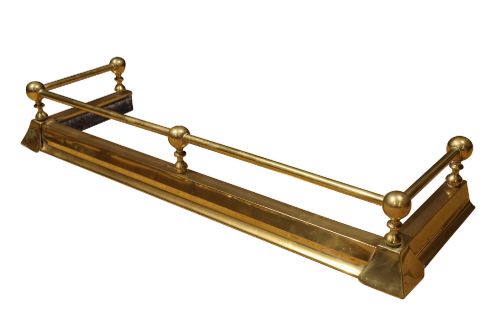
A brass hearth rail protects the room and frames the grate, bringing warmth and metallic weight to the hearth.
Brass Hearth Rail
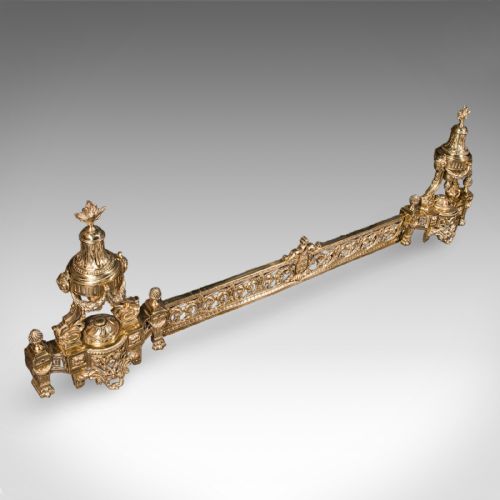
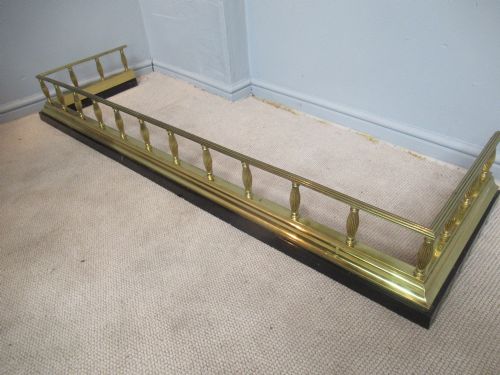
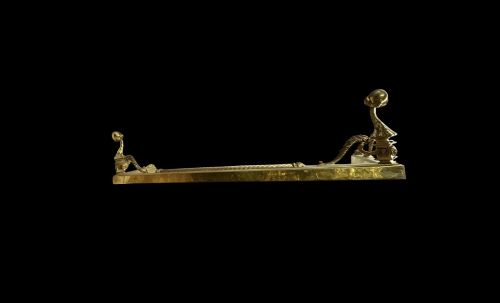
A brass hearth rail sits before the fireplace to keep stray embers from the floor and to define the fireside space. When you search for a brass hearth rail, you encounter a range of protective accessories designed to sit directly upon the stone or tile.
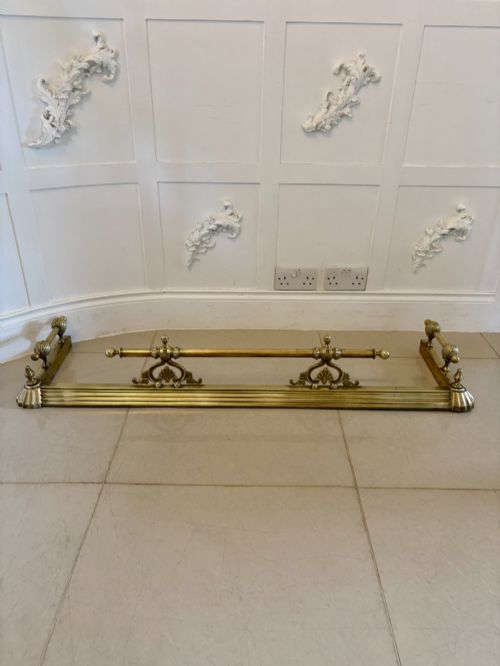
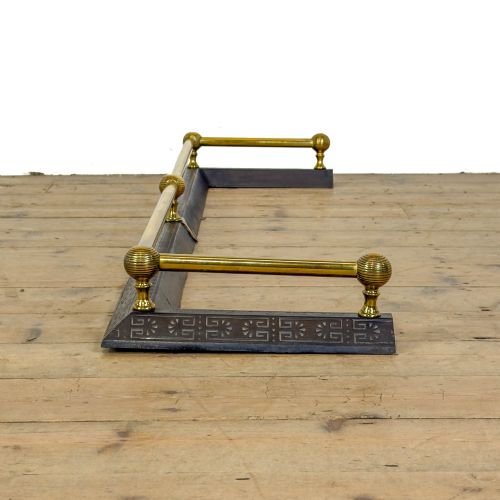
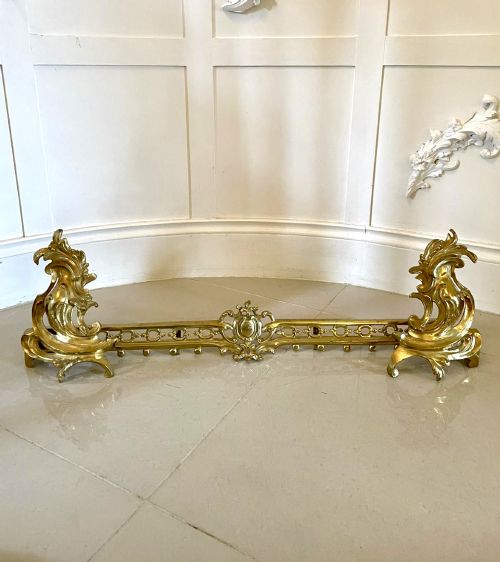
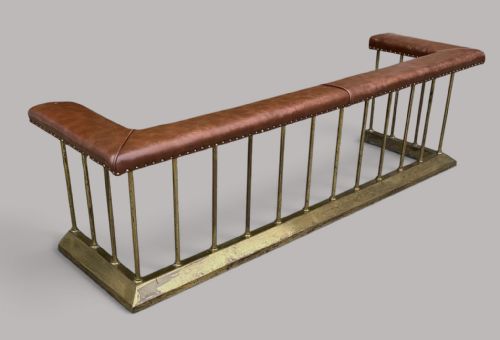
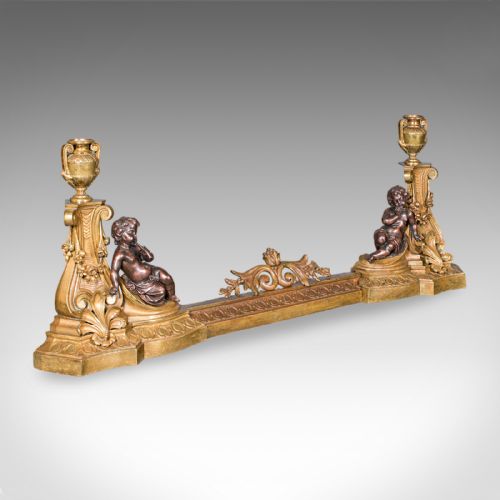
The selections span the Victorian and Edwardian eras, alongside pieces reflecting French Rococo and Louis XVI Neoclassical styles. Forms include adjustable curbs, club fenders with leather seats, nursery guards, and heavy cast pieces.
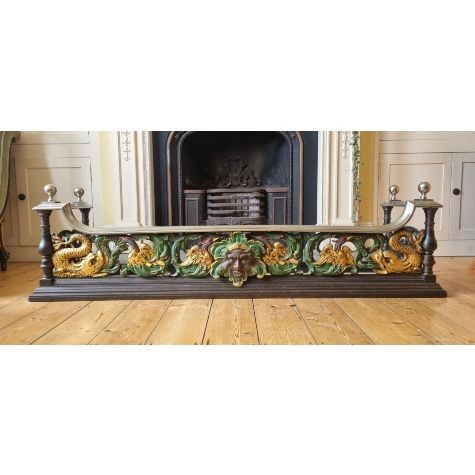
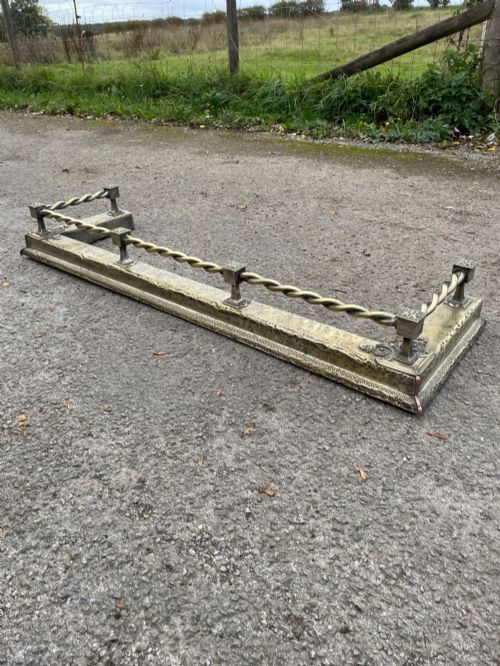
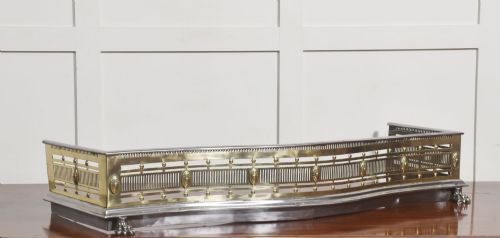
Victorian examples dominate the listings, frequently pairing polished metal with iron, steel, or copper elements. These domestic fixtures range from simple extending rails to ornate scrolled frameworks featuring lions or pierced panels.
Materials and Construction
Workshops utilised heavy gauge brass, cast brass, and gilded brass alongside structural iron and steel to build sturdy fire curbs. Metal components were cast, pierced, and polished, occasionally incorporating polychrome finishes or leather upholstery.
Many examples feature adjustable mechanisms that allowed homeowners to fit the fender precisely to varying fireplace dimensions. Skilled metalworkers combined brass tubing and heavy cast bases to withstand the rigours of daily hearthside use.
Brass Hearth Rail Retail Price Guide 2026
Typical asking prices for brass hearth rail among the pieces listed under this phrase on Sellingantiques today, from the lower quarter to the upper quarter. They describe what is for sale here now, not the wider market.
Distinctions in Quality
Quality rests in the heft of the metal and the crispness of the cast details, from intricate French Rococo scrolls to solid club fender frames. Substantial weight and thicker gauge brass separate robust architectural fixtures from lighter domestic items.
The integration of secondary materials, such as mature tan leather on club fender seats or finely pierced steel panels, distinguishes superior production. Careful finishing of joints and the retention of original adjustable mechanisms further elevate the standing of a piece.
The Brass Hearth Rail Glossary
- Club fender
- A low fireside guard featuring upholstered top rails that double as seats. These sturdy frames allow people to sit close to the warmth of the fire.
- Fire curb
- A low metal barrier enclosing the hearth space. It keeps coal and ash contained upon the hearthstone.
- Nursery fender
- An elevated safety guard designed to prevent children and pets from reaching the open fire. They frequently incorporate integrated rails for drying clothes.
- Gilt brass
- Metal treated with a gold-coloured wash or finish to enhance its decorative brilliance. This treatment catches the firelight in formal drawing rooms.
Brass Hearth Rail: Frequently Asked Questions
What is a club fender?
A club fender is a low fireside barrier featuring upholstered leather seats along the top rail. It provides practical protection from sparks while offering a comfortable place to sit near the hearth.
These substantial pieces became popular in gentlemen's clubs and large domestic drawing rooms during the nineteenth century. They allow individuals to sit directly beside the fire while keeping a safe distance from the flames.
How do I measure for a fender?
Measure the width and depth of your hearthstone carefully to ensure the metal curb sits correctly within the space. Take into account any protruding hearth tiles or uneven masonry.
Many period examples feature adjustable mechanisms that permit minor alterations in width. Checking these dimensions ensures the guard fits snugly against the chimney breast.
Are these fenders adjustable?
Several Victorian and Edwardian examples feature sliding sections that let you alter the overall width. This clever engineering accommodated different fireplace openings in period homes.
When inspecting an adjustable model, verify that the sliding mechanism moves smoothly within its channel. Such pieces offer versatility if you move the furnishing to another room.
How do I care for polished brass?
Maintain polished brass surfaces by dusting regularly with a soft, dry cloth to prevent the buildup of soot and ash. Avoid harsh chemical cleaners that strip the historic character of the metal.
Allowing the brass to retain a natural, mature patina often highlights the historical depth of nineteenth-century pieces. Gentle cleaning preserves both the bright highlights and the darker recessed details.