
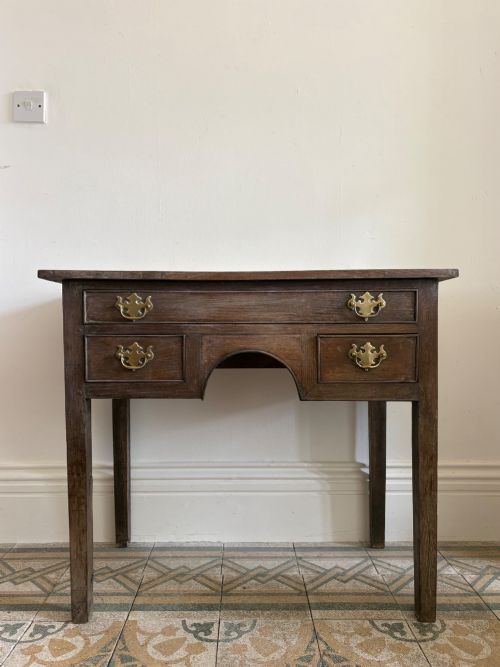
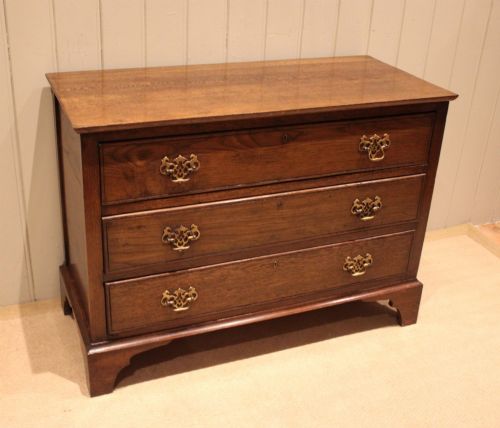
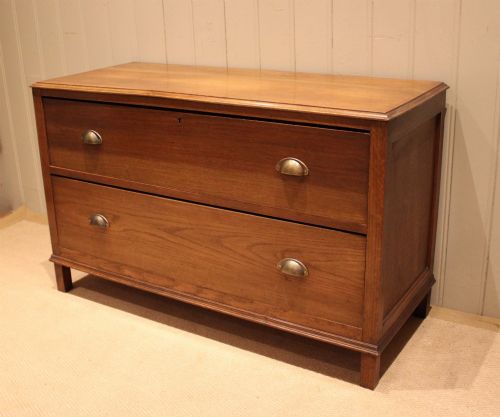
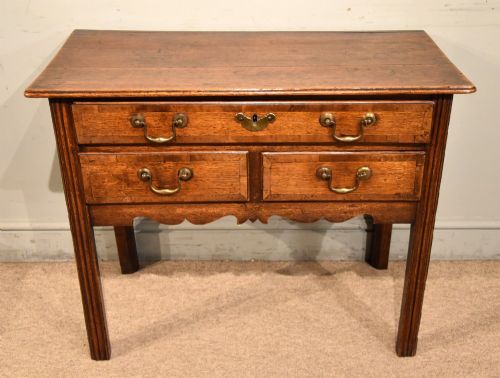
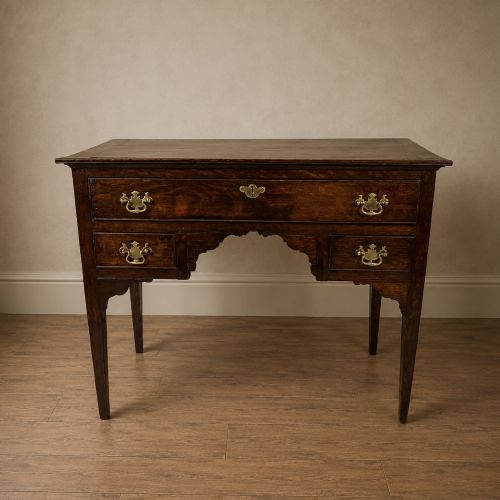
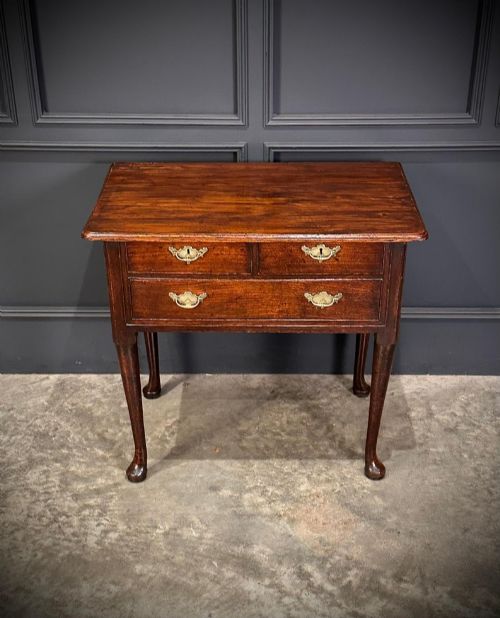
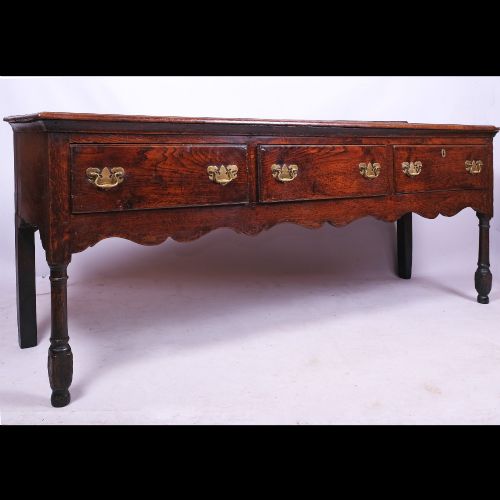
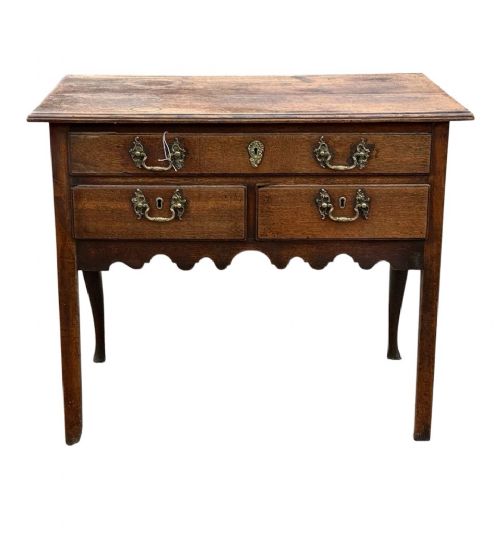
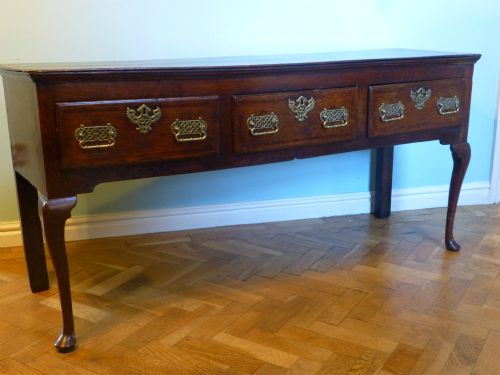
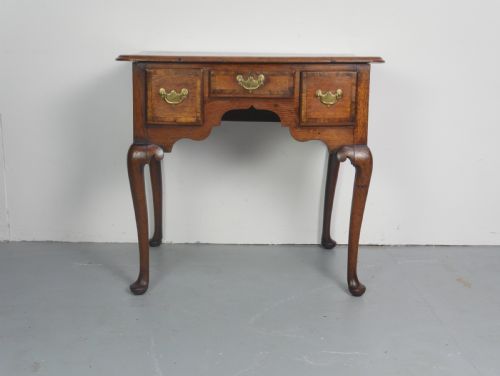


Brass Handle Oak Lowboy
A brass handle oak lowboy is a compact table built for storage, combining practical drawers with sturdy timber.
Brass Handle Oak Lowboy
A brass handle oak lowboy functions primarily as a small side table, dressing table or writing desk fitted with drawers beneath the top. Buyers seeking a brass handle oak lowboy will find pieces mostly dating from the eighteenth century, alongside later revivals from the Edwardian era and the twentieth century.
The form appears under various overlapping descriptions in the evidence, including side tables, dresser bases and chests on stand. While oak dominates, related examples utilise walnut, cherrywood and painted wood.
The Georgian period supplies many of the surviving examples, often featuring cabriole legs or three frieze drawers. Later twentieth-century interpretations reproduce these traditional proportions and timber choices.
What varies in quality
The refinement of the timber grain and the selection of secondary woods distinguish simpler vernacular pieces from finer examples. Burr walnut veneers and carefully figured oak display greater attention to decorative surface appeal.
The execution of structural details, such as leg shaping and drawer configuration, marks the difference in craftsmanship. Finer pieces demonstrate balanced proportions and integrated brass hardware that suit the specific period style.
Materials recorded across the inventory include solid oak, walnut, burr walnut, cherrywood, painted wood and brass.
The Brass Handle Oak Lowboy Glossary
- Lowboy
- A small side table featuring one or more rows of drawers beneath the working surface. This form frequently served as a dressing table or writing desk in domestic interiors.
- Dresser base
- A long low sideboard or table fitted with drawers, sharing construction methods and timber usage with the lowboy.
- Cabriole leg
- A furniture leg that curves out and then narrows inward, terminating in a foot. This decorative feature appears frequently on eighteenth-century examples.
- Frieze drawer
- A drawer built into the upper band of a table frame directly beneath the top. These drawers often carry the brass handles characteristic of the piece.
Brass Handle Oak Lowboy: Frequently Asked Questions
What is a brass handle oak lowboy used for?
These tables function as compact surface furniture suited for hallways, bedrooms or living spaces. The integrated drawers provide discreet storage for small household items while the top holds lamps or decorative objects.
Historically, craftsmen designed these pieces for personal grooming or writing tasks. Modern homes utilise them as versatile side tables that fit into narrow areas.
How do you date an oak lowboy?
Dating relies on examining construction methods, timber characteristics and stylistic markers recorded in period examples. Eighteenth-century pieces display specific joinery and hardware evolution compared to later Edwardian or twentieth-century revivals.
Analysing the brass handles, drawer linings and leg profiles helps determine whether a piece originates from the seventeen-hundreds or a later reproduction period.
Are all lowboys made of oak?
While oak remains the primary timber found across these listings, makers also utilised walnut, burr walnut and cherrywood. Some variants feature painted wood surfaces instead of exposed grain.
Buyers encounter both solid timber construction and veneered surfaces depending on the specific regional origin and stylistic period of the furniture.
What is the difference between a lowboy and a dresser base?
A lowboy is typically a smaller, standalone side table with a compact footprint designed for individual use. A dresser base generally offers a longer span and heavier proportions intended for larger storage tasks.
Both forms share similar drawer arrangements and brass hardware details, reflecting overlapping cabinet-making traditions of the eighteenth century.