

Brass Hallway Stick Stand
These brass hallway stick stands tame wet umbrellas and walking canes with functional metalwork.
Brass Hallway Stick Stand
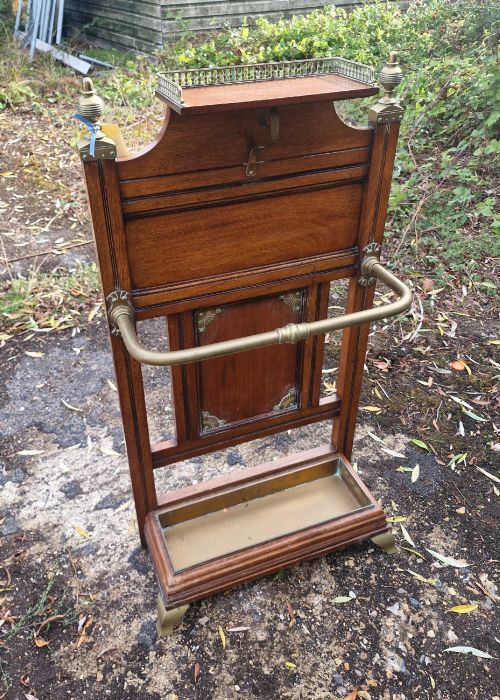
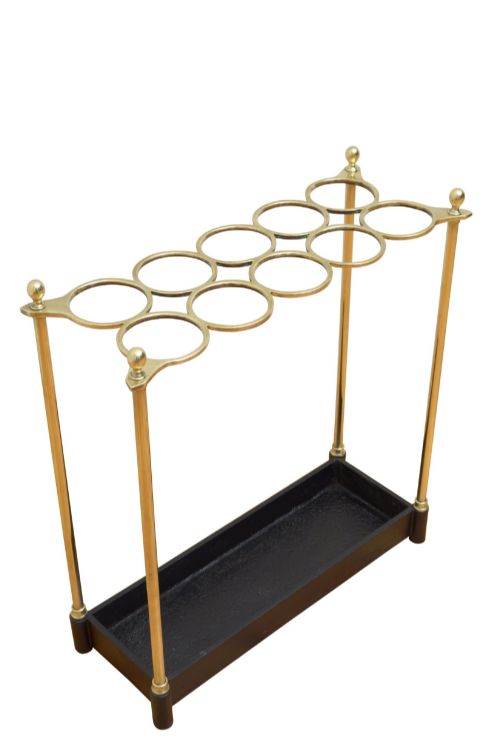
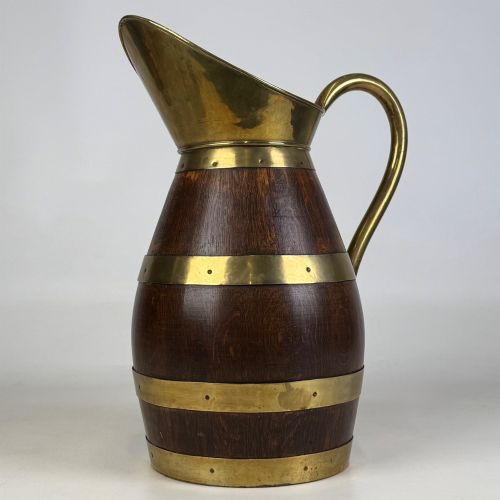
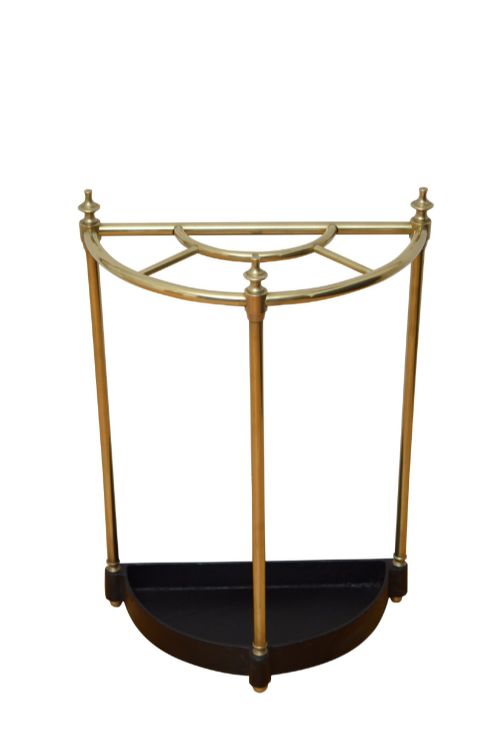
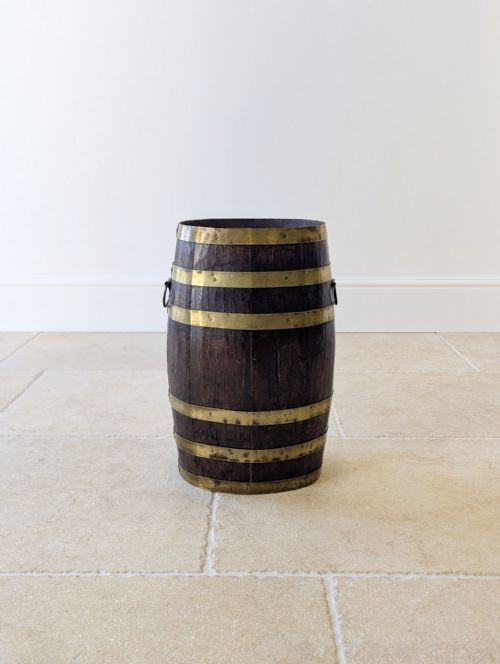
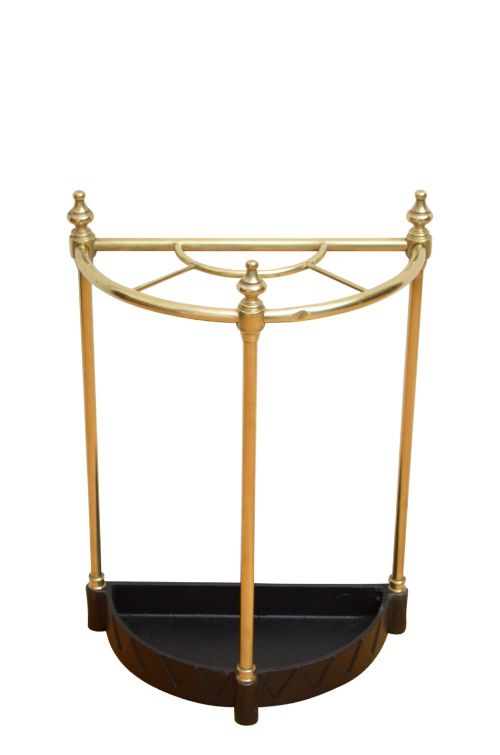
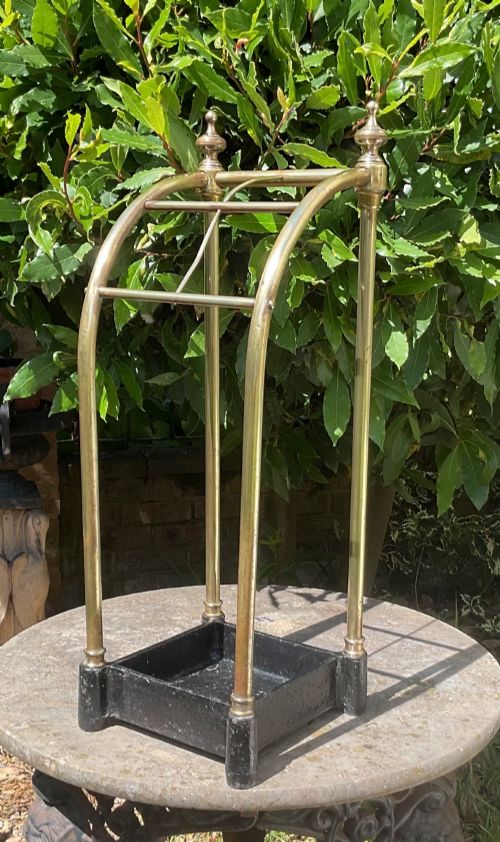
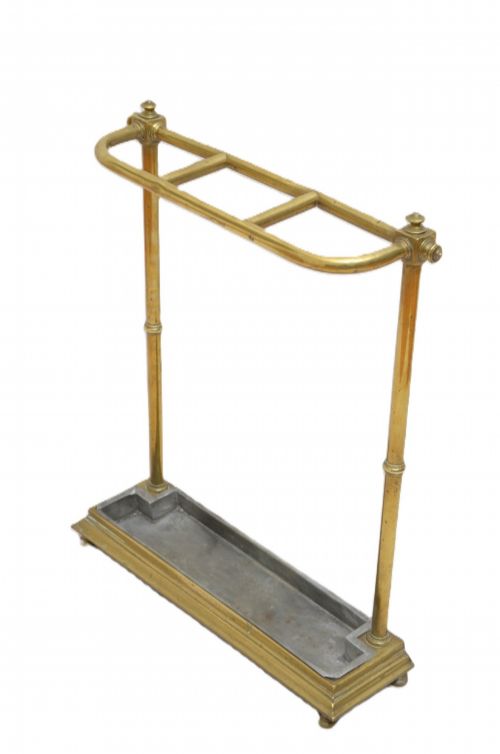
A brass hallway stick stand organises walking canes and wet umbrellas near an entrance. Buyers seeking this form encounter Victorian and Edwardian examples fashioned into half-moon or demi-lune shapes, alongside cylindrical barrel forms.
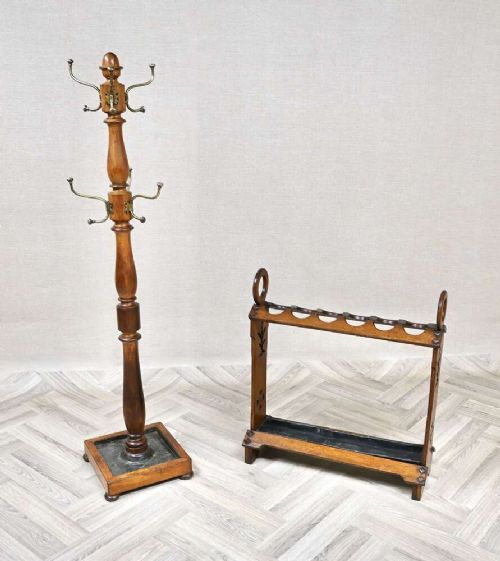
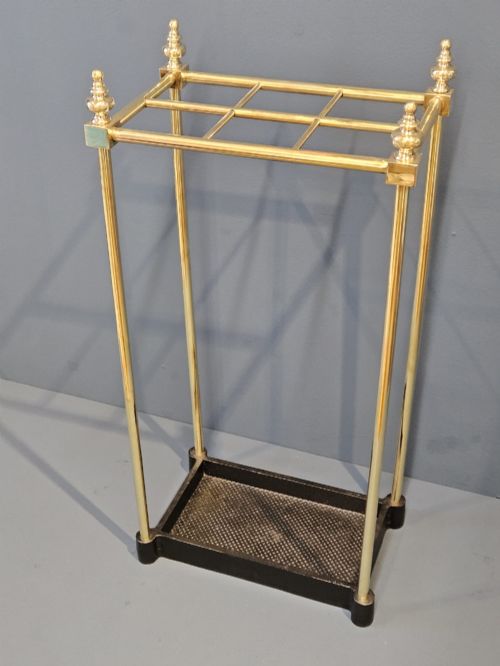
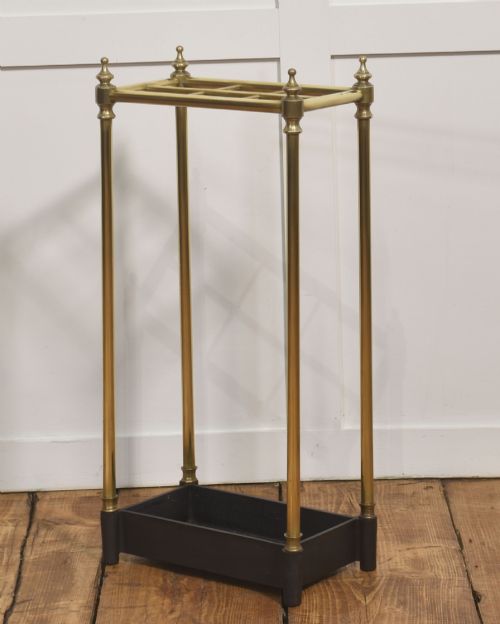
Many designs combine brass with cast iron bases or oak frames, while others present purely metal constructions with decorative ball finials or bun feet. These pieces originate primarily from English country houses and traditional workshops of the nineteenth and early twentieth centuries.
Materials and Techniques
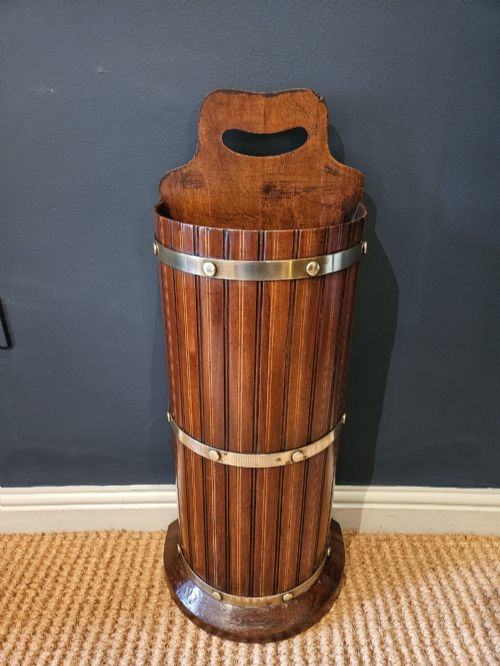
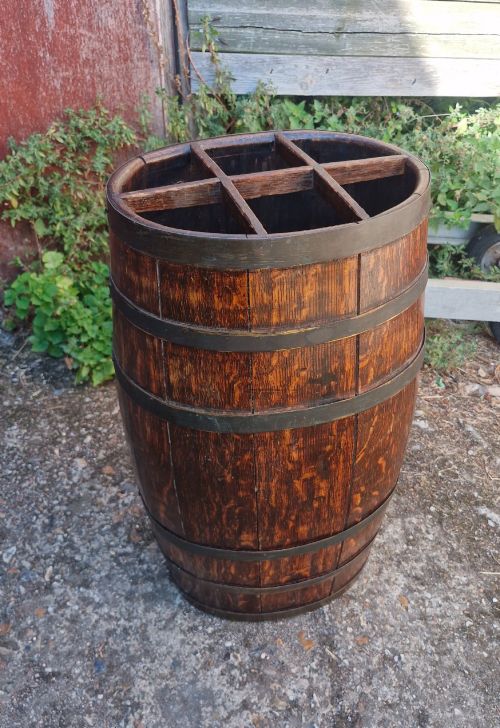
Maker construction relies heavily on sheet and cast brass combined with structural timber elements such as coopered oak or mahogany. Metal components utilise riveting and soldering, while wooden barrels employ brass hoops or bands to secure the staves.
Cast iron frequently forms the heavy base plates necessary to provide stability against tall walking sticks and dripping umbrellas. Drip trays fashioned from metal or ceramic sit beneath these structures to catch rainwater.
Brass Hallway Stick Stand Retail Price Guide 2026
Typical asking prices for brass hallway stick stand among the pieces listed under this phrase on Sellingantiques today, from the lower quarter to the upper quarter. They describe what is for sale here now, not the wider market.
Listings feature oak, mahogany, and cast iron combined with brass across Victorian and Edwardian periods.
Judgements of Quality
Quality rests upon the weight of the metal and the integrity of the joinery rather than surface polish alone. Heavier gauge brass and solid cast iron bases indicate superior durability compared to lighter stamped alternatives.
The precision of the cooperage on wooden barrel versions and the crispness of casting detail on decorative ironwork distinguish standard utility items from finer workshop pieces.
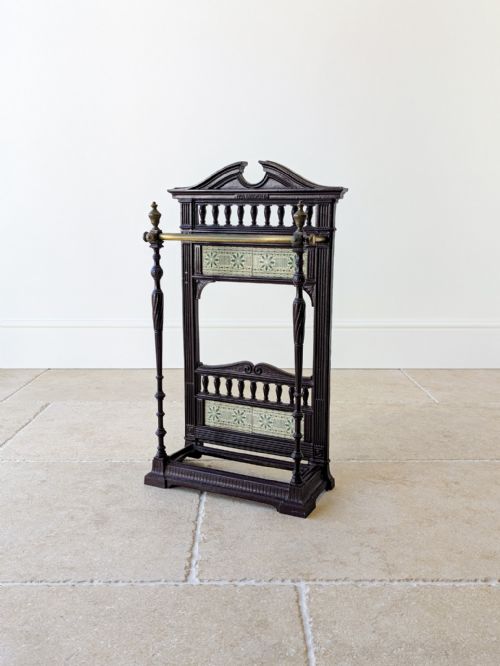
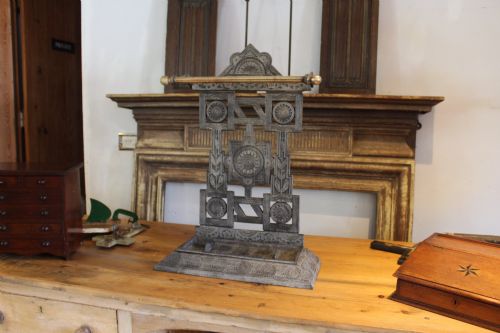
Coalbrookdale·Thomas Jeckyll
The Brass Hallway Stick Stand Glossary
- Demi-lune
- A half-moon shape designed to sit flat against a hallway wall and save floor space. This profile is common among metal umbrella racks.
- Coopered
- Built from wooden staves bound together with metal hoops, resembling a small barrel. This technique appears frequently in oak stick stands.
- Drip tray
- A removable metal or ceramic dish placed at the base to catch water from wet umbrellas. It protects hallway flooring from moisture.
- Finial
- A decorative ornamental terminal piece mounted at the top of the frame. These often take the form of brass balls or cast motifs.
Brass Hallway Stick Stand: Frequently Asked Questions
Where do you place a stick stand?
These pieces belong in an entrance hall or porch where wet weather gear and walking canes accumulate. Their compact footprints allow them to stand neatly against a wall without obstructing doorways.
Demi-lune shapes fit particularly well in narrow corridors by hugging the vertical surface while maintaining internal storage divisions.
How do you clean brass and oak?
Maintenance requires dusting the metal regularly with a soft cloth and avoiding harsh chemical abrasives that strip the aged finish. Oak sections benefit from occasional waxing to nourish the timber grain and protect against moisture.
Iron bases and drip trays should be checked periodically for trapped water to prevent surface corrosion.
Did Victorians use these for umbrellas?
Households during the nineteenth century relied upon these receptacles for both rain umbrellas and walking sticks. Canes were daily accessories for outdoor attire, making an organised rack essential near the front door.
Divided compartments kept different lengths and types of walking aids separated for easy selection.
How do you date a brass stand?
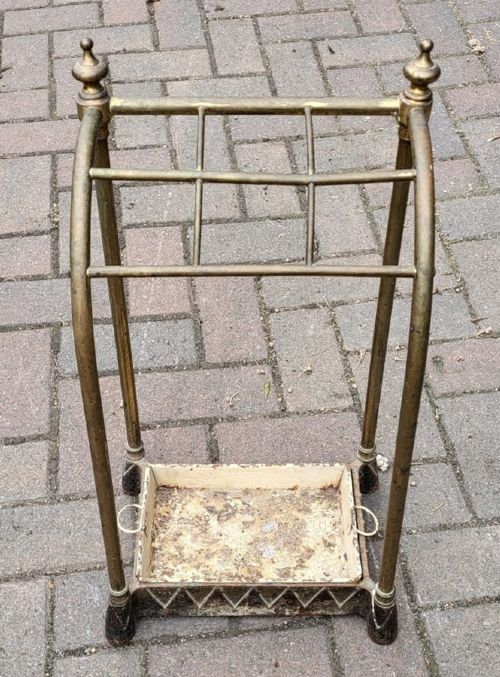
Stylistic clues such as Aesthetic Movement motifs or Edwardian dog-tooth trays point to specific decades of manufacture. Construction methods, including hand-beaten seams versus machine stamping, also indicate the period.
Heavy cast iron components combined with specific brass patination help distinguish nineteenth-century examples from later reproductions.