




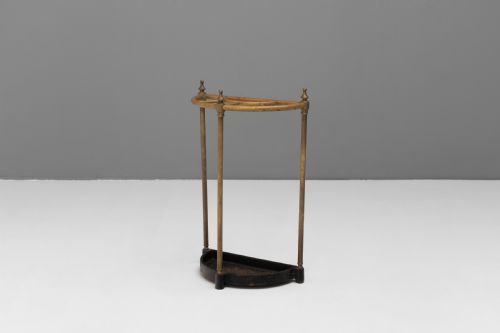
Brass Hallway Cane Rack
A brass hallway cane rack brings polished metal and daily utility to an entrance, keeping walking sticks and umbrellas orderly.
Brass Hallway Cane Rack
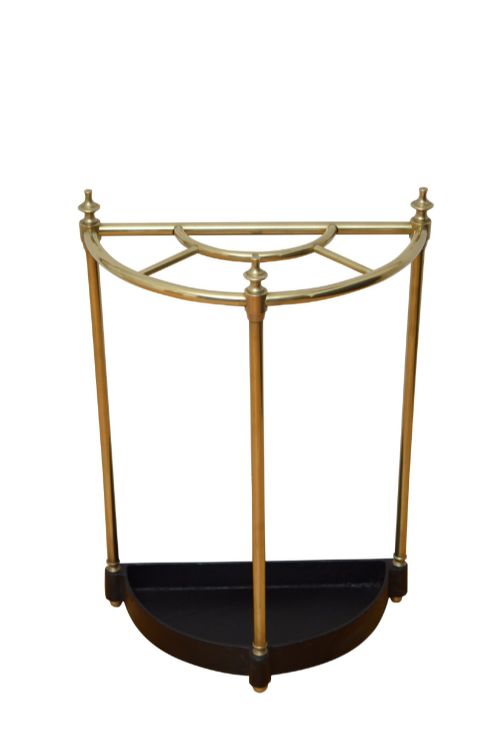
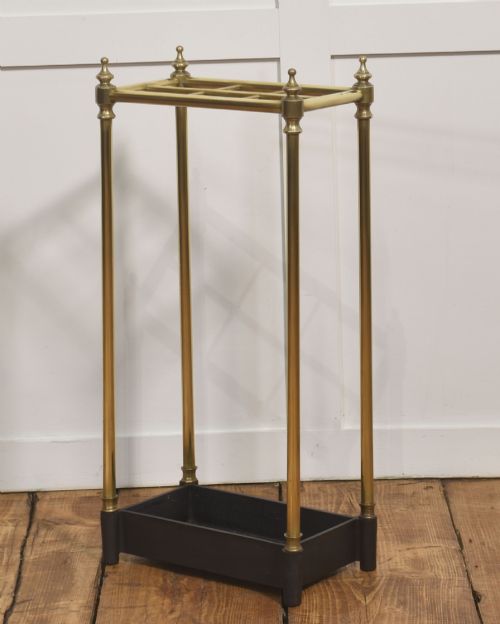
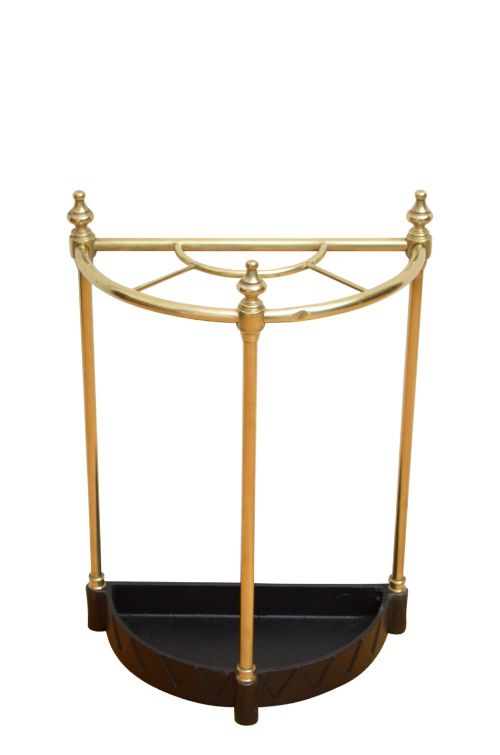
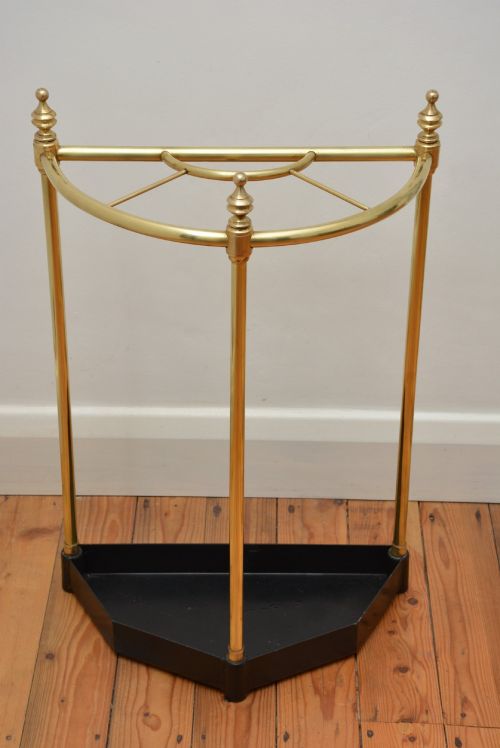
A brass hallway cane rack organises umbrellas and walking sticks in an entrance hall, appearing in various spatial configurations to suit different interiors. The most common format met on this page is the demi-lune or half-moon design, which fits flush against a wall.
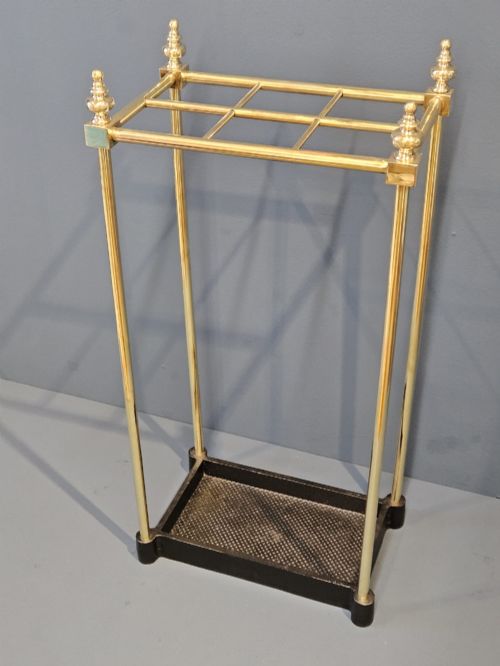
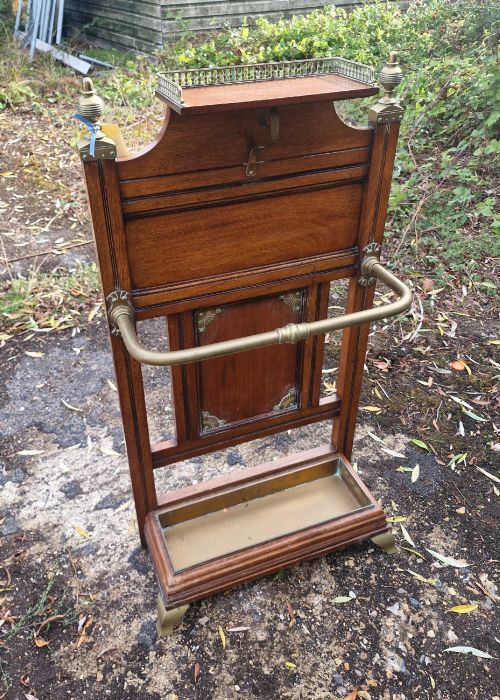
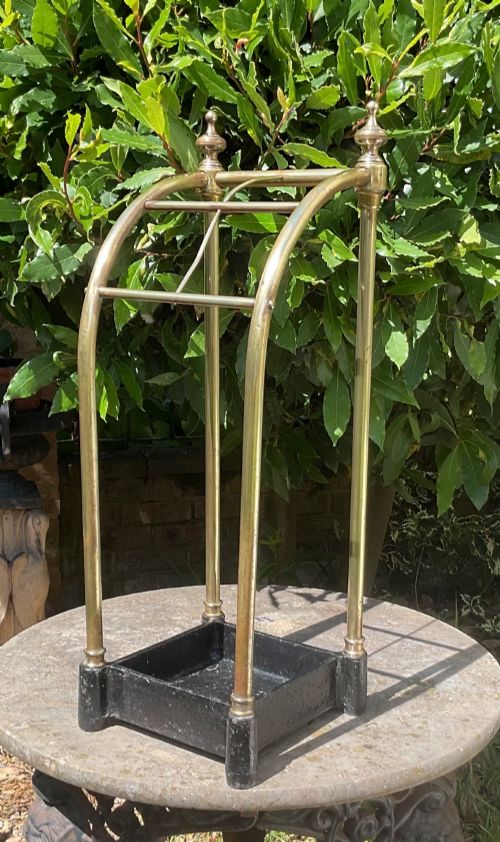
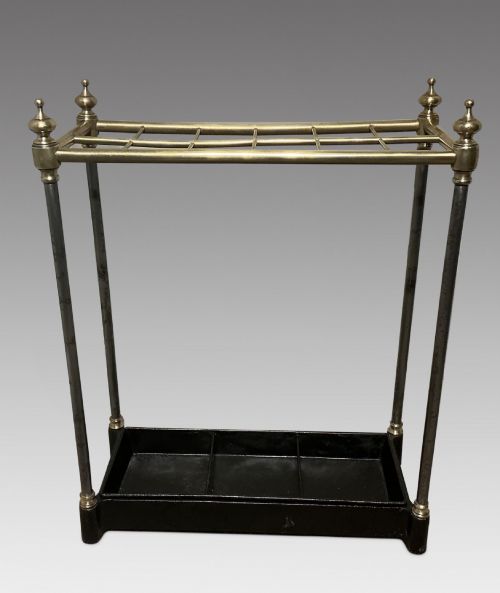
Pieces span the nineteenth century through the Edwardian period and into the twentieth century, reflecting Victorian and Edwardian domestic habits. Alongside standalone brass frames, designs frequently combine brass with cast iron bases or wooden structures in oak and mahogany.
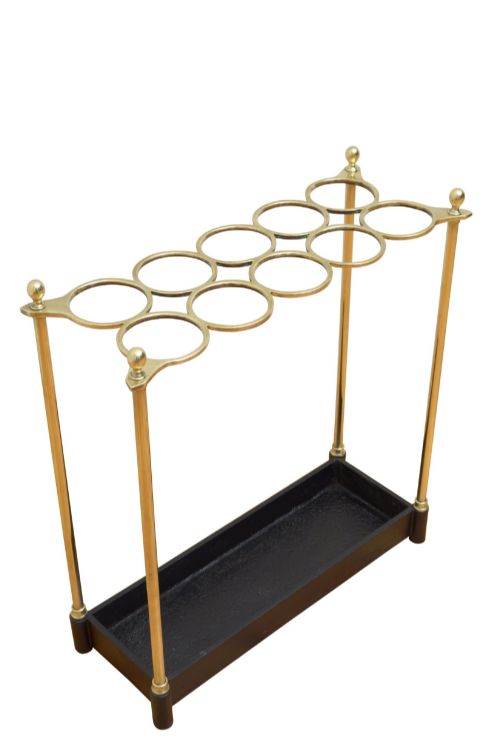
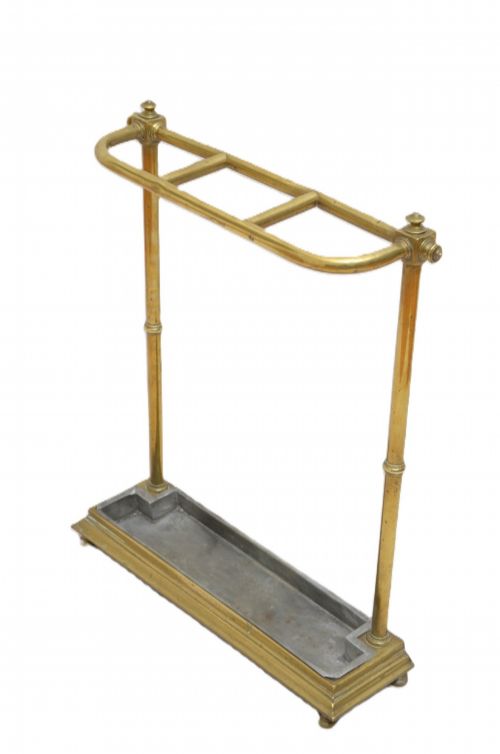
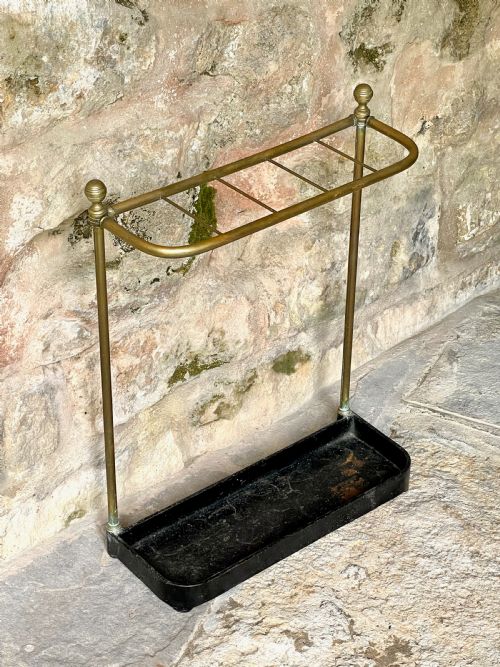
Originating in English homes, these hallway items vary from circular frameworks to corner stands and narrow umbrella loops. They serve the practical purpose of draining wet umbrellas while displaying gentlemanly walking canes.
Distinction in Craft
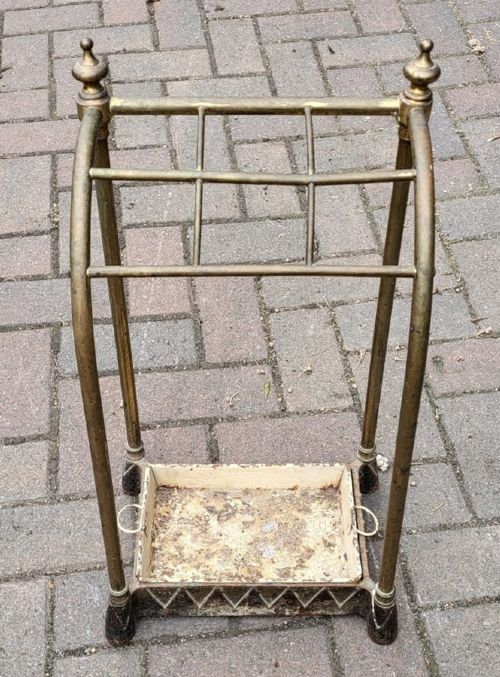
Quality rests on the substance of the metalwork and the rigidity of the frame, where heavier cast iron bases and substantial brass sections outlast lighter tubular assemblies. Finer examples display deliberate decorative details like ball finials, dog tooth trays, and clean castings rather than plain pressed sheet metal.
The integrity of the structural joints and the presence of the original drip tray separate everyday pieces from more considered hallway furnishings. Design ambition also elevates certain items, notably those touching the Art Nouveau or Aesthetic Movement styles.
Brass Hallway Cane Rack Retail Price Guide 2026
Typical asking prices for brass hallway cane rack among the pieces listed under this phrase on Sellingantiques today, from the lower quarter to the upper quarter. They describe what is for sale here now, not the wider market.
Listings feature oak, mahogany, cast iron, and copper alongside primary brass construction across Victorian and Edwardian periods.
Shoolbred
The Brass Hallway Cane Rack Glossary
- Demi-lune
- A half-moon shape designed to stand flat against a hallway wall. This profile conserves floor space in narrow corridors.
- Drip tray
- A removable pan placed at the base to catch water from wet umbrellas. These are frequently cast iron or ceramic.
- Stick loop
- The upper metal ring divider that keeps walking canes and umbrellas separated. It prevents leaning sticks from tangling.
- Ball finial
- A spherical decorative terminal capping the upright posts of a metal frame. They add weight and finish to the top corners.
- Dog tooth tray
- A base tray featuring a serrated or notched decorative border pattern. This detail appears on specific Edwardian examples.
Brass Hallway Cane Rack: Frequently Asked Questions
Where should I place a brass hallway cane rack?
Position the rack near the main entrance door where guests and residents drop off walking sticks and wet umbrellas upon entering the house.
Demi-lune and corner designs work particularly well in narrow hallways because they sit flush against the wall and save valuable floor space.
How do I protect my floor from wet umbrellas?
Most traditional stands include an integrated metal or ceramic drip tray positioned directly beneath the umbrella loops.
Ensure the tray is present inside the base to catch moisture and protect timber or tiled hallway flooring from water damage.
Are these stands suitable for modern walking sticks?
The upper loop dividers and circular frames accommodate standard walking canes, shooting sticks, and modern umbrella handles alike.
The spacing is designed for traditional gentlemanly accessories, which share very similar dimensions with contemporary umbrellas.
How do I date a Victorian brass stick stand?
Victorian and Edwardian dating relies on stylistic clues like heavy cast iron bases, Aesthetic Movement motifs, and Art Nouveau curves.
Records show pieces spanning from the mid-nineteenth century through the Edwardian era, often featuring stamped registry numbers or characteristic maker details.