

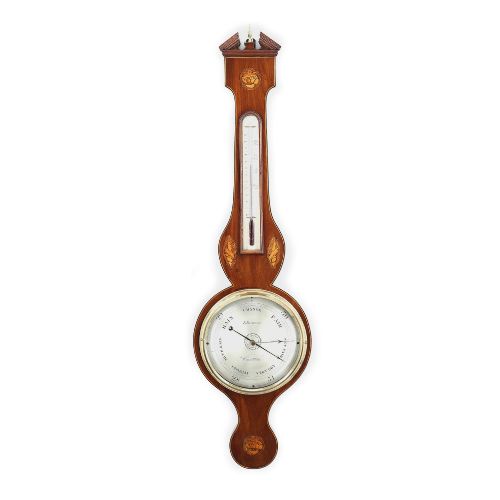


Brass Glass Barometer
These brass glass barometer examples combine scientific utility with cabinet-maker timber framing, offering a reliable atmospheric guide for the home.
Brass Glass Barometer
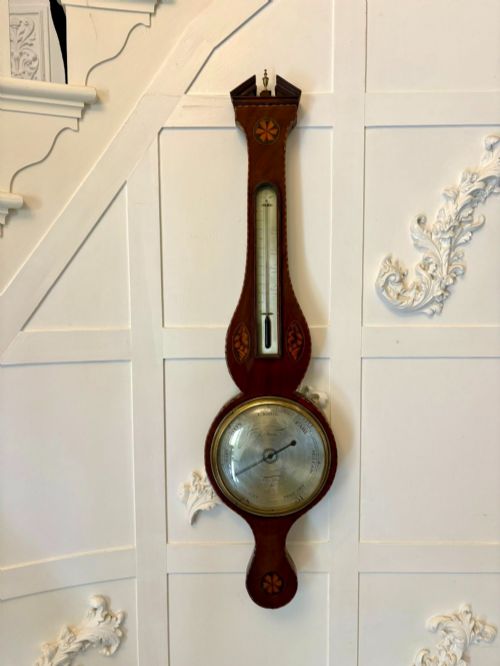
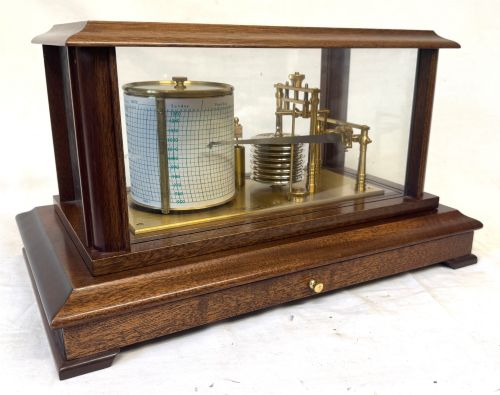
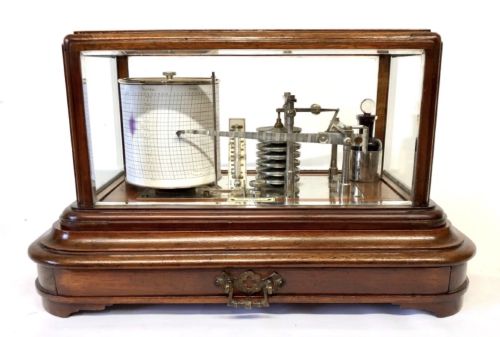
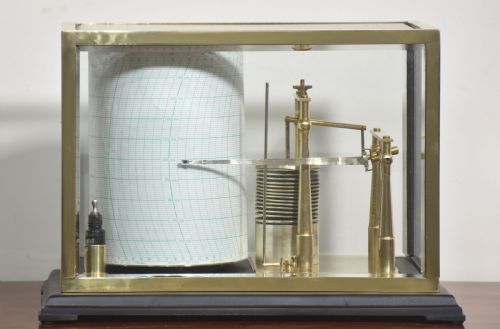
A brass glass barometer integrates heavy metal bezels and dials with clear viewing panes, housed within timber frames that range from George III stick forms to Victorian wall instruments and multi-glass recording barographs.
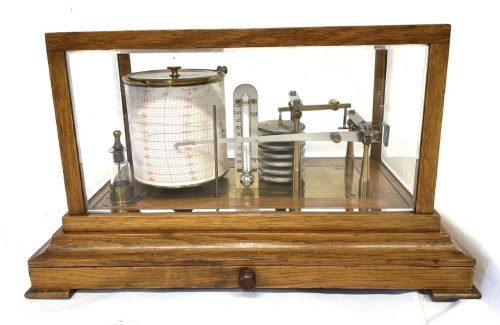
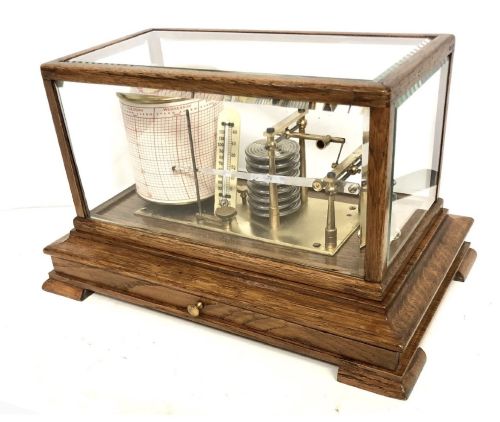
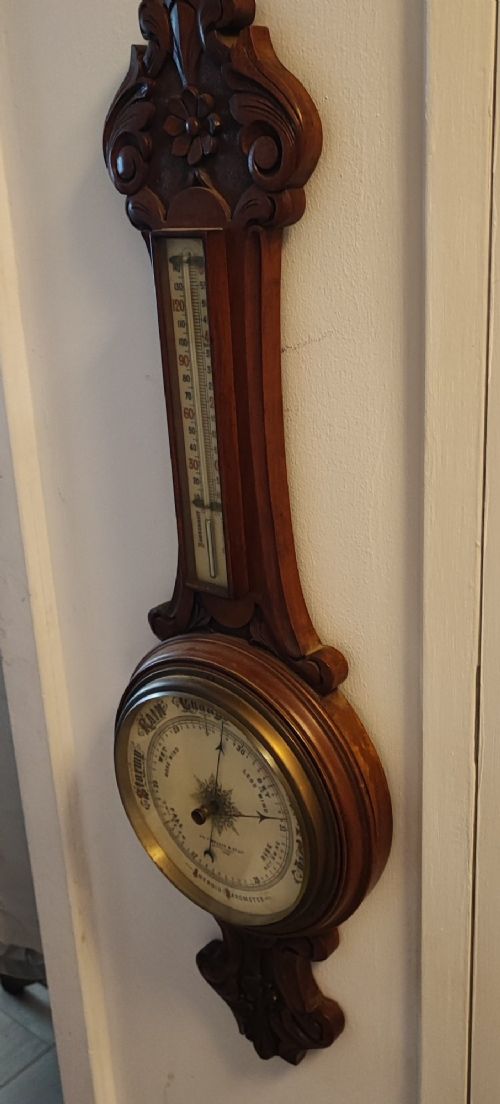
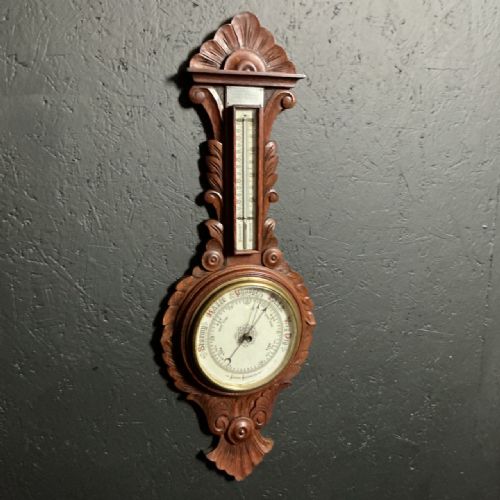
The versions most frequently met on this page belong to the Victorian and Edwardian periods, often taking the form of oak or mahogany cased barographs featuring bevelled glass covers and chart drawers, alongside classic banjo and stick barometers.
Originating as practical maritime and domestic scientific tools, these instruments present a blend of utilitarian engineering and decorative cabinet-making spanning the eighteenth, nineteenth and early twentieth centuries.
Materials and Construction
Visible metallic components rely heavily on polished brass for bezels, fittings and dials, paired with silvered metal plates for engraved pressure readings.
Transparent protection is provided by thick glass panels and bevelled panes, which allow visibility of the internal levers, aneroid capsules or mercury columns without exposing them to dust.
Several Victorian oak barometers display elaborate carved birds perched near the thermometer, proving that nineteenth-century meteorology had a distinct sense of theatre.
Judging Quality and Craftsmanship
The distinction between standard examples and top-tier pieces rests on the crispness of the timber carving, the precision of the brass casting, and the refinement of the paper or silvered dials.
Superior instruments display crisp mechanical execution from named makers or retailers, paired with robust cabinet-making such as neatly fitted five-glass oak or mahogany cases rather than plain secondary woods.
Russell Norwich·Gaupp and Co·Short and Mason·Elliott Brothers·Negretti and Zambra·Baines Harrogate
The Brass Glass Barometer Glossary
- Aneroid barometer
- A type of barometer that measures atmospheric pressure through the expansion and contraction of a flexible sealed metal capsule, without using liquid mercury.
- Barograph
- A self-recording meteorological instrument that draws a continuous pressure reading onto a rotating drum holding a paper chart.
- Stick barometer
- A tall, slender wall instrument enclosing a vertical glass tube filled with mercury, designed to show direct barometric height.
- Banjo barometer
- A domestic wall barometer shaped roughly like a banjo, typically featuring a hygrometer, thermometer and circular dial below a dampening trunk.
- Bevelled glass
- Glass panes finished with an angled edge ground down around the perimeter, fitted into instrument cases to catch the light.
Brass Glass Barometer: Frequently Asked Questions
How do I read a barograph chart?
The rotating drum holds a paper chart marked with pressure lines and days of the week, traced by a pen arm connected to the aneroid mechanism.
Rising lines indicate improving weather, while falling traces point towards approaching low pressure and unsettled conditions.
Where should I hang a wall barometer?
Choose a stable interior wall away from direct sunlight, central heating radiators, and heavy draughts that could skew the temperature reading.
Ensure the mounting surface is secure enough to support the weight of the timber case and heavy brass bezel.
What is the difference between mercury and aneroid?
Mercury barometers rely on a column of liquid metal balancing against atmospheric pressure in a glass tube, representing traditional scientific design.
Aneroid instruments utilise internal metal vacuum chambers linked to mechanical levers, offering a safer mechanism for domestic wall hanging.
How do I care for the brass and glass?
Dust the bevelled glass panes gently with a dry microfibre cloth and avoid using harsh liquid cleaners that might seep into the timber case.
Leave the polished brass bezels to age naturally, or apply a gentle non-abrasive metal polish very sparingly if required.