




Brass Fusee Library Clock
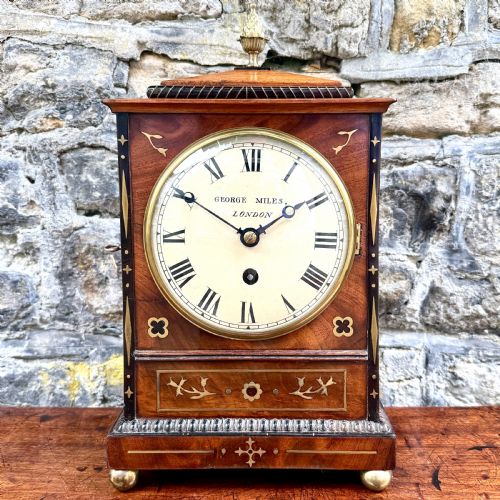
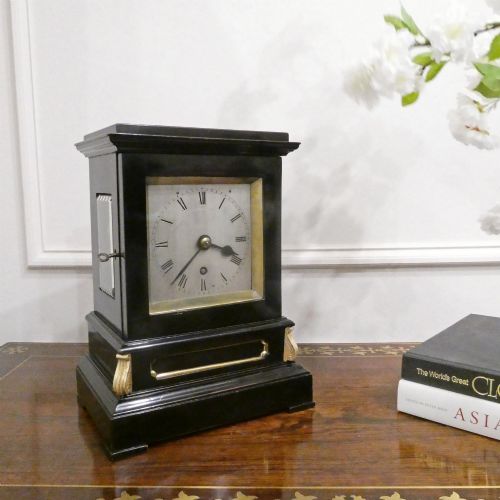
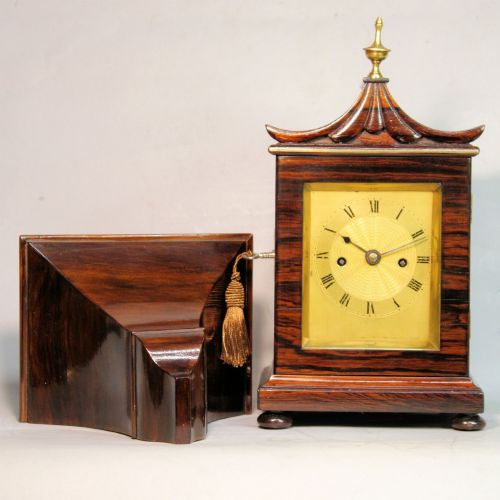
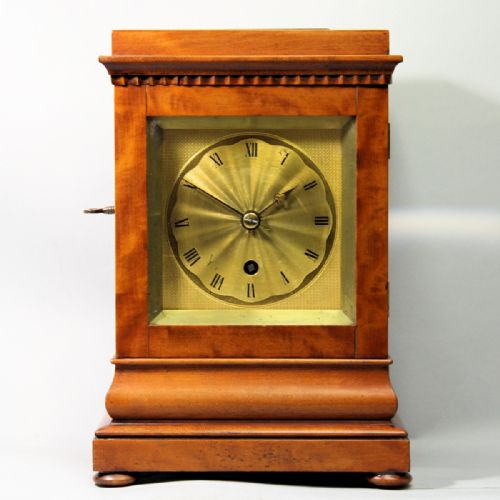
These brass fusee library clocks are substantial timepieces housed in fine timber and glass cases, prized for their reliable chain movements and desk or mantel presence.
Brass Fusee Library Clock
A brass fusee library clock combines a precision chain-driven movement with a sturdy timber case designed for desks, tables, and mantelpieces. When you search for a brass fusee library clock, you encounter pieces originating from the Regency period through the late nineteenth century.
The forms span straightforward mantel clocks to elaborate bracket clocks and five-glass designs. Most examples encountered here date from the nineteenth century, including specific pieces from the Regency era up to eighteen ninety.
London makers dominate the origins recorded in these listings, bringing city craftsmanship to domestic timekeeping. Buyers find variations in case timbers, ranging from rich mahogany and rosewood to ebonised wood and satinwood.
How they were made
Makers housed the mechanical movements within brass and glass frameworks, often set inside cabinetry built from mahogany, rosewood, satinwood, or ebonised wood. Steel components work within the movement alongside the brass plates and wheels, while enamel provides the dial surface for clear reading.
The fusee movement itself utilises a conical pulley and a fine chain to equalise the pull of the mainspring as it winds down, ensuring steady timekeeping. Dials frequently feature engine turned gilded detailing that catches the light behind bevelled glass panes.
Materials recorded across these listings include brass, glass, mahogany, rosewood, satinwood, ebonised wood, steel, and enamel.
What varies in quality
The crispness of the brass casting, the delicacy of the engine turning on the dial, and the selection of timber veneers distinguish standard production from superior work. Original matching wall brackets or exceptional miniature proportions also set particular pieces apart.
Webster Cornhill London·McCabe London·Plumbly and Tupman London·Barraud and Lunds·John Massey London·Leith of London
The Brass Fusee Library Clock Glossary
- Fusee
- A conical pulley connected to the mainspring by a chain, designed to maintain even tension and equal force as the spring unwinds. This mechanism improves the accuracy of the timepiece throughout its running cycle.
- Bracket clock
- A portable clock traditionally placed on a shelf or bracket, though many sit directly on tables and mantelpieces. These cases often feature substantial timber construction with carrying handles or architectural details.
- Engine turned
- A decorative pattern machined precisely into metal surfaces using a specialised lathe. This technique creates geometric textures on clock dials, adding visual depth behind the glass.
- Timepiece
- A clock that tells the time without incorporating a striking mechanism for hours or quarters. These movements focus purely on the going train.
Brass Fusee Library Clock: Frequently Asked Questions
What is a single fusee movement?
A single fusee movement drives the timekeeping train via a chain wound around a conical drum. It maintains constant power to the escapement for improved accuracy.
This system requires regular winding and professional servicing to keep the chain and spring operating smoothly.
Where were these clocks placed?
These clocks were designed for desks, tables, libraries, and mantelpieces where a reliable and portable timepiece was needed. Some pieces also included optional wall brackets for hanging.
Their compact scale allowed them to be moved easily between rooms within a large house.
How do I identify a Regency period clock?
Regency clocks typically feature clean architectural lines, brass inlay, and rich mahogany or rosewood cases. They reflect the neoclassical tastes of the early nineteenth century.
Proportions tend to be balanced and restrained, avoiding the heavier ornamentation seen in later Victorian designs.