



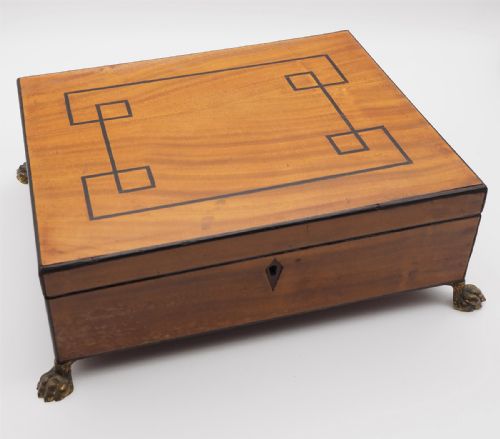


Brass Footed Tea Caddy
A brass footed tea caddy is a small lidded chest raised on tiny metal feet, designed to store valuable loose leaves.
Brass Footed Tea Caddy
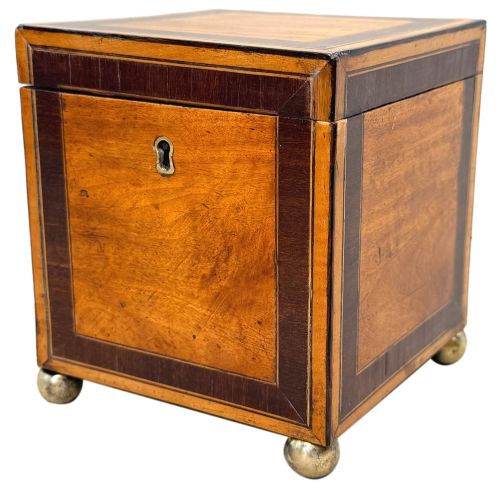
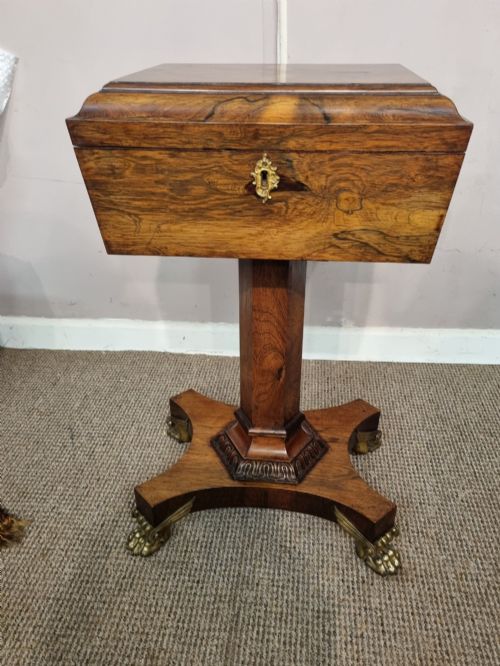
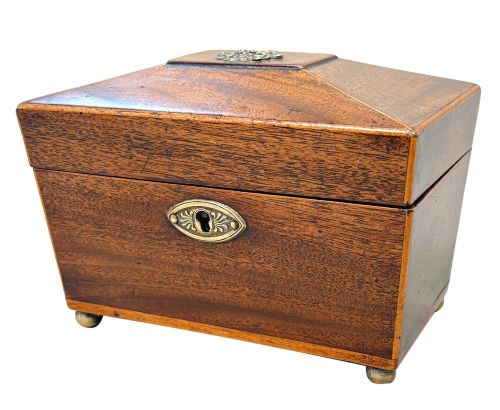
When you search for a brass footed tea caddy, you are looking at containers made during the Georgian, Regency, and Victorian periods. These pieces take the form of sarcophagus shapes, oblong tapered boxes, and freestanding teapoys.
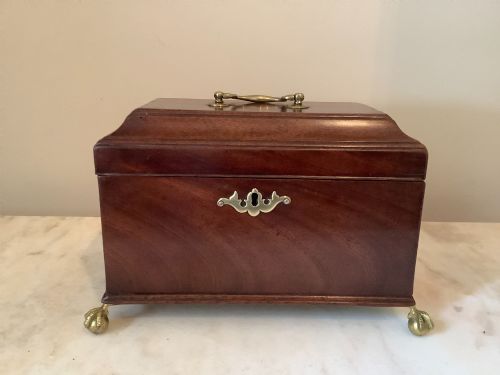
The versions you are most likely to meet on this page date from the eighteenth and nineteenth centuries, constructed from rich timbers like mahogany and rosewood. Many feature small brass feet that elevate the wooden body from the surface of a table.
Makers shaped these vessels to sit in the formal rooms of grand houses, where tea was locked away safely from household servants. Inside, you often find original compartments or mixing bowls that survived centuries of daily use.
How they were made
Cabinetmakers constructed these caddies using dense tropical hardwoods such as mahogany and rosewood, often applying fine veneers over a secondary wood. They incorporated contrasting stringing and inlay from boxwood and ebony to define the edges and geometric panels.
Metalwork played a structural and decorative role, with cast brass feet screwed directly to the base of the box. Artisans also utilised tortoiseshell and gilt metal to cover exterior surfaces, securing delicate inlays with animal protein glues.
Brass Footed Tea Caddy Retail Price Guide 2026
Typical asking prices for brass footed tea caddy among the pieces listed under this phrase on Sellingantiques today, from the lower quarter to the upper quarter. They describe what is for sale here now, not the wider market.
What varies in quality
The standard of timber selection separates simpler boxes from superior examples. Master cabinetmakers chose rosewood and mahogany with intense, highly figured grain patterns that caught the candlelight in a formal parlour.
Detailing in the secondary materials dictates the grade of the piece. Crispness in the brass feet, precision in the ebony inlay, and intact interior fittings reveal the time an artisan spent at the workbench.
The Brass Footed Tea Caddy Glossary
- Teapoy
- A freestanding piece of furniture carrying a tea caddy on a pillar or legs. These often stand higher than table-top caddies.
- Sarcophagus
- A box shape featuring a domed lid and canted sides, mimicking ancient stone tombs. Cabinetmakers favoured this profile during the Regency era.
- Veneer
- A thin layer of choice wood applied over a stable carcase timber. This technique allowed workshops to display striking grain patterns.
- Stringing
- Narrow inlaid lines of contrasting timber used to edge panels and borders. It frames the primary wood of the lid.
Brass Footed Tea Caddy: Frequently Asked Questions
What is a brass footed tea caddy?
These pieces are small wooden chests created to hold and preserve dry tea leaves when the commodity was exceptionally costly. They sit on raised metal mounts to protect fine furniture surfaces.
Craftsmen built them in various timber species, incorporating compartments inside for different grades of tea.
How were they used originally?
Households kept dried leaves under lock and key in the parlour or drawing room to prevent theft by staff. The mistress of the house typically held the key and doled out the leaves herself.
Inside, twin canisters or a central mixing bowl held the black and green teas before infusion.
How do I date a tea caddy?
Look to the overall silhouette, timber choice, and construction methods visible inside the box. Regency examples often display rosewood and brass inlay, while earlier eighteenth-century pieces favour solid mahogany.
Secondary woods inside the carcass and the style of the hinge also help narrow down the decade of manufacture.
How should I care for one?
Keep these items away from direct sunlight and strong sources of artificial heat to prevent the wood and veneer from shrinking and cracking. Dust them gently with a dry, soft cloth without applying modern liquid polishes.
Maintain a stable room humidity to protect old animal glues and delicate inlays.