
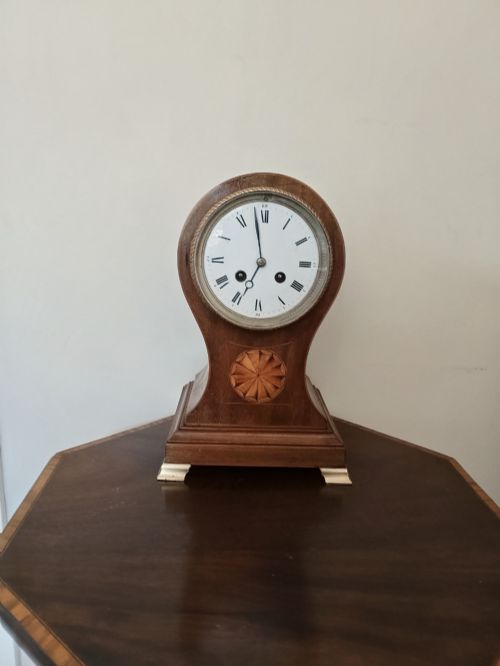



Brass Footed Table Clock
These brass footed table clock pieces bring traditional horology and striking timber cases into domestic interiors.
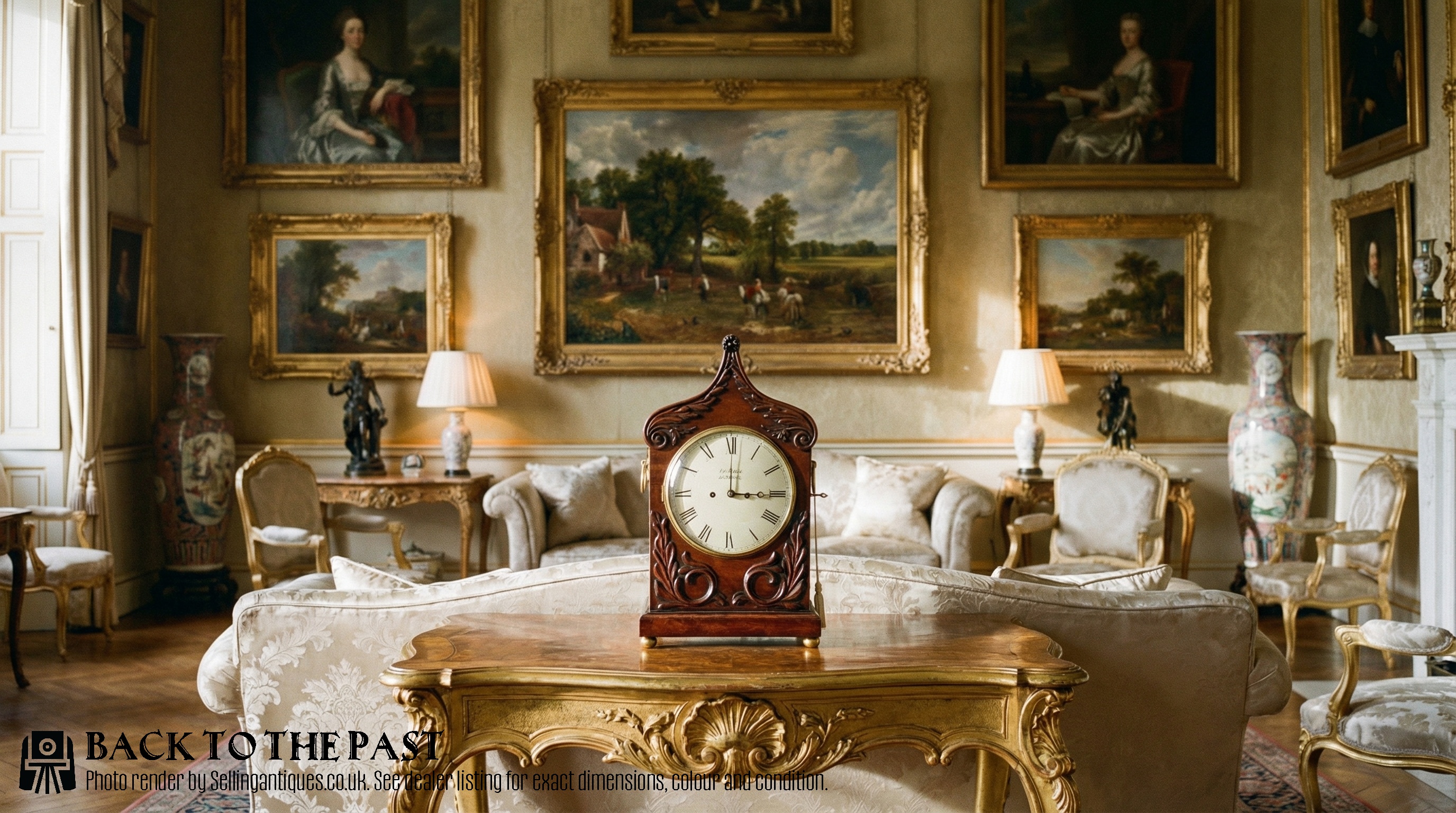
Brass Footed Table Clock
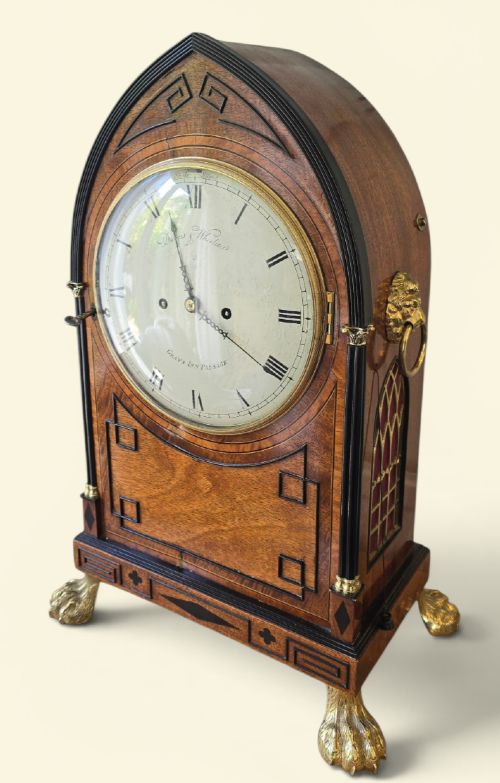
A brass footed table clock sits upon small metallic feet, elevating the timber case above the surface of a desk, bracket shelf, or mantelpiece. Buyers searching for a brass footed table clock encounter items ranging from compact library timepieces to striking bracket clocks.
The selections span the Georgian, Regency, Victorian, and Edwardian periods, reflecting evolving British and French taste. Mahogany remains the dominant timber housing these movements, often enriched with ebony veneers, satinwood inlay, or glass panels.
How they were made
Cabinetmakers constructed the architectural and bracket cases from dense hardwoods like mahogany, rosewood, and ebony. Skilled hands applied delicate satinwood inlay and fitted bevelled glass panels to protect the delicate dials.
Clockmakers fitted fusee movements and striking mechanisms within these wooden housings, pairing them with enamelled dials. Cast brass components formed the supporting feet and decorative mounts.
Several makers operated out of narrow London passages, timing their bracket clocks to keep the capital running.
What varies in quality
The refinement of the cabinetwork dictates much of the distinction between ordinary and superior pieces. Crisp inlay, well-figured timber grain, and substantial brass casting elevate an example above standard production.
The reputation of the maker inscribed upon the dial or backplate holds considerable weight. Signed works by London makers command attention through superior mechanical execution and finishing.
Bush of London·Desbois and Wheeler·L. Vick of Stroud·Hyde of Salisbury·Louis Recordon·Joseph Jump of London·Leplastrier of London·Plumbly and Tupman
The Brass Footed Table Clock Glossary
- Fusee
- A conical pulley used in older clock movements to maintain even driving tension as the mainspring unwinds. This mechanism ensures more accurate timekeeping throughout the power reserve.
- Bracket clock
- A portable clock originally designed to sit on a wall bracket to distribute sound effectively throughout a room. Later examples continued the name despite sitting directly on tables or mantelpieces.
- Lancet-top
- A case shape featuring a pointed, arched top resembling a gothic lancet window. This silhouette became particularly popular during the Regency and Georgian periods.
- Break arch
- A dial or case top configuration featuring a central rise flanked by curved shoulders. It provides a distinctive architectural framing for the chapter ring.
Brass Footed Table Clock: Frequently Asked Questions
Where should I place a table clock?
These clocks sit comfortably on side tables, desks, or dedicated wall brackets where their architectural cases can be appreciated.
Ensure the placement protects the timber and glass from direct sunlight and sudden temperature changes.
What timber cases are most common?
Mahogany forms the primary housing for the majority of these pieces, frequently enhanced with ebony or satinwood details.
Alternative woods like rosewood appear in select Regency and nineteenth-century examples.
How do I identify a fusee movement?
A fusee movement utilises a conical drum connected to the spring barrel via a fine brass chain or cord.
This mechanism compensates for the decreasing power of the mainspring as it unwinds.