
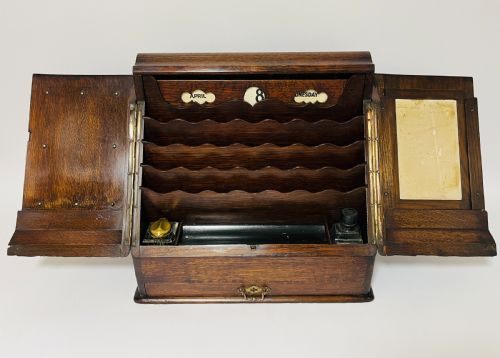
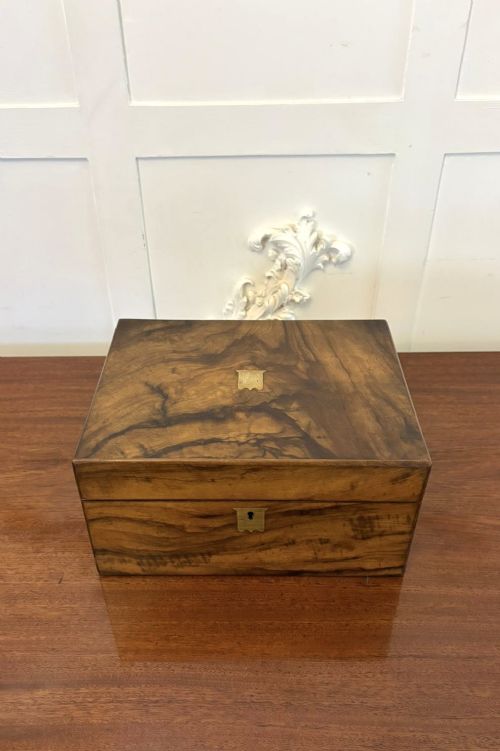


Brass Fitted Writing Slope
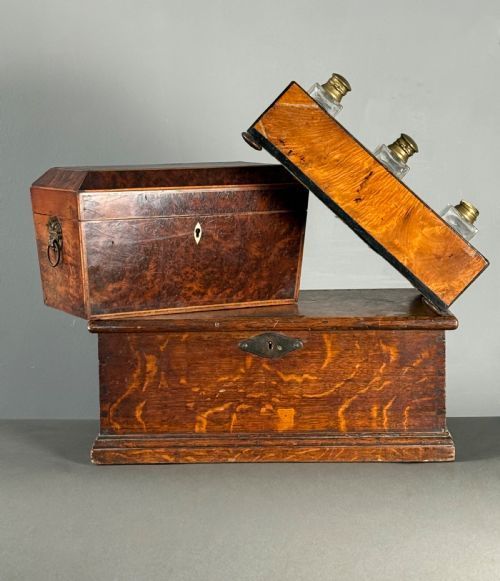
A brass fitted writing slope is a portable desk designed for travel, combining tactile timber and robust metalwork to create a compact writing station.
Brass Fitted Writing Slope
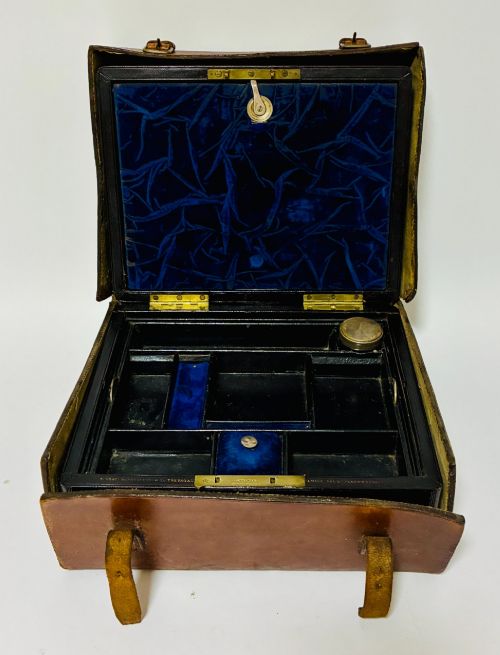
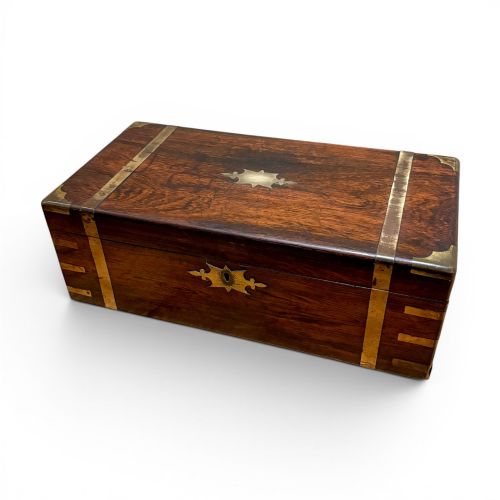
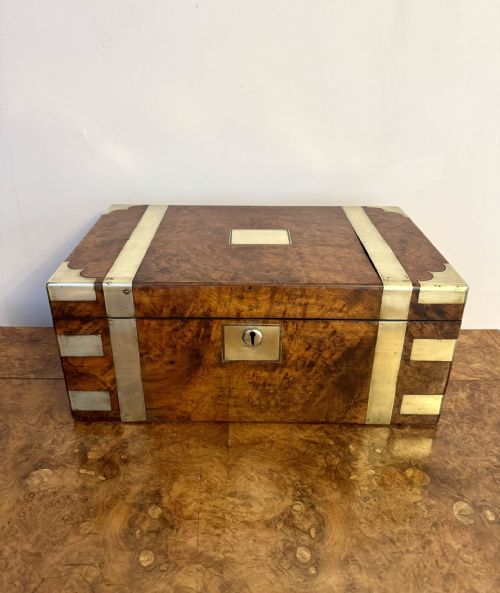
A brass fitted writing slope is a portable desk designed for travel and correspondence, folding closed to protect ink and paper during journeys. The version most commonly met on this page is the Victorian or nineteenth century box, constructed with hinged leaves that open to form a slanted writing surface lined with leather.
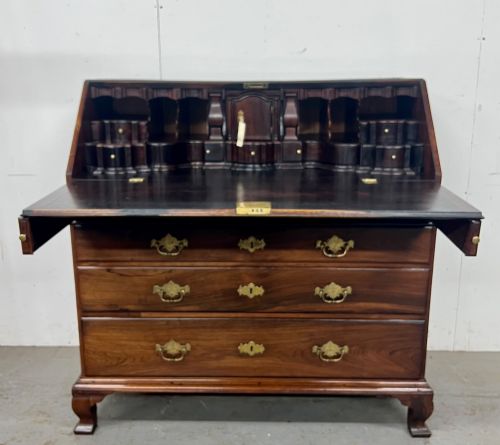
These pieces appear across several periods, stretching from the eighteenth century and the Georgian era through to the early twentieth century. Alongside standard writing slopes, the selection includes related forms such as writing boxes, deed boxes, dressing cases, and stationery cabinets.
Origins and styles vary widely, featuring regional variations like Anglo-Indian padouk boxes, Portuguese rosewood bureaux, and military campaign pieces. Makers utilised dense hardwoods built to withstand the rigours of travel while incorporating secure compartments and secret drawers for valuables.
Materials and construction
The foundation of these pieces relies on sturdy timbers such as mahogany, walnut, burr walnut, rosewood, oak, and padouk, often chosen for their rich grain and durability. Craftspeople built the carcases to house internal fittings securely, employing precise joinery to handle the stresses of movement.
Object types on this page include writing slopes, deed boxes, dressing cases, stationery cabinets, and miniature desks.
Evaluating craftsmanship and detail
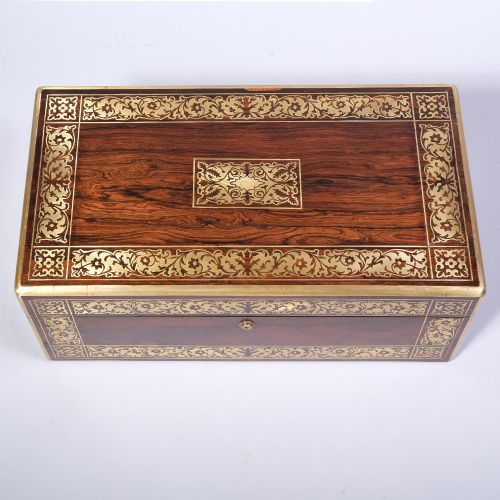
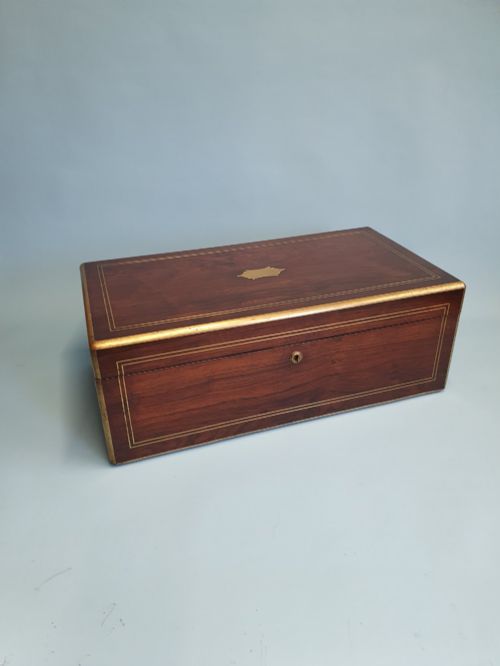
Quality in a brass fitted writing slope is shown through the selection of timber veneers, such as figured walnut or rosewood, and the precision of the brass inlay. Superior examples display tight mitres on the brass corner mounts and seamless integration of secret drawers within the fitted interior.
The presence of original working keys, maker signatures, or specialised campaign additions like candle sconces and sovereign sections elevates the standing of a piece. Better construction ensures that hinges, folding flaps, and locking systems operate smoothly after decades of use.
F. West·Marsh & Tatham
The Brass Fitted Writing Slope Glossary
- Writing slope
- A portable box with a slanted lid that folds down to provide a flat or angled writing surface. It typically opens to reveal compartments for pens, inkwells, and paper.
- Campaign style
- Furniture designed for military officers on active service, characterised by portability, brass corner guards, and flush-fitting handles for easy packing.
- Secret drawers
- Concealed compartments built into the interior of a box, often accessed by removing dummy panels or secondary trays to hide sensitive documents.
- Escutcheon
- A protective metal plate surrounding a keyhole, usually made of brass on these pieces to prevent the surrounding wood from splitting.
- Bramah lock
- A high-security cylindrical lock patented by Joseph Bramah, frequently found on better-quality nineteenth-century boxes and writing slopes.
Brass Fitted Writing Slope: Frequently Asked Questions
What is a brass fitted writing slope?
A brass fitted writing slope is a portable wooden box designed to fold open into a slanted desk for writing letters while travelling. They house dedicated compartments for inkwells, pens, and paper.
These pieces were essential for correspondence before the widespread availability of fixed stationery desks. The brass fittings protected the corners and edges from damage during transport.
How do you open secret drawers?
Secret drawers are usually concealed behind removable panels, false bottoms, or sliding partitions within the interior stationery compartments. Finding them often requires removing the inkwells or lifting an internal divider.
Craftspeople designed these hidden spaces to secure valuables, money, and private letters. Operating them relies on discovering the correct sequence of hidden catches.
Were these used in the military?
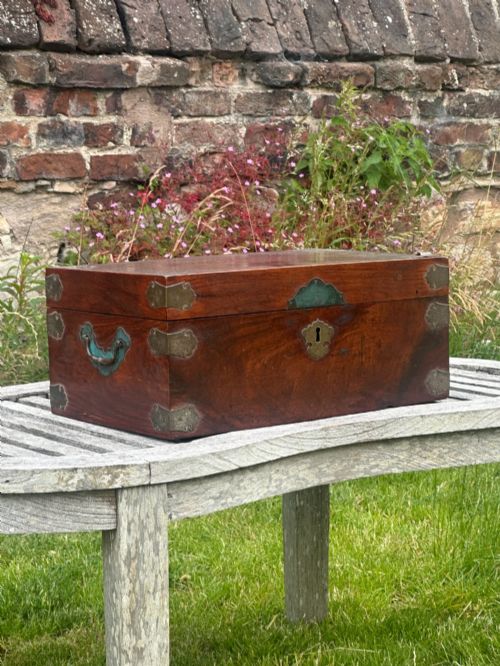
Many writing slopes were built in a campaign style specifically for officers on active military service. These versions utilised robust timbers and flush brass mountings to withstand rough journeys.
Some military examples include specialised additions such as candle sconces for writing in the dark and secure sovereign sections for coinage. Camphor wood and padouk were often chosen for their resistance to humidity.
How do I date a writing slope?
Dating relies on observing the timber choices, construction techniques, and brass hardware styles typical of different eras. Georgian and eighteenth-century pieces often feature simpler mahogany or rosewood surfaces with understated brass stringing.
Victorian and later nineteenth-century examples frequently display heavier brass corner straps, burr walnut veneers, and complex internal stationery arrangements. Documented makers' stamps or original locks can also narrow down the manufacturing period.