


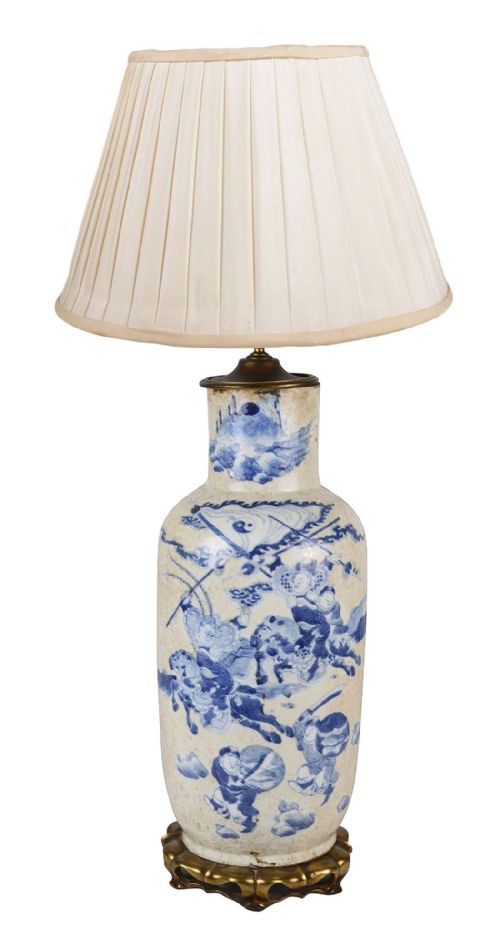


Brass Fitted Table Lamp
A brass fitted table lamp brings character to a room through period metalwork and converted vessels.
Brass Fitted Table Lamp
A brass fitted table lamp combines period metal mounts with varied lamp bodies, ranging from converted porcelain vases to carved timber bases. These pieces span the nineteenth century through the Edwardian era, reflecting diverse global influences from Chinese Qing dynasty porcelain to Japanese Meiji ceramics.
Assessing quality in period lamps
Quality rests upon the execution of the brass mounts and the integrity of the primary body, whether hand-painted porcelain or polished marble. Finer examples display crisp casting in the metal fittings and harmonious integration between the original antique vessel and the added hardware.
The origin of the ceramic or wooden body significantly shapes the standing of the piece, particularly where signed or documented makers like Royal Worcester, Royal Doulton, and Sitzendorf are involved. Balanced proportions and careful conversion methods separate standard utility lighting from superior decorative examples.
Listings feature materials spanning brass, porcelain, oak, marble, and lacquered wood across nineteenth-century and Edwardian periods.
The Brass Fitted Table Lamp Glossary
- Chinoiserie
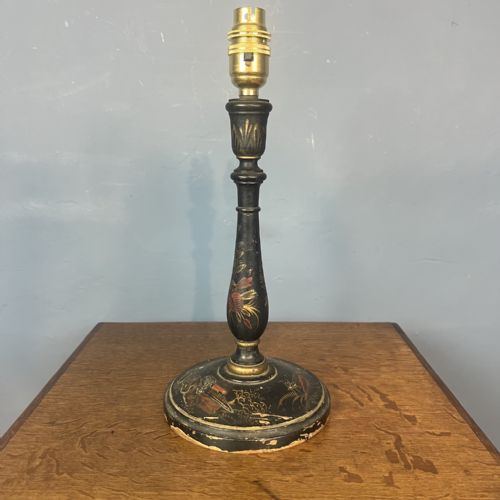
- European artistic interpretation of Chinese and East Asian decorative motifs, prevalent in Edwardian lacquerwork and painted lamp bases.
- Ewer
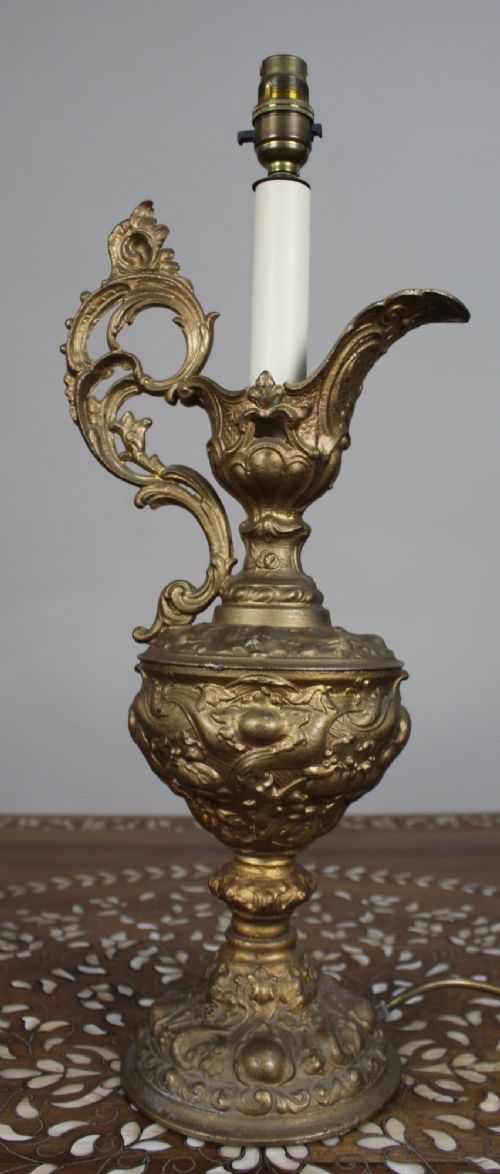
- A large jug with a wide spout, frequently adapted from a pouring vessel into a decorative lamp base using metal mounts.
- Imari
- Japanese porcelain decorated in underglaze blue and iron red, often utilised for nineteenth-century lamp conversions.
- Cloisonné
- Enamelling technique where metal wire creates compartments on a vessel surface, visible on nineteenth-century Chinese lamp bases.
- Meiji
- Japanese historical period spanning the late nineteenth and early twentieth centuries, known for distinctive export ceramics.
Brass Fitted Table Lamp: Frequently Asked Questions
What periods do these lamps cover?
The pieces span the nineteenth century, Victorian era, and the Edwardian period up to around nineteen ten. Makers utilised diverse materials and historical styles during these decades.
Buyers encounter everything from early nineteenth-century French Empire bases to Edwardian chinoiserie lacquer designs.
Are these lamps converted antiques?
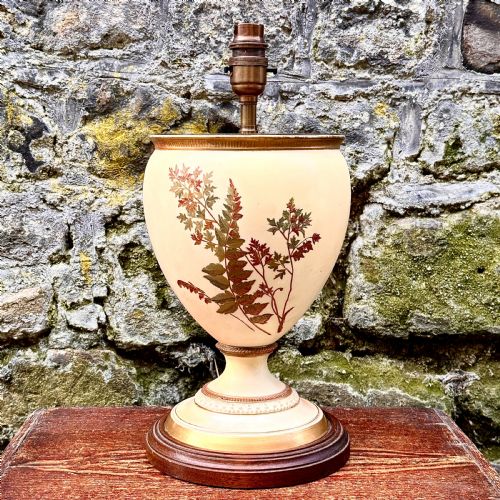
Many examples began life as vases, tobacco jars, or ewers before being converted into functional lighting with brass mounts. This practice gives antique ceramics and metalwork a second life.
Converted pieces retain their original decorative surfaces while incorporating period electrical fittings.
How do I identify Edwardian styles?
Edwardian pieces often feature lighter painted finishes, chinoiserie lacquerwork, or refined brass light fittings dating around nineteen ten. These designs reflect a shift away from heavier Victorian aesthetics.
Details such as painted floral motifs and subtle gilt metal accents help distinguish the period.
What materials make up the bases?
Bases incorporate porcelain, oak, lacquered wood, polished marble, and gilt metal alongside the characteristic brass fittings. Asian ceramics and European pottery feature prominently among the vessel bodies.
Textured fabrics and painted wood provide further variety across the available lighting forms.