

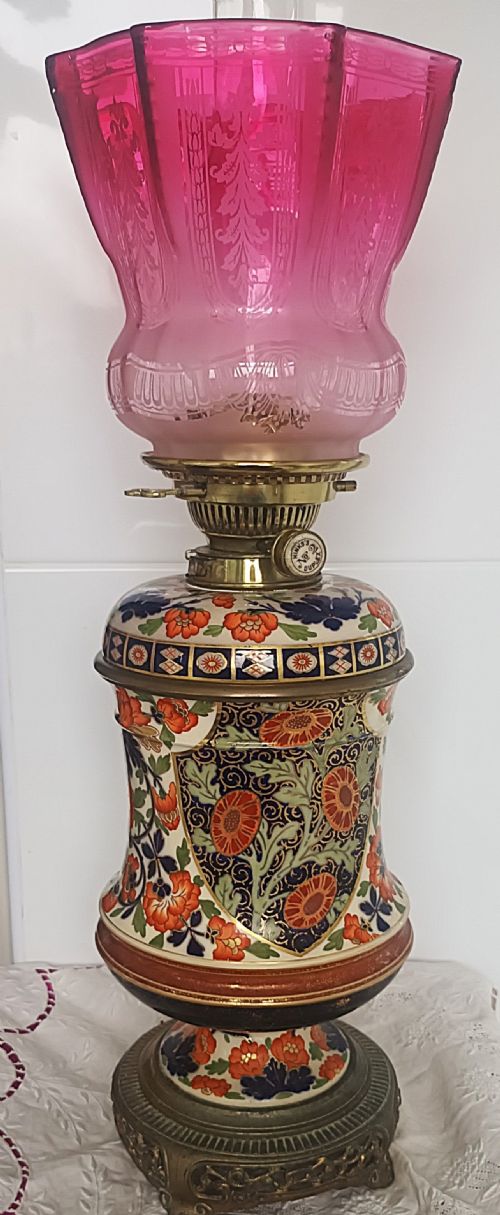


Floral Ceramic Table Lamp
A floral ceramic table lamp brings soft colour and botanical detail into a room, spanning Victorian porcelain, Chinese export porcelain, and later glazed earthenwares.
Floral Ceramic Table Lamp
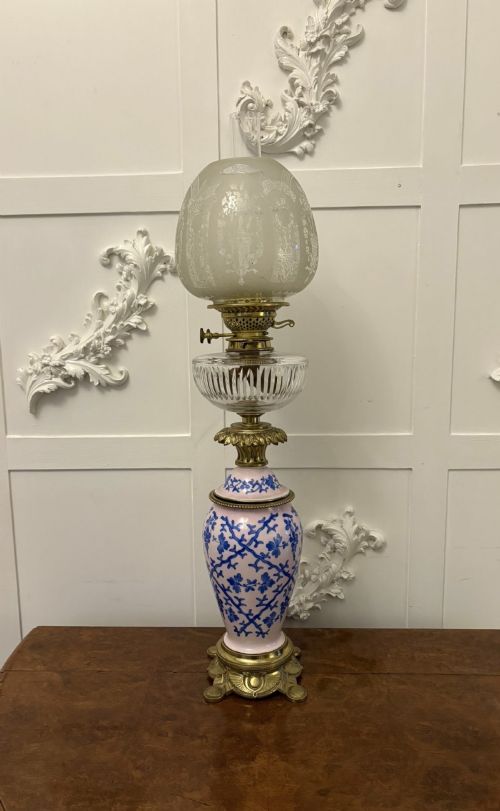
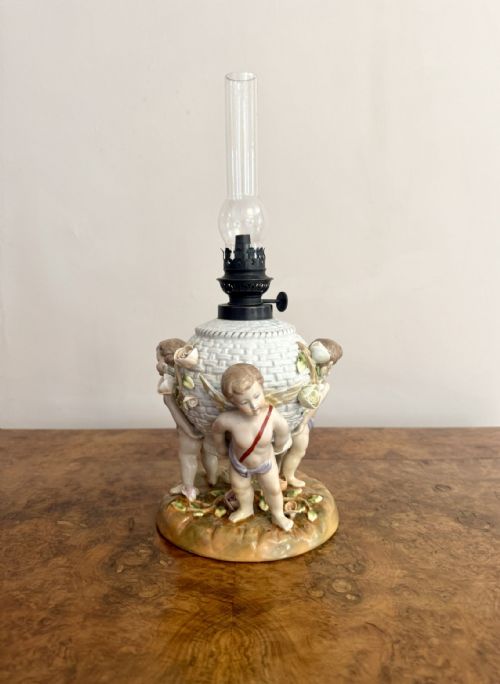
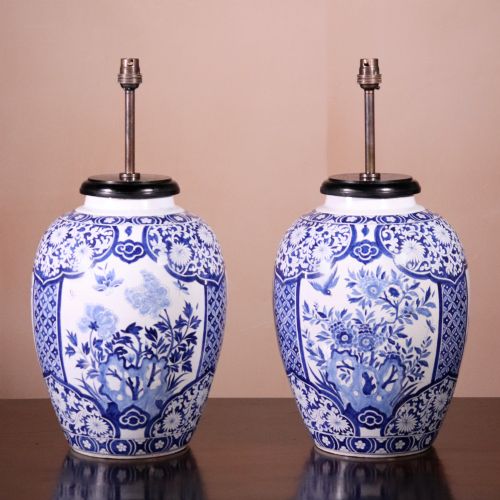
A floral ceramic table lamp covers a range of lighting fixtures built from glazed pottery, porcelain, and converted vessels. When you search for a floral ceramic table lamp, you meet nineteenth-century oil lamps, converted ginger jars, and porcelain vases mounted for electricity.
The pieces on this page span the Victorian and Edwardian eras through to the Art Deco period, alongside Chinese and Japanese export ceramics mounted in Europe. Many examples started life as oil lamps or decorative vases before receiving electrical fittings later.
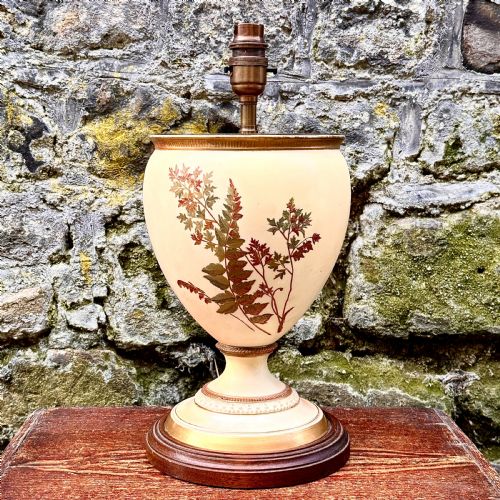
English factories such as Royal Worcester and Denby Ware sit alongside continental porcelain works and Asian export pieces. The floral decoration takes the form of hand-painted botanical sprays, blue and white underglaze motifs, and raised enamel work.
How they were made
Makers shaped ceramic bodies on the potter's wheel or cast them in moulds, applying hand-painted or transfer-printed floral decoration before high-temperature firing. Porcelain and earthenware received translucent or opaque glazes to seal the surface and protect the pigments.
Metal mounts in brass, gilt bronze, and ormolu secure the ceramic bodies to weighted bases, often incorporating collar mounts and burner assemblies left over from earlier oil lamps. Silk and fabric shades complete the construction on specific surviving pairs.
Listings feature ceramics spanning the eighteenth to the twentieth centuries, incorporating porcelain, earthenware, and cast brass elements.
What varies in quality
The standard of painting defines the better examples, where hand-drawn botanical details and delicate enamelling display clear artist control rather than mechanical repetition. Crisp definition in the porcelain potting and smooth application of the glaze separate superior pieces from standard production ware.
The quality of the metal mounts and structural hardware dictates the overall integrity of the piece. Heavy cast brass or chased gilt bronze mounts fitted securely to the ceramic body indicate a higher grade of manufacture than light, stamped metal fittings.
Royal Worcester·Sitzendorf·Denby Ware·Hinks·Taylor Tunnicliff·Samson
The Floral Ceramic Table Lamp Glossary
- Famille Rose
- A palette of Chinese porcelain enamels dominated by opaque pink or rose colours, introduced in the eighteenth century and widely copied later. It frequently depicts floral and botanical scenes.
- Famille Verte
- A group of Chinese porcelain wares characterised by a predominant green enamel palette, often combined with iron red and blue underglaze. The designs commonly feature flowers, foliage, and natural subjects.
- Ormolu
- Gilt bronze ornamentation applied to furniture and ceramics, created by fusing a gold-mercury amalgam onto hammered bronze. It provides decorative mounts for nineteenth-century vases and lamps.
- Pâte-sur-Pâte
- A method of ceramic decoration where successive layers of liquid clay slip are built up on a coloured body to create a low relief cameo effect. It requires great skill from the artist to achieve tonal shading.
- Baluster
- A vase form with a rounded body that tapers towards a narrow neck and base, resembling the architectural baluster of a stair rail. It forms the foundation for many ceramic lamp bodies.
Floral Ceramic Table Lamp: Frequently Asked Questions
How do I date a ceramic lamp?
Dating relies on the style of the ceramic body, factory backstamps, and the construction of the metal mounts and collar assemblies.
Nineteenth-century pieces often retain oil lamp mechanisms or heavy bronze mounts, whereas twentieth-century examples show simpler electrical fittings.
Can I replace the shade safely?
Replacement shades in silk or fabric match the traditional appearance of these fixtures, provided the fitting matches the harp or shade carrier.
Choose proportions that balance the weight and height of the ceramic base without overpowering the painted floral design.
How should I clean the ceramic body?
Dust the surface regularly with a soft, dry cloth to prevent dirt from settling into textured enamel or gilt details.
Avoid abrasive cleaners or chemical solvents that might damage hand-painted floral glazes or vintage metallic finishes.