

Brass Fireside Seat
A brass fireside seat brings structural metalwork and comfortable upholstery together around the hearth.
Brass Fireside Seat
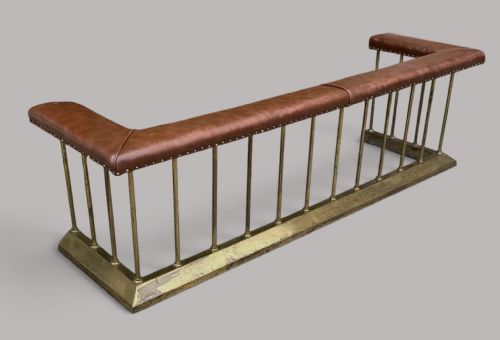
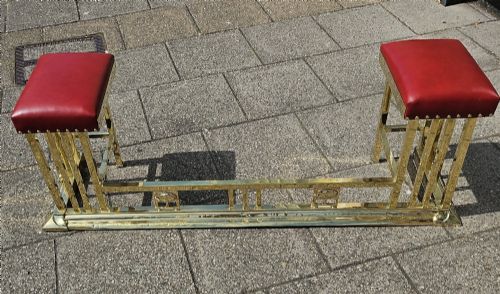
A brass fireside seat forms a practical and decorative addition to the hearth, combining metal frameworks with upholstered seating surfaces. These pieces frequently appear in the record as club fenders and fireside benches dating from the Victorian and Edwardian periods.
The materials span sturdy brass structures paired with leather, fabric, and velvet upholstery over hardwood frames of mahogany, walnut, and oak. Such combinations reflect traditional English country house interiors where warmth and durability mattered equally.
How they were made
Makers constructed the primary frames using brass alongside hardwoods like mahogany, walnut, and oak to ensure structural integrity around the heat of a fireplace. Tubular or cast brass components form the characteristic low surrounding rails, which often feature cushioned top surfaces.
Upholstery techniques involved traditional stuffing materials covered in durable leather, velvet, or woven fabric, sometimes finished with button-backed detailing. The union of polished metal and hide required precise joinery and metalworking skills to withstand heavy daily use by the hearth.
Listings for a brass fireside seat span the Victorian, Edwardian, and 1920s periods, incorporating brass, mahogany, leather, and velvet.
What varies in quality
Quality rests upon the weight and gauge of the brass used in the fender framework, alongside the density of the underlying timber frame. Finer examples display substantial cast components and heavier metal sections rather than thin hollow tubing.
The grade of the leather or upholstery fabric dictates the tactile richness of the piece, with mature tan leather and deep buttoning showing superior craftsmanship. Original patination on the brass surfaces and intact structural joints separate standard examples from finer workshops.
Whytock and Reid·Howard and Sons·SF Cullen·Hampton and Sons
The Brass Fireside Seat Glossary
- Club Fender
- A low metal frame surrounding a hearth, featuring upholstered corner seats or continuous top cushions. This form allows people to sit close to the fire while keeping drafts away from the floor.
- Fireside Bench
- A long seating form designed specifically for placement in front of an open fireplace. They utilise robust wooden frames combined with metal or upholstered elements.
- Button Back
- An upholstery method where depressions are formed in the padding by stitches or buttons pulled tight to the frame. This technique secures the internal stuffing and creates a distinct geometric pattern.
- Patina
- The surface sheen and colour acquired by materials like brass, leather, and wood through age and handling. This gradual change reveals the history of the object.
- Hardwood
- Timber derived from broad-leaved deciduous trees such as mahogany, walnut, and oak. These dense woods provide the essential strength needed for antique seating frames.
Brass Fireside Seat: Frequently Asked Questions
What is a brass fireside seat used for?
These pieces provide a low seating position directly around the hearth, placing people near the warmth of the fire.
They also serve to contain ash and sparks while defining the perimeter of the fireplace area in traditional rooms.
How do I identify a Victorian brass fireside seat?
Victorian examples typically show heavier cast brass components and substantial wooden frames beneath leather or fabric upholstery.
Look for period construction methods and materials such as mahogany, walnut, and heavy brass tubing.
Are these seats comfortable for daily use?
The presence of padded leather or velvet cushions over sturdy frames makes them suitable for regular sitting by the hearth.
Many incorporate supportive button-backed upholstery and generous seat depths designed for long periods of resting.
How should I clean the brass work?
Gentle dusting with a dry cloth helps maintain the metal without stripping away the historical surface finish.
Avoid harsh chemical polishes that remove the natural aged character of antique brass.