


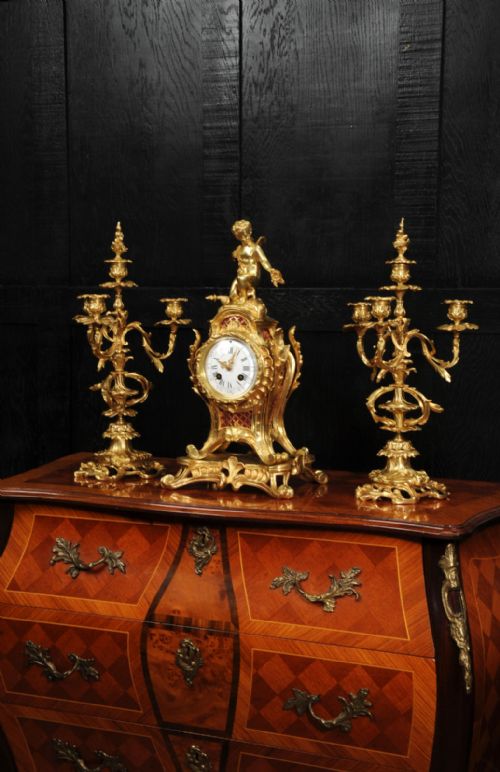


Brass Finial Mantel Clock
A brass finial mantel clock sits proudly on the hearth or bracket shelf, bringing precise movement and classical form into the room.

Brass Finial Mantel Clock
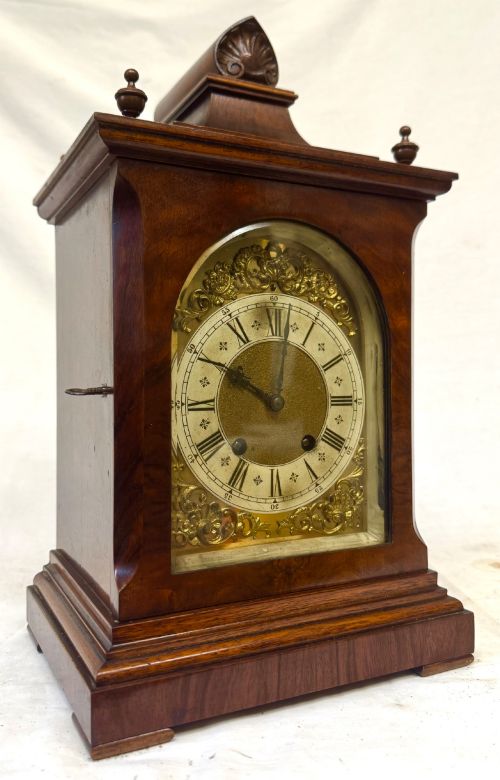
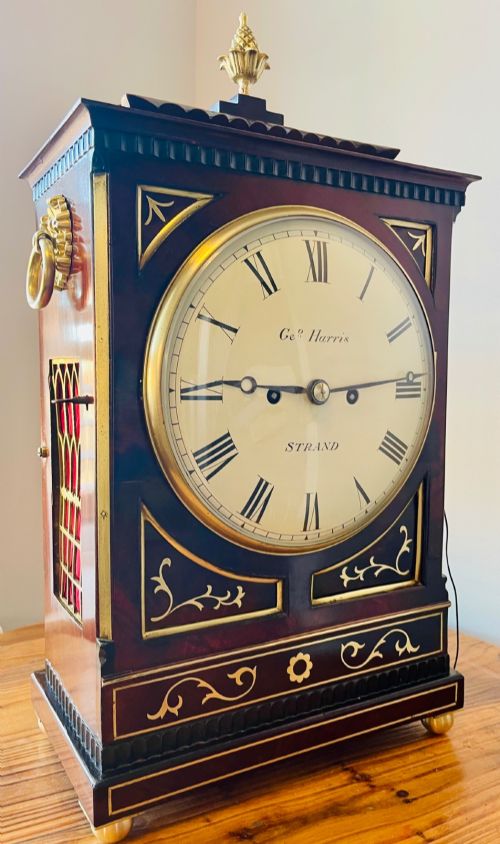
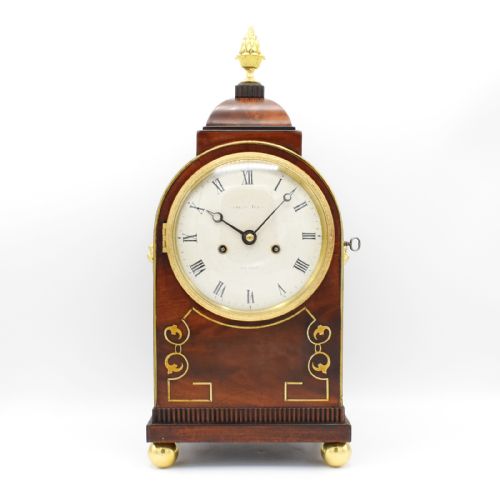
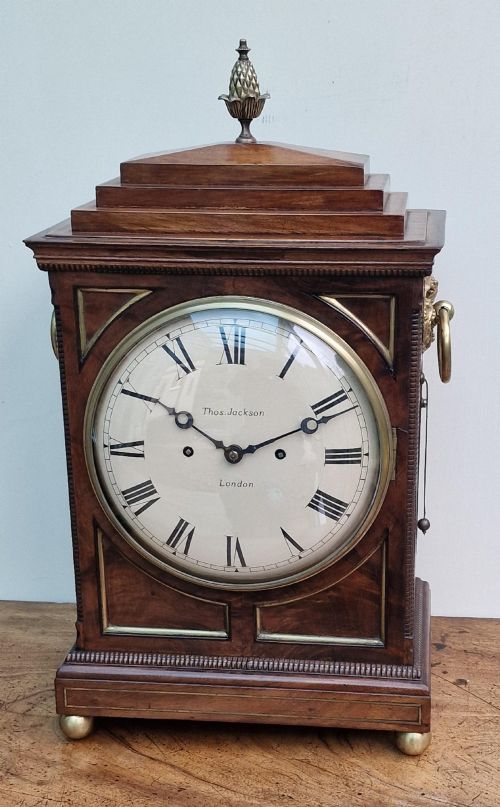
When you search for a brass finial mantel clock, you are looking at timepieces that combine robust mechanical movements with striking decorative metalwork. These clocks range from compact table models to substantial bracket clocks designed to anchor a room.
You are most likely to meet Regency, Victorian, and Georgian examples on this page. They appear in forms such as bracket clocks, mantel clocks, and clock sets.
The materials span mahogany, ebonised wood, and tortoiseshell, often highlighted by ormolu and brass. Many feature enamel dials and protective glass panels that showcase the intricate mechanics within.
How They Were Made
Cabinetmakers constructed the wooden cases using timbers such as mahogany and walnut, frequently incorporating ebonised finishes and tortoiseshell veneer. These wooden housings were shaped into chamfer tops, balloon forms, and architectural bracket styles.
Metalworkers cast and chased brass and ormolu to create the decorative mounts, bezels, and finials that crown the cases. Enamel dials were meticulously painted with numerals, then paired with finely wrought hands and precision fusee movements.
Cupids and classical mounts often peer out from French ormolu cases, quietly reminding viewers that time waits for no romance.
What Varies in Quality
The distinction between ordinary and exceptional pieces lies in the crispness of the brass casting and the execution of the woodwork. Finer examples display deeply chased ormolu mounts, perfectly fitted glass panels, and substantial mahogany cases without heavy restoration.
Movement sophistication also dictates the tier of the piece. Clocks housing intricate fusee mechanisms by known makers command attention through their engineering precision and the enduring quality of their striking trains.
Charles Pratt London·Thomas Jackson London·Webster Cornhill London·John Bull of Bedford·Samuel Marti·Leplastrier of London·Berguer of the Strand·Wilson And Gill London
The Brass Finial Mantel Clock Glossary
- Fusee
- A conical pulley used in clock movements to maintain an even pull on the mechanism as the mainspring unwinds. This device ensures more accurate timekeeping throughout the duration of the winding.
- Bracket Clock
- A portable mechanical clock originally designed to sit upon a matching wall bracket or a table. These pieces often feature sturdy carrying handles and sophisticated striking movements.
- Ormolu
- Gilded bronze created by applying a mercury and gold amalgam to a bronze base and heating it. The technique yields a rich, golden surface finish popular on decorative mounts and finials.
- Boulle
- A form of marquetry developed in France utilising tortoiseshell and brass inlaid in contrasting patterns. This technique decorates the surfaces of elaborate mantel clocks.
- Chamfer Top
- A cabinet design where the upper edges of the clock case are bevelled or cut away at an angle. This shape is frequently seen on Regency and Georgian mahogany bracket clocks.
Brass Finial Mantel Clock: Frequently Asked Questions
Where should I place a bracket clock?
These clocks rest securely on heavy mantelpieces, sturdy tables, or dedicated wall brackets positioned at eye level. Their compact footprints allow them to anchor smaller spaces while maintaining a strong decorative presence.
Ensure the surface is completely level to keep the pendulum swinging evenly and the movement running reliably. Avoid placing them near direct heat sources or damp exterior walls to protect the delicate wood and metal components.
How do I wind a fusee movement?
Insert the winding key into the dial aperture and turn it gently in the direction specified by the maker, taking care not to overwind. Most fusee clocks require a key specifically fitted to their square arbor.
Wind the clock at regular intervals, ideally on the same day each week, to maintain consistent tension on the mainspring. Steady, deliberate movements prevent any strain on the delicate internal brass gears and chain.
How do I identify a Regency clock case?
Regency cases typically feature rich mahogany or ebonised surfaces with restrained brass inlay and classical architectural proportions. Look for clean lines, bracket feet, and distinct top treatments like chamfered edges.
Unlike the more ornate Rococo or Louis XIV styles, Regency design favours geometric clarity and understated elegance. The brass finials on these pieces are usually sharp and functional rather than purely decorative.
What is the difference between a bracket clock and a mantel clock?
Bracket clocks historically originated as portable timepieces equipped with top handles for carrying between rooms, often sitting on matching wall brackets. Mantel clocks were generally designed from the outset to stand permanently on a fireplace shelf.
Over time, the terms became somewhat interchangeable in descriptions, but bracket clocks often retain more complex fusee movements and architectural wooden cases. Mantel clocks frequently embrace varied materials like porcelain, ormolu, and shaped marble.