

Brass Double Sconces
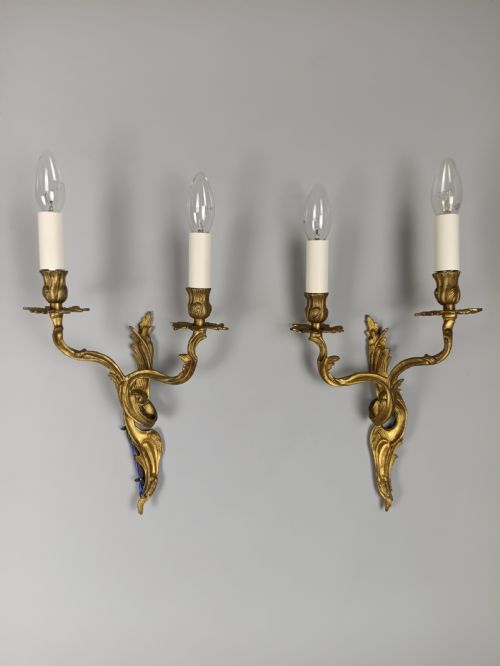
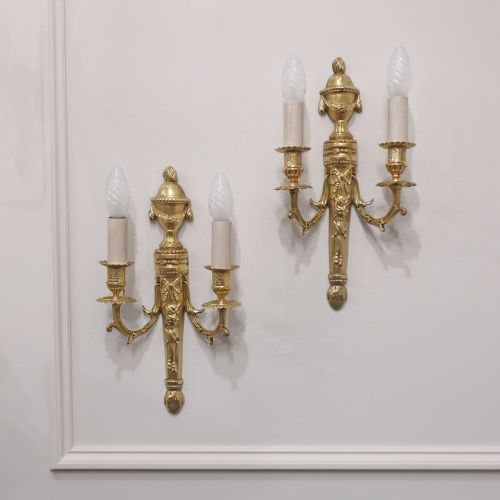
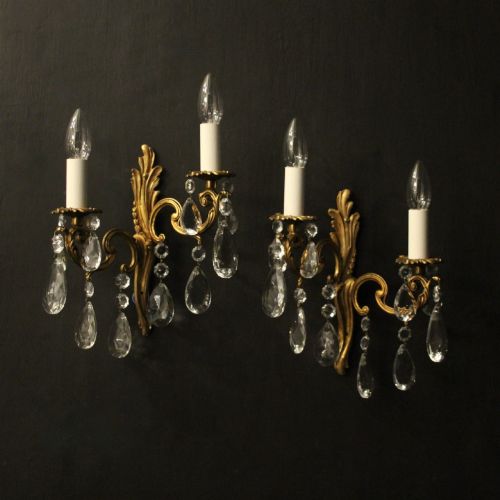
Brass double sconces bring paired candlelight to a wall, offering symmetrical illumination in gilded metal and bronze.
Brass Double Sconces
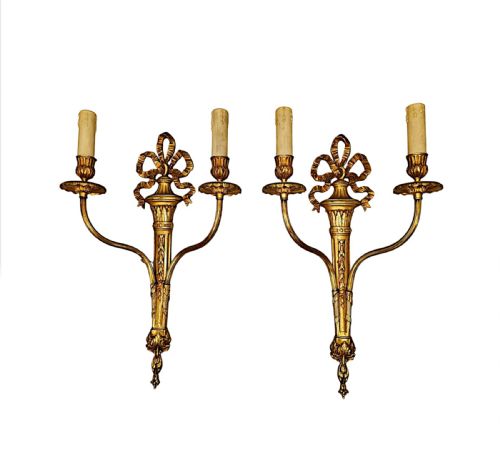
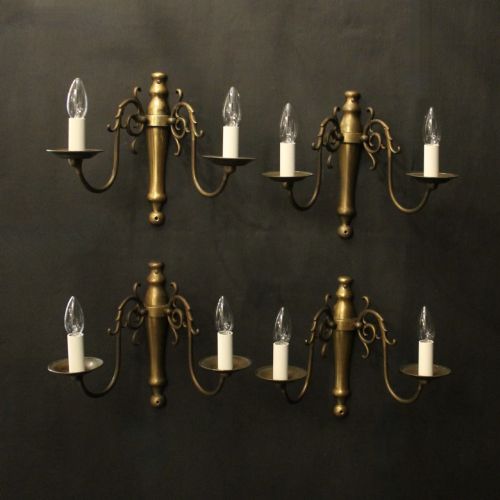
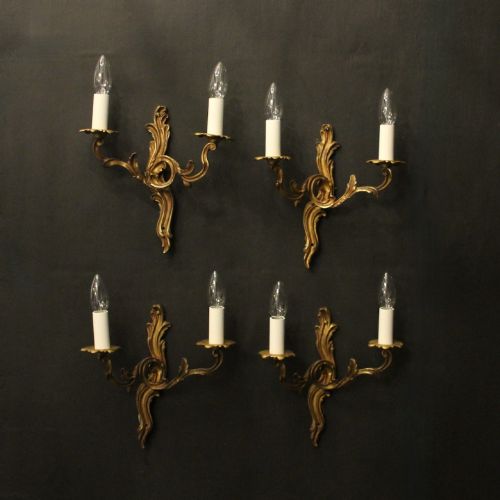
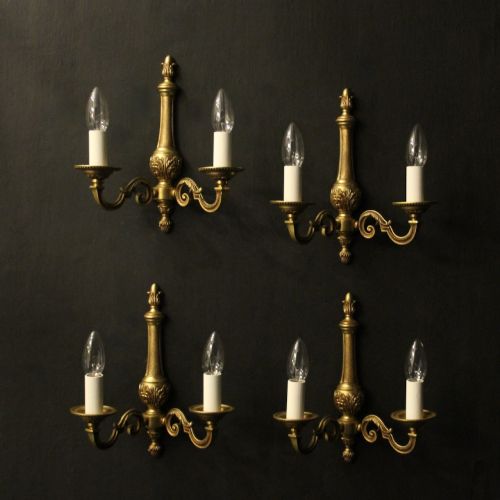
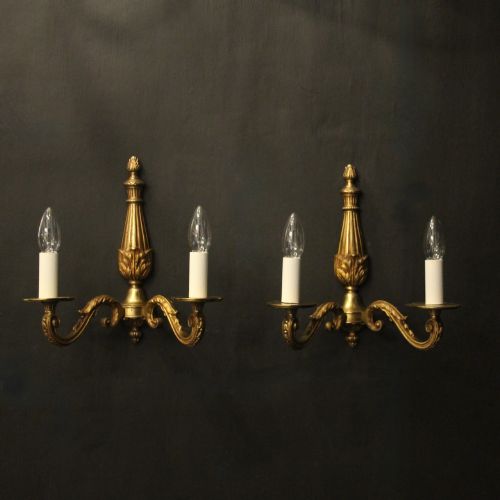
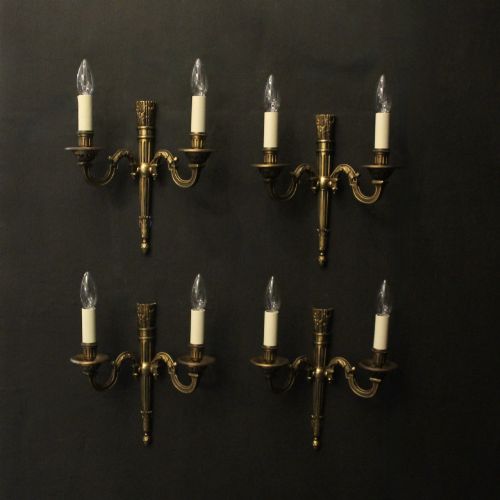
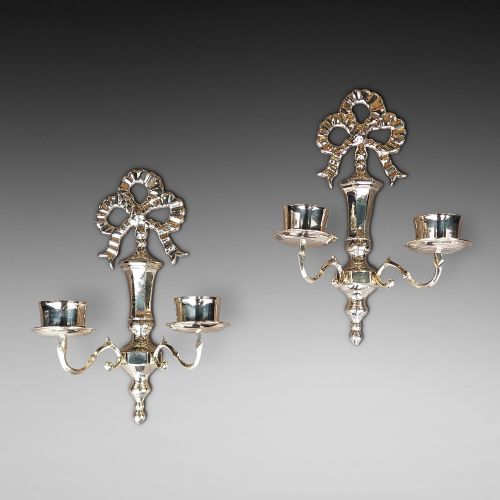
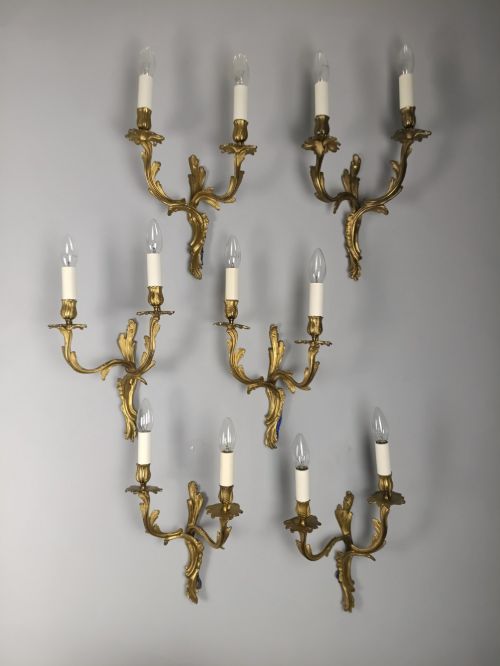
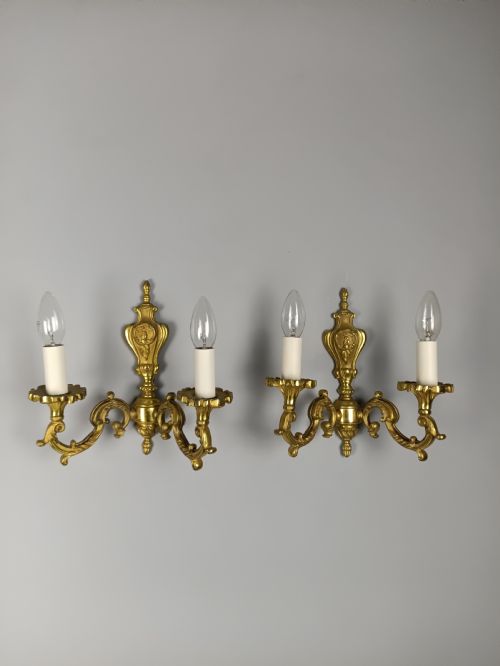
The prevailing form on this page is the French twin-arm wall light from the 1920s and 1930s, often rendered in gilded brass or bronze. Alongside these, English examples from the nineteenth century utilise heavier brass and bronze casting.
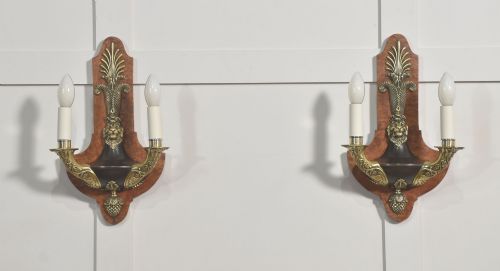
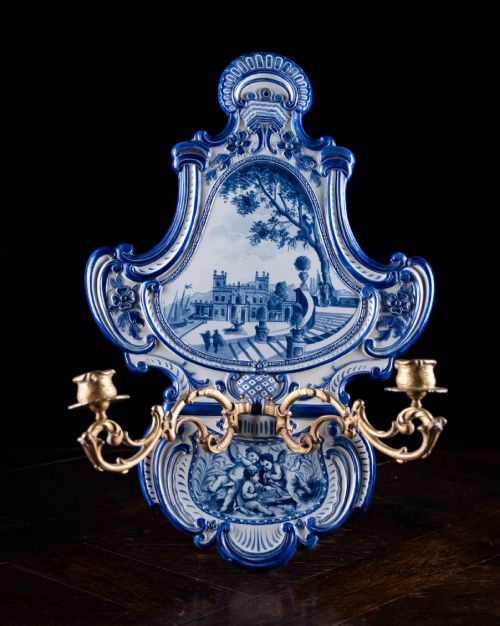
Makers and designers drew upon historical vocabularies, producing pieces in Rococo, Neoclassical, and Empire styles. While primarily functioning as wall lights, related forms such as girandole mirrors and candlesticks occasionally join the selection.
How they were made
Makers utilised cast brass, bronze, and ormolu to form the backplates and twin arms of these fixtures. Gilded finishes, whether applied through traditional fire gilding or gold leaf, provide the characteristic surface lustre found on French Rococo and Empire models.
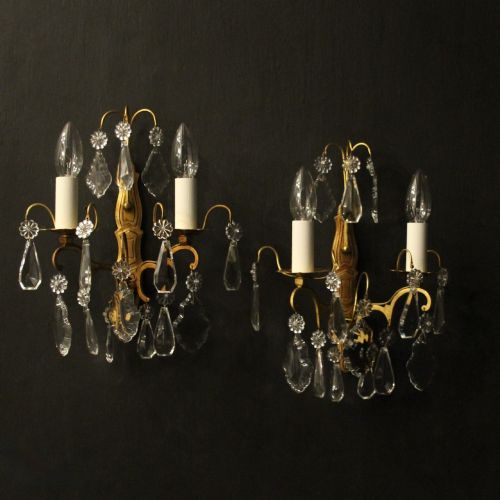
Ornate details such as ribbons, crystal drops, and walnut accents were integrated into the metalwork through manual chasing and assembly. Many of these wall lights transitioned from candle power to electricity during subsequent rewiring campaigns.
The listings span from the nineteenth century through the 1930s, featuring materials from basic brass to gilt bronze and ormolu.
What varies in quality
The distinction between standard production and superior work lies in the crispness of the metal chasing and the depth of the gilding. Heavier bronze castings with finely detailed foliage separate high-end French and English pieces from lighter, simpler brass pressings.
The integrity of the structural joints where the twin arms meet the backplate dictates the overall solidity of the fixture. Original surface patination and intact mercury gilding command greater appreciation than later, uniform resprays.
F. & C. Osler·Villeroy & Boch·Casier·Gillows
The Brass Double Sconces Glossary
- Ormolu
- Gilded bronze, produced by applying a gold and mercury amalgam to a bronze base and heating it. This technique was widely utilised in French decorative metalwork.
- Girandole
- A branched wall light or sconce incorporating a mirror backplate. The reflective glass serves to multiply the illumination cast by the candles.
- Sconce
- A wall-mounted lighting fixture designed to project illumination into a room. These fixtures historically held candles before the adoption of electric wiring.
- Rococo Revival
- A nineteenth-century design movement drawing upon eighteenth-century French asymmetry, scrollwork, and naturalistic floral motifs. This style heavily influences many twin-arm wall lights.
Brass Double Sconces: Frequently Asked Questions
How do I hang brass double sconces?
These wall lights require secure anchoring to wall studs or appropriate cavity fixings due to the weight of cast bronze and brass.
Electric versions need professional connection to household circuits, while older fixtures may require modern rewiring for safe operation.
Were these lights originally for candles?
Many nineteenth-century and early twentieth-century examples were manufactured specifically for candles before being converted to electricity later.
Examining the original drip pans and sockets reveals whether the fixture was conceived for wax or wired illumination.
How do I clean gilded brass safely?
Dusting with a soft, dry brush prevents the accumulation of grime without disturbing delicate or aged metallic surfaces.
Harsh commercial polishes and abrasive cloths must be avoided, as they strip away thin layers of gilding and original patination.
How do I identify French Empire style?
French Empire pieces display classical symmetry, military motifs, and clean architectural lines derived from ancient Roman and Greek design.
Ormolu mounts and heavy cast bronze construction are characteristic of this early nineteenth-century aesthetic.