



Ribbon Bow Sconces
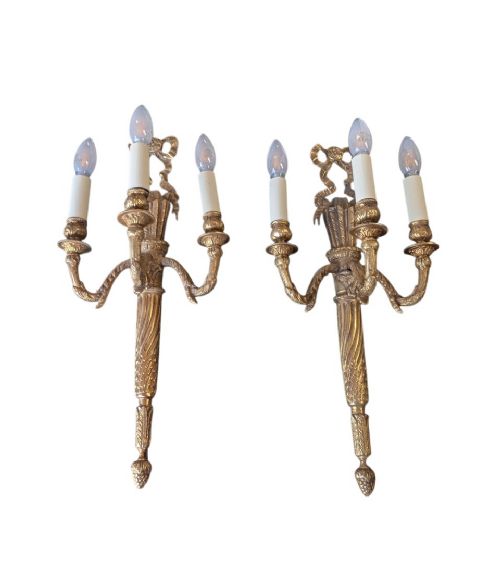
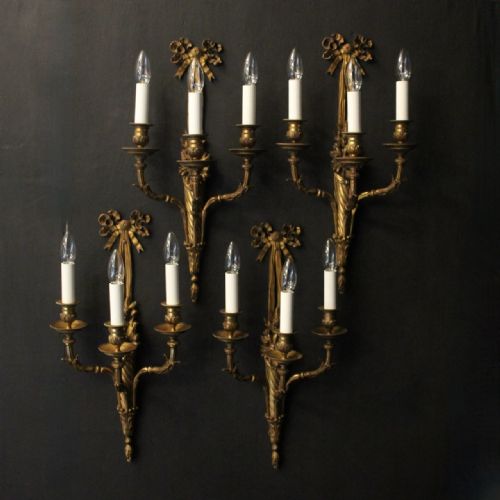
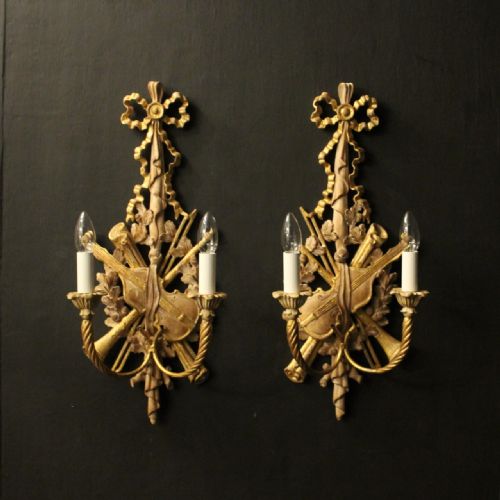
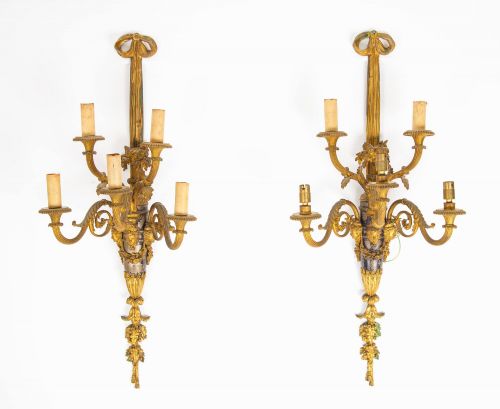
Ribbon bow sconces are decorative wall lights shaped with tied ribbons and branches, bringing classical French elegance to a room.
Ribbon Bow Sconces
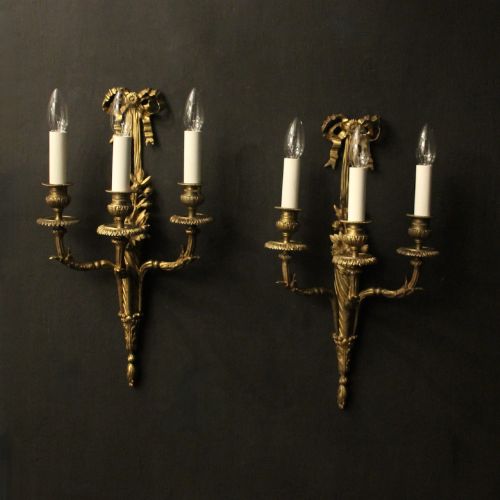
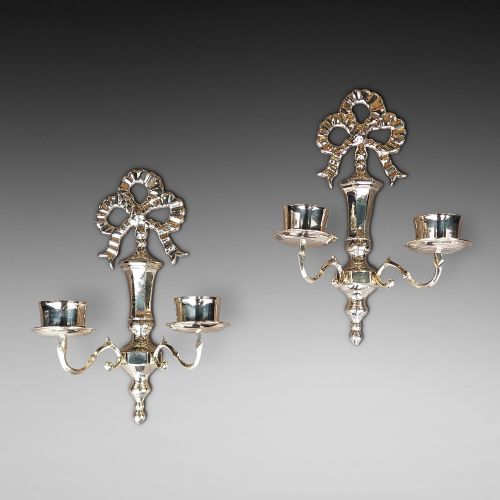
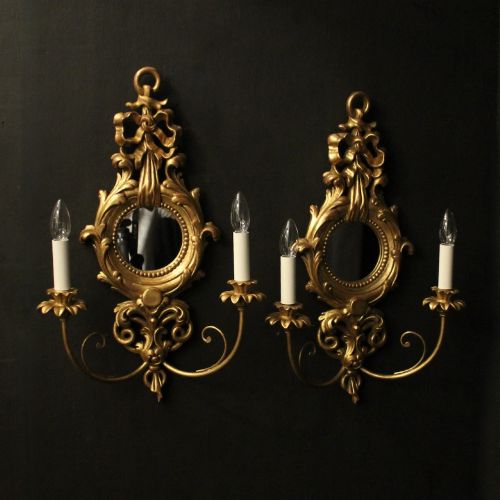
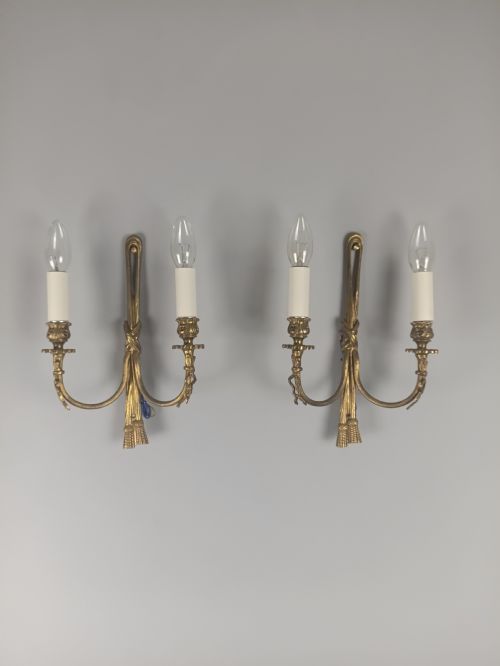
Ribbon bow sconces combine wall lighting with ornate metalwork or carved wood, frequently taking the form of paired wall lights designed to flank mirrors or fireplaces. You will most often find French examples spanning the nineteenth and early twentieth centuries, drawing on Louis XVI and neoclassical styles.
The decorative vocabulary relies heavily on cast metal or giltwood forms shaped as suspended ribbons, bows, and scrolling arms. These fixtures range from simple two-branch twin-arm lights to large multi-light chandeliers and girandoles.
Makers across France, Italy, and Britain adopted these classical motifs through various revivals, producing matched sets and pairs in brass, bronze, and giltwood. The physical evidence shows wall lights dated from the Victorian and Edwardian eras alongside specific decades like nineteen-twenty and nineteen-thirty.
How they were made
Metals such as brass, bronze, and ormolu form the structural body of many pieces, often finished with gold leaf, gilding, or silver plating. Workshops cast these elements to create crisp architectural details and flowing ribbon motifs that mimic fabric.
Alternative materials include carved giltwood and toleware, which provide lighter wooden alternatives or painted decorative accents. Artisans joined cast metal arms to backplates or integrated them with wooden carvings and glass components to form sturdy wall-mounted fixtures.
Materials recorded on this page include solid brass, gilt bronze, carved giltwood, toleware, and silvered metal.
What varies in quality
The refinement of the casting and carving dictates the visual depth of the piece, separating finely chased bronze or deeply carved giltwood from simpler, flatter manufacturing. Superior examples display sharp definition in the folds of the ribbon and the acanthus scrolls of the arms.
The original surface finish also determines the character of the object, as aged gilding, genuine ormolu, and untouched patination carry more visual harmony than later re-gilding or heavy cleaning. Maker attribution, such as stamps from established Paris foundries, elevates certain pieces above standard production models.
Henri Vian·Maison Baques
The Ribbon Bow Sconces Glossary
- Ormolu
- Gilded bronze used widely in French decorative arts. The technique involves applying a mercury and gold amalgam to bronze before heating.
- Girandole
- A decorative wall bracket or branching sconce holding candles or lights, frequently paired with a reflecting mirror plate.
- Louis XVI style
- A neoclassical design movement characterised by straight lines, symmetry, and classical motifs like ribbons, urns, and swags.
- Toleware
- Lacquered or enamelled sheet metal items used for decorative household objects and light fittings.
- Adam revival
- A neoclassical style drawing on the eighteenth-century designs of the Adam brothers, featuring delicate symmetry and classical ornamentation.
Ribbon Bow Sconces: Frequently Asked Questions
Where should I hang ribbon bow sconces?
These wall lights suit living rooms, dining rooms, and hallways where they add layered illumination at eye level. Placing them on either side of a fireplace, mantelpiece, or large mirror creates a balanced classical focal point.
Ensure they are installed at a height that complements surrounding furniture and architectural proportions, allowing the hanging ribbon details to sit comfortably within the wall space.
How do I identify French neoclassical sconces?
Look for characteristic design elements such as symmetrical scrolling arms, acanthus leaves, urn motifs, and prominent tied ribbon crests at the top of the backplate. Materials like gilt bronze, ormolu, and cast brass are typical of this tradition.
French pieces from the nineteenth and early twentieth centuries often feature refined chasing work on the metal surfaces and may bear workshop stamps on the reverse.
What is the difference between giltwood and ormolu?
Giltwood refers to carved wood surfaces coated with a thin layer of gold leaf or gesso and size. It offers a warmer, softer texture often found on wooden girandoles and decorative wall frames.
Ormolu describes gilded bronze where gold is applied to a cast metal base through mercury amalgamation or electroplating, resulting in a heavier, metallic brilliance suited to intricate casting.
How are antique wall lights powered today?
Many vintage and antique wall sconces are adapted for modern electrical wiring by internal rewiring of the original candle tubes or sockets. Some retain their original candle-fitting aesthetic while hiding modern cables behind the backplate.
Consult a qualified electrician to inspect the wiring and ensure the fixture complies with current safety standards before mounting it to the wall.