


Brass Door Furniture
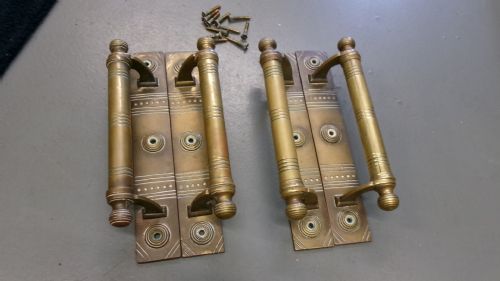
Brass door furniture encompasses hardware items like knockers, handles, plates and hinges designed to furnish entrances and interior doors.
Brass Door Furniture
Brass door furniture covers essential hardware items used to equip and ornament entrances and interior passages, ranging from striking knockers to functional handles and finger plates. When exploring this category, buyers encounter items produced during periods spanning the nineteenth century, the Arts and Crafts movement, and the Art Deco era.
The selections appearing in current stock predominantly include Victorian examples alongside pieces originating from the Regency period and the early twentieth century. Common forms span solid brass knockers, cast handles paired with lead crystal, and extensive sets of finger plates designed for domestic or public use.
Makers and designers from these various stylistic eras utilised cast and sheet brass, frequently combining the metal with materials such as porcelain or glass. These items reflect the shifting tastes of British and continental design, moving from classical Regency motifs through to utilitarian Arts and Crafts production.
Materials and methods of production
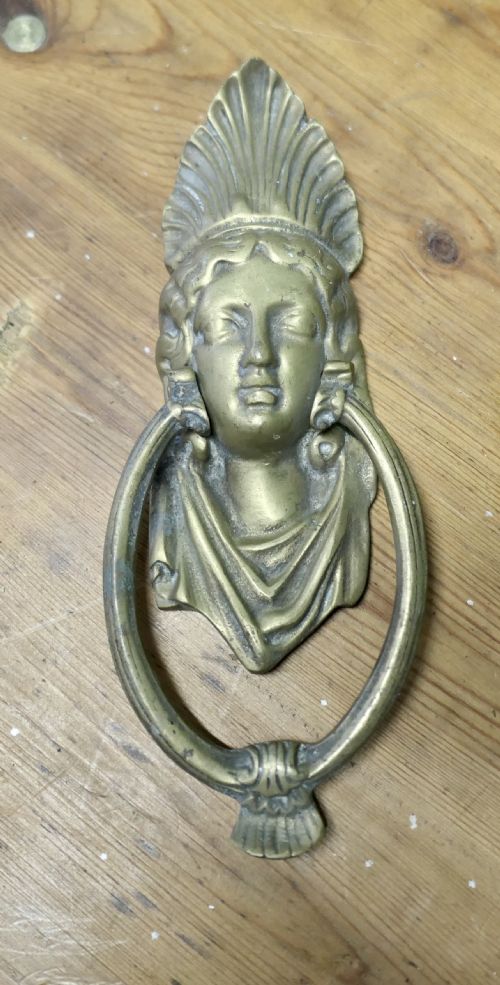
The manufacture of these fittings relies primarily upon brass, utilised either as solid cast metal or as thin plates shaped for handles and finger plates. Craftsmen employed traditional foundry techniques to pour molten metal into moulds, producing crisp relief details for items such as caryatid knockers and Gothic hinges.
Many items combine brass components with contrasting materials recorded in the evidence, including lead crystal, porcelain inserts, and glass. These secondary elements were secured mechanically or adhered to the metal backplates, creating durable hardware intended for daily domestic interaction.
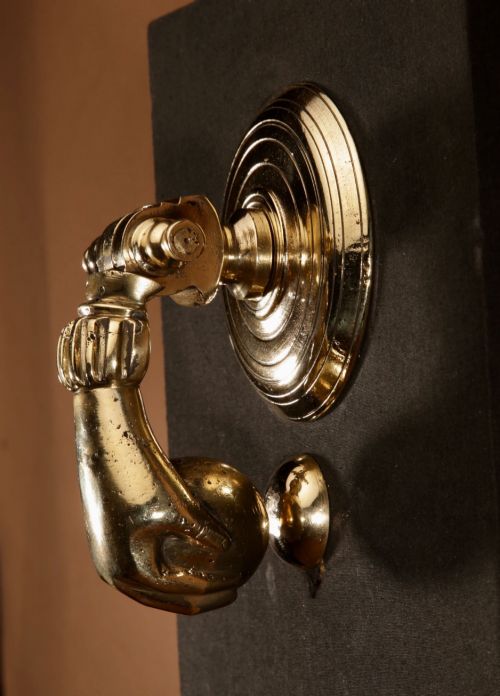
Several heavy door knockers take the literal shape of a human hand, offering visitors an unexpected handshake before they even cross the threshold.
Distinctions in manufacture and design
Quality within this hardware category is determined by the crispness of the casting and the thickness of the metal utilised in production. Finer examples display sharp definition in decorative motifs and substantial weight, whereas lower tiers often exhibit softer detail and lighter construction.
The integration of secondary materials such as lead crystal or porcelain also dictates the grade of the piece, with superior specimens showing secure mounts and high-grade finishing. The integrity of the original surface patination further separates standard utilitarian hardware from pieces of distinct artistic merit.
Louis Constantin Le Gaigneur·Robert Strahan
The Brass Door Furniture Glossary
- Finger Plate
- A protective metal sheet attached to a door around the handle area to prevent soiling of the wood or paintwork. These plates often feature decorative cast patterns or engraved borders.
- Caryatid
- A sculpted female figure serving as an architectural support or decorative feature. In door furniture, this appears as the main sculptural body of a knocker.
- Gothic
- A revival style drawing inspiration from medieval architecture and ornament. Items of this type often incorporate pointed arches and heavy geometric detailing.
- Art Deco
- A design style characterised by sleek geometric shapes, streamlined forms, and stylised motifs. Pieces from this movement typically date from the early twentieth century.
Brass Door Furniture: Frequently Asked Questions
What is brass door furniture?
Brass door furniture comprises functional and decorative metal fittings used on doors, including knockers, handles, hinges, and finger plates. These items serve both a practical purpose in operating or protecting the door and an aesthetic function in defining the style of an entrance.
The selection available includes items from the nineteenth and early twentieth centuries, reflecting changing domestic fashions across the Victorian and Arts and Crafts periods.
How do I date antique brass hardware?
Dating antique hardware involves examining the manufacturing techniques, stylistic motifs, and the specific materials combined with the brass, such as lead crystal or porcelain. Items from the Regency period often display classical restraint, while Victorian and Arts and Crafts examples show greater ornamentation or industrial standardisation.
Comparing the casting quality and the presence of makers' marks or specific design styles helps narrow down the production era to distinct historical windows.
Can I use antique brass handles daily?
Most antique brass hardware was built for robust everyday use in domestic or public settings and remains entirely functional for modern installation. Solid cast brass and sturdy mounting plates ensure these pieces withstand regular handling over long periods.
Care should be taken when cleaning vintage metals to preserve the original surface patination and protect any delicate inserts like porcelain or glass.
How do I clean antique brass?
Cleaning antique brass requires gentle methods that preserve the historic surface and accumulated patination valued by collectors. Harsh chemical abrasives should be avoided to prevent stripping the top layer of metal and losing fine casting details.
A soft cloth and mild soapy water are generally sufficient for routine maintenance of older door furniture.