

Brass Dog Fire Irons
Brass dog fire irons bring hearths to life with functional shine and solid period weight.
Brass Dog Fire Irons
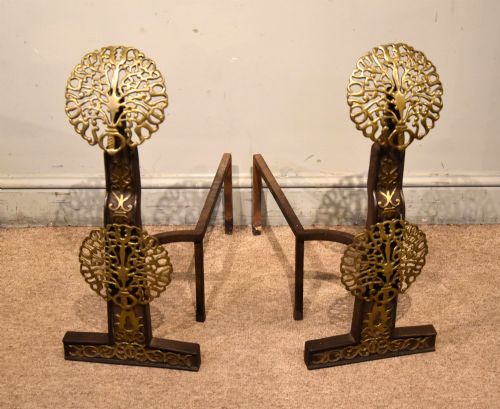
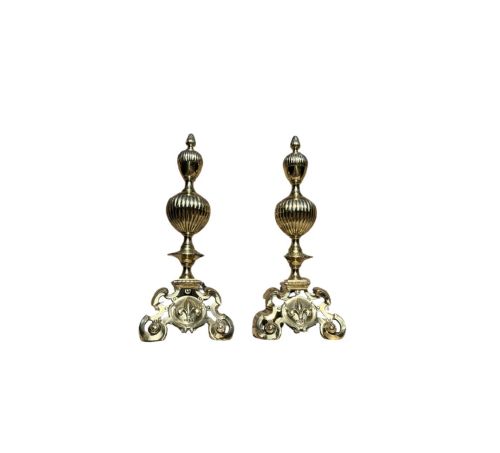
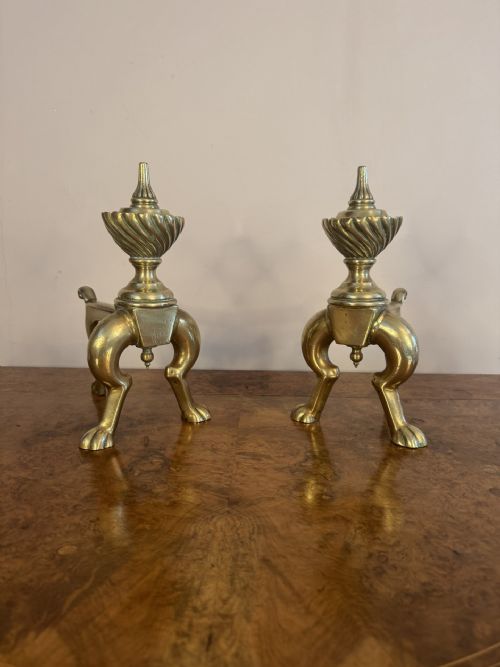
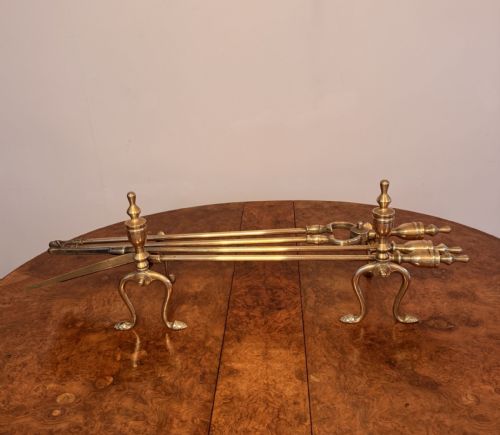
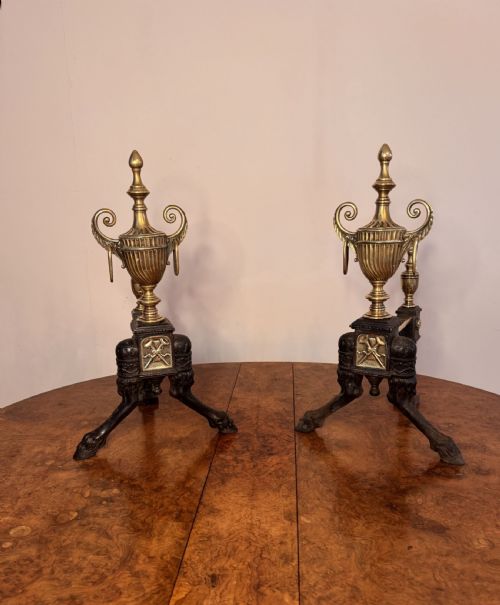
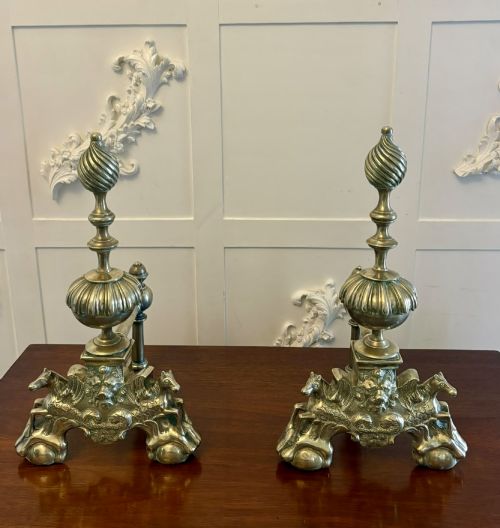
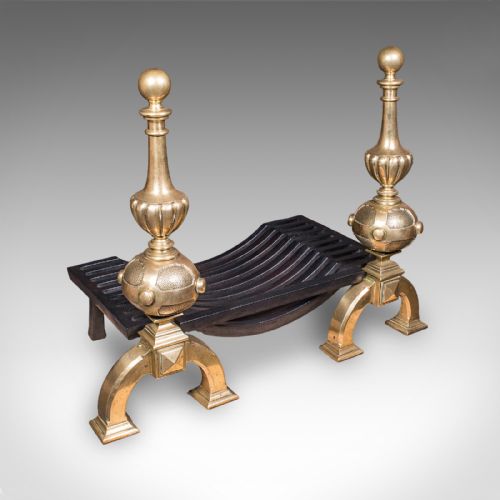
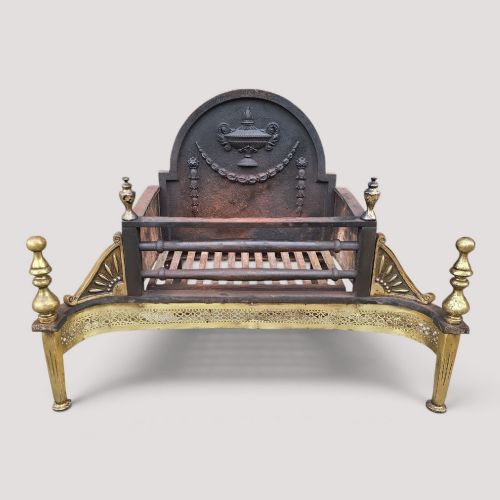
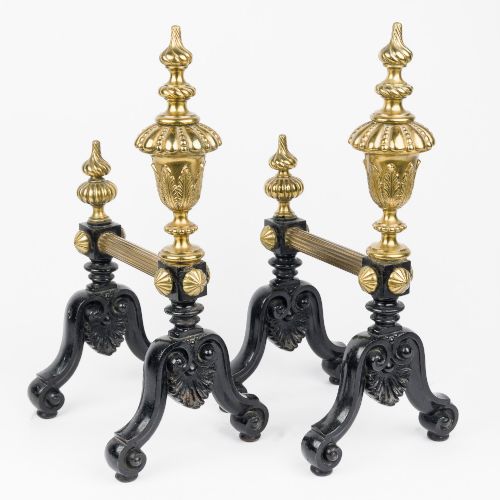
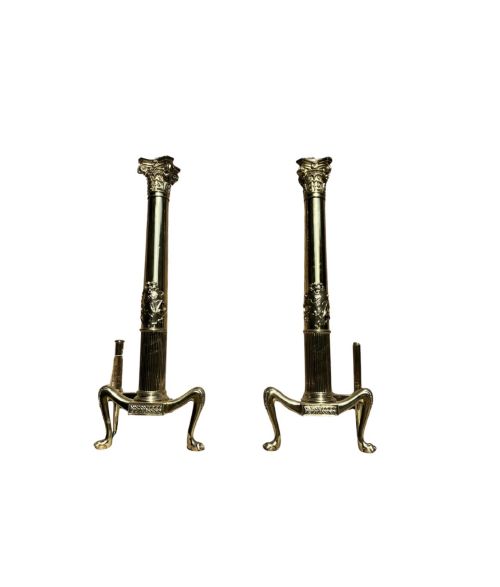
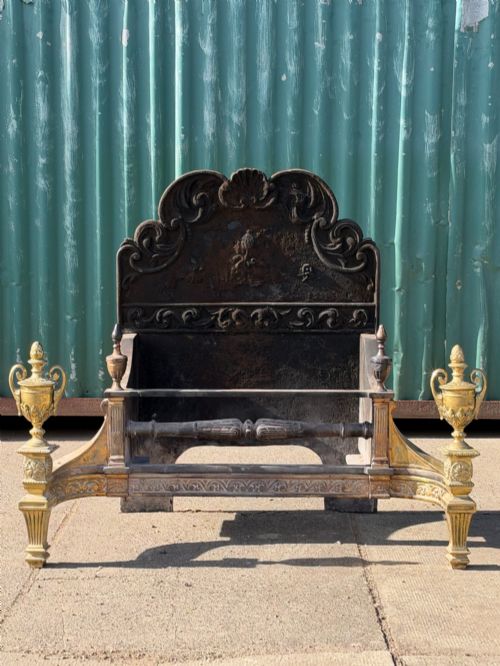
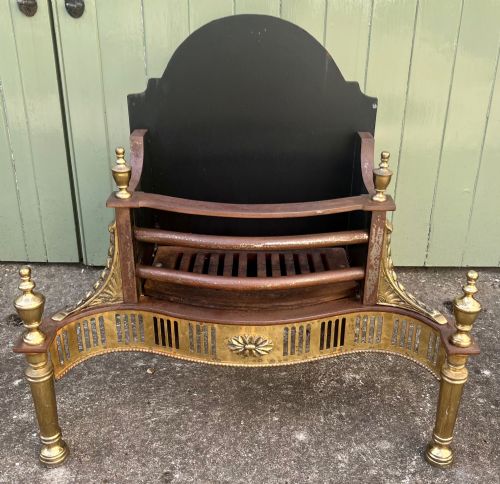
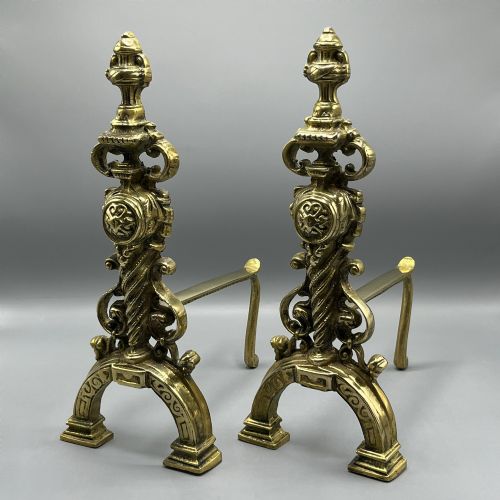
Brass dog fire irons comprise structural firedogs paired with hearth accessories, commonly found in Victorian iterations alongside older revivals. Buyers looking for brass dog fire irons encounter heavy cast and wrought supports built to hold logs above the hearth floor. These fireplace additions range from straightforward English utility pairs to ornate continental styles designed to frame an open fire basket.
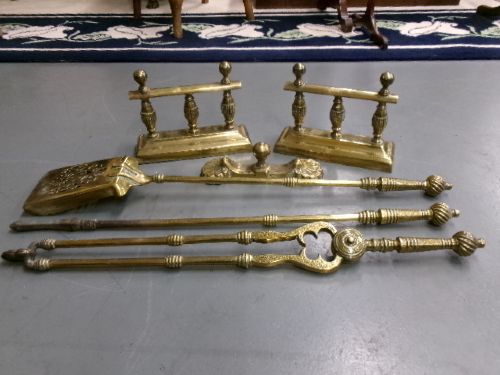
The objects take several forms on this page, including traditional andirons paired with companion tools, grates, and fenders. Pieces date predominantly from the nineteenth century, spanning Victorian domestic production through to later revivals of Georgian and Regency aesthetics. Such items serve both to elevate wood for better air circulation and to anchor the decorative scheme of the chimney breast.
Materials and construction methods
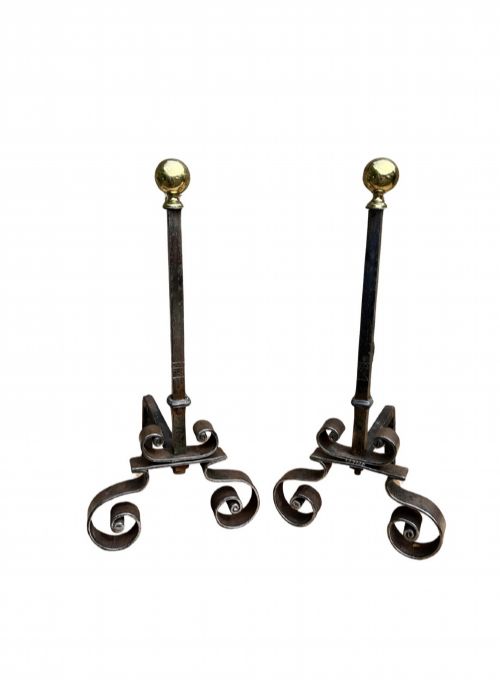
Maker workshops combined cast brass components with iron bars to achieve structural strength and decorative brightness. Iron provides the heavy inner spine and log supports required to withstand intense hearth heat, while brass forms the visible front faces, finials, and companion tool handles.
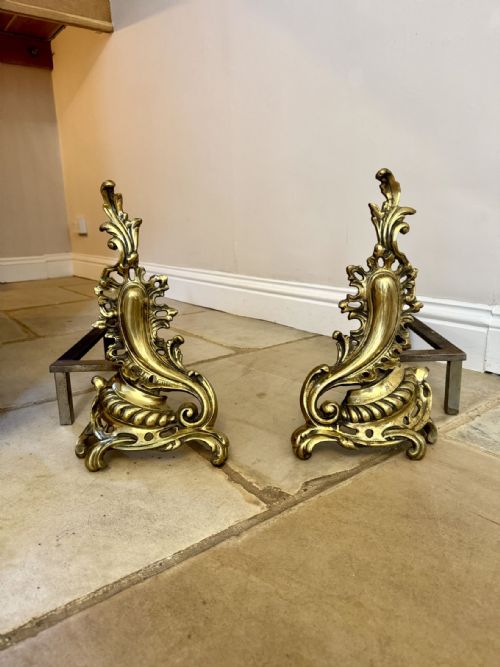
Surface treatments vary between polished brass finishes, parcel gilt bronze, and ormolu mounts depending on the continental or domestic origin. Foundries utilised sand casting for intricate rococo scrolls and neoclassical urns, later hand-finishing the metal with files and chasers to sharpen botanical or scrollwork details.
Brass Dog Fire Irons Retail Price Guide 2026
Typical asking prices for brass dog fire irons among the pieces listed under this phrase on Sellingantiques today, from the lower quarter to the upper quarter. They describe what is for sale here now, not the wider market.
Cherubs peer out from parcel gilt bronze chenets, keeping eternal watch over hearth ashes.
Judging execution and finish
Quality rests in the weight of the casting and the crispness of the chased detail across the brass face. Finer examples display deep, three-dimensional relief modelling rather than shallow, mass-produced surface patterns that blur under polish.
Structural integrity separates utilitarian foundry output from exceptional parlour pieces. Superior sets maintain heavy iron billets securely joined to substantial brass fronts without play or loose components at the joints.
James Cartland & Sons
The Brass Dog Fire Irons Glossary
- Andiron
- A horizontal iron bar raised on legs with an upright pillar at the front to support logs in an open fireplace. Also known as a fire dog.
- Chenet
- The French term for an andiron, frequently associated with more decorative ormolu and parcel gilt bronze designs. These pieces often feature figurative or rococo scroll motifs.
- Fender
- A low metal guard placed on the hearth in front of a fireplace to contain rolling embers. They are frequently made of brass or iron to match the companion fire dogs.
- Fire grate
- A basket or frame made of iron, sometimes incorporating brass elements, designed to hold burning fuel safely off the hearth floor. Grates often accompany sets of fire dogs.
- Companion set
- A collection of fireside tools such as tongs, pokers, and shovels, usually displayed alongside fire dogs in matching metal.
Brass Dog Fire Irons: Frequently Asked Questions
What do brass dog fire irons do?
Fire irons and dogs support logs above the hearth floor to improve airflow and combustion while protecting the masonry base. The paired dogs hold the fuel in place while companion tools manage the burning wood.
Beyond utility, these polished brass assemblies frame the fireplace opening to reflect light into the room during colder months.
How do I date a set?
Dating relies on stylistic markers such as neoclassical urns, Victorian proportions, or aesthetic movement linearity. Heavier cast iron frames combined with bright brass detailing typically point towards nineteenth-century production.
Examining the casting texture and assembly bolts underneath also helps distinguish original period work from later twentieth-century revivals.
Are they suitable for daily use?
Solid iron and brass construction makes these pieces sturdy enough for burning wood in an active open hearth. The heavy iron billets are engineered to withstand high temperatures over extended periods.
Regular polishing keeps the brass bright, though many owners simply allow the metal to develop a natural historic patina.
What styles are available?
The selection includes plain utilitarian iron supports alongside elaborate French rococo, Regency, and Adam style designs. Pieces range from simple nineteenth-century English domestic pairs to ornate ormolu-mounted continental chenets.
Geometric Aesthetic Movement examples and George III revival pieces also appear frequently across the listings.