

Brass Dining Chairs
Brass dining chairs bring together rich timbers and fine metallic detailing to elevate any formal interior.
Brass Dining Chairs
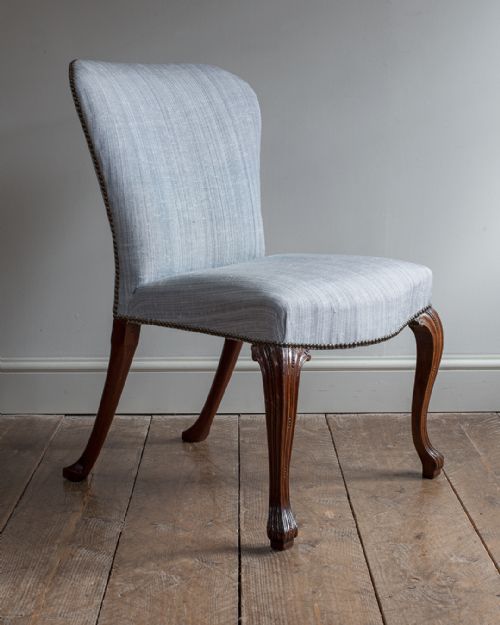
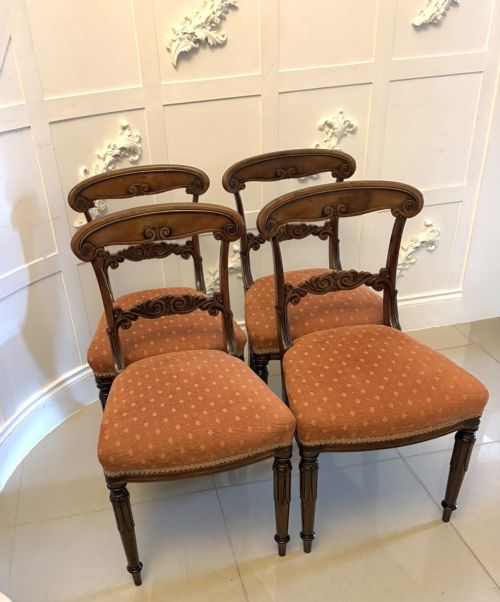
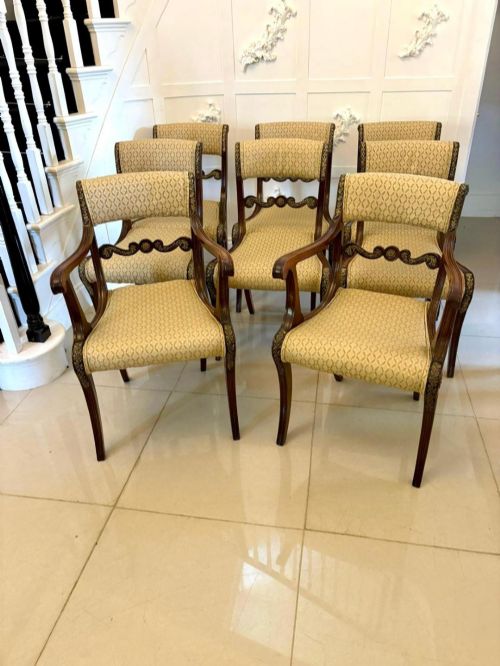
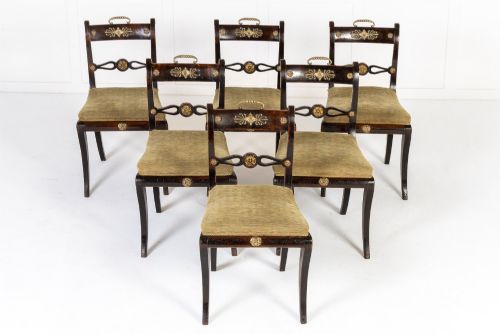
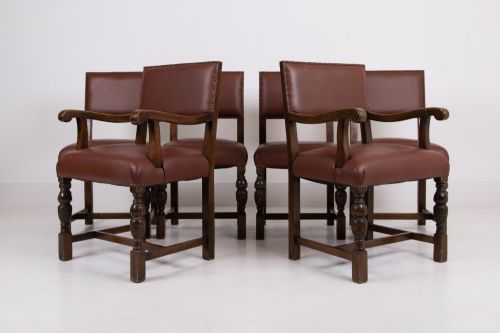
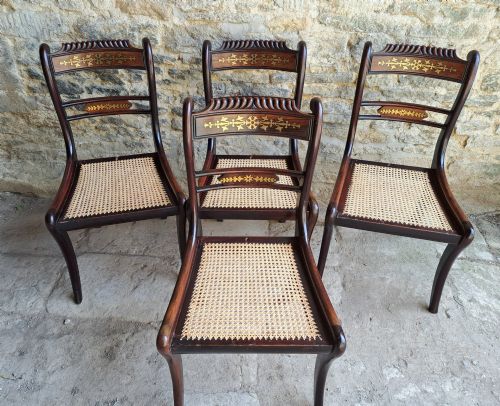
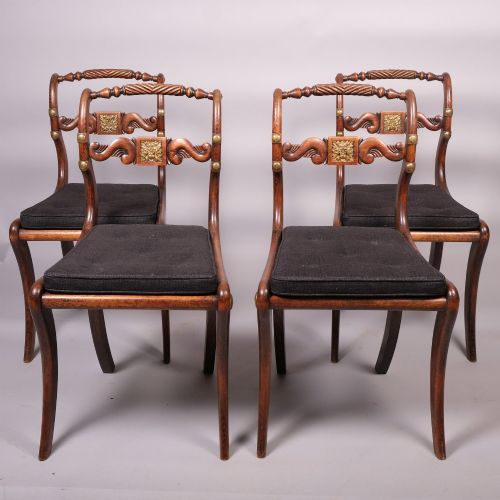
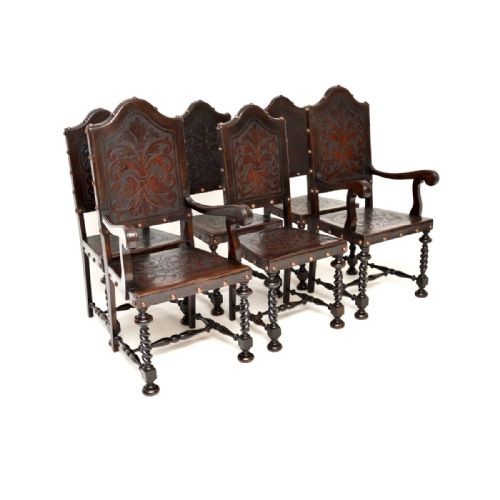
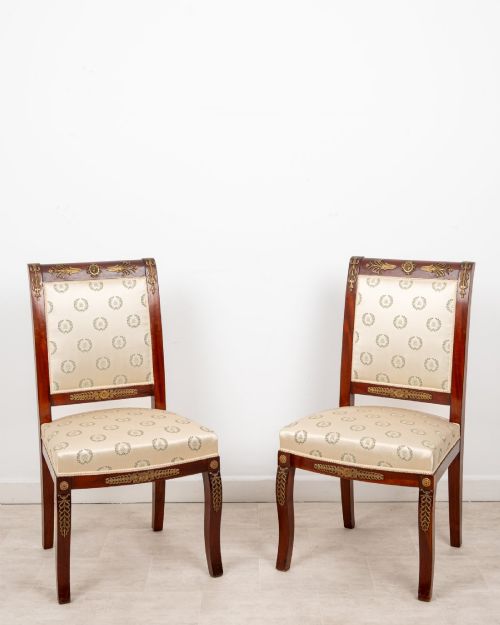
When you examine brass dining chairs on this page, you encounter seating designed primarily during the Regency and Georgian periods alongside later revival pieces. The most common iteration you meet is the Regency mahogany or rosewood dining chair accented with fine brass inlay along the top rail and splat.
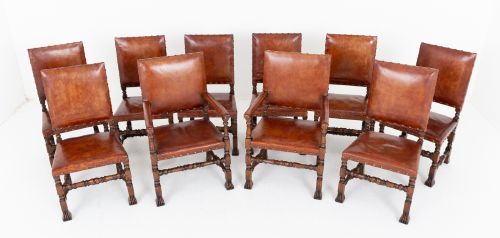
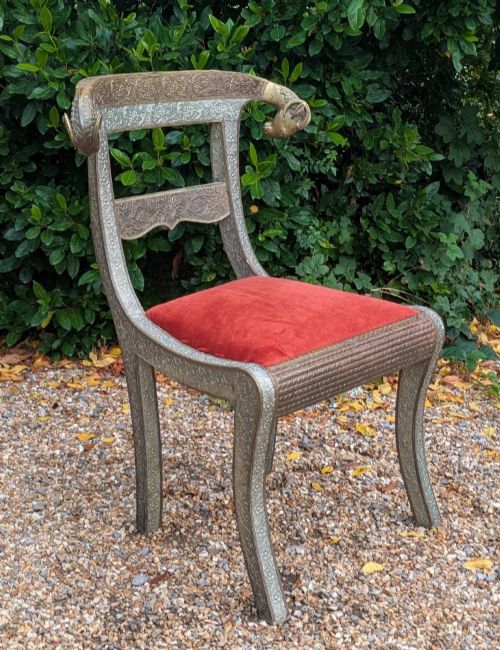
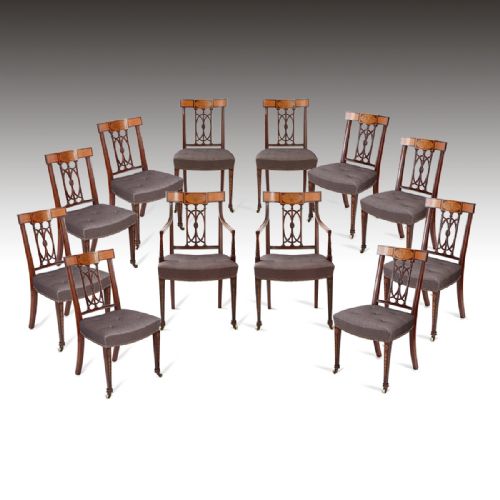
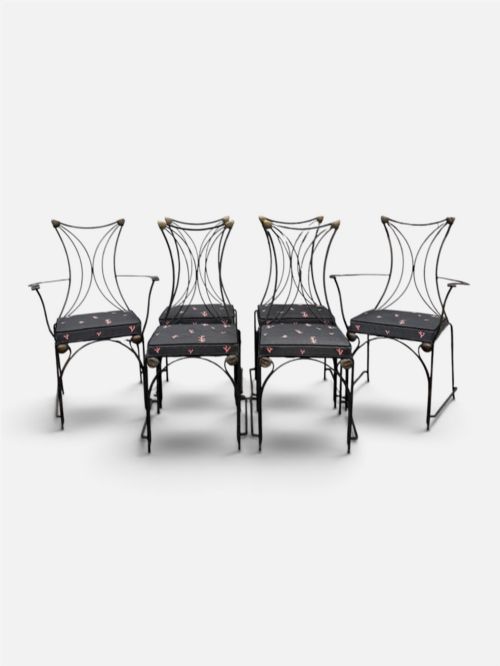
These forms range from single side chairs to extensive matching sets numbering up to twelve pieces. Alongside classical English prototypes, the selection incorporates occasional chairs, armchairs, and carvers, capturing diverse aesthetic movements from Gothic revival to Anglo-Indian craftsmanship.
How they were made
Cabinetmakers constructed the primary framework using dense hardwoods such as mahogany, rosewood, oak, and walnut, often utilising simulated grain techniques or fine veneers to achieve a uniform appearance. Artisans then meticulously inlaid contrasting brass wire or cast brass ornaments into precision-cut channels along the wooden surfaces.
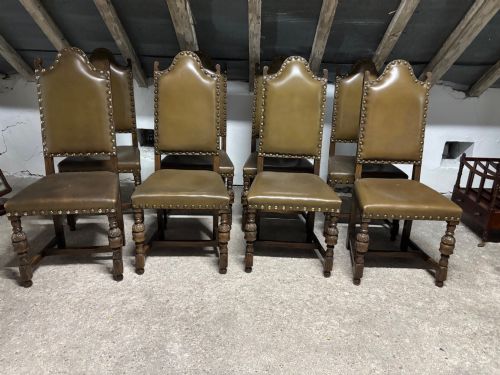
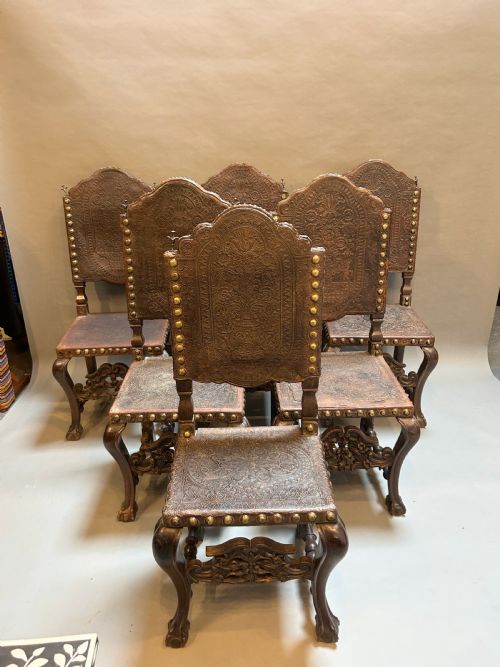
Upholstered elements relied on traditional stuffing methods covered in leather, velvet, or woven fabric, secured with individual brass studs. Metal components including ormolu mounts, castors, and structural brackets provided both decorative contrast and mechanical reinforcement.
Several armchairs incorporate carved ram heads on the arm supports, bringing an unexpected mythological flourish to the dining room.
What varies in quality
Timbers selected for the primary structure also indicate grade, with figured rosewood, pollard oak, or dense old-growth mahogany commanding higher regard than simpler secondary woods. Furthermore, the integrity of the original frame construction and the survival of matching sets heavily influence the standing of any given group.
Howard And Co London
The Brass Dining Chairs Glossary
- Brass inlay
- The technique of embedding thin strips of brass flush into carved channels within a wooden surface for decorative contrast. This method defines the primary aesthetic of classic Regency seating.
- Carver chair
- An armchair designed with open sides to accommodate voluminous period clothing, typically placed at the head of a dining table. These pieces often match the side chairs in a larger dining set.
- Simulated rosewood
- A painted or stained finish applied to a more common timber to mimic the deep grain and colouration of genuine rosewood. Cabinetmakers frequently utilised this method during the 19th century.
- Ormolu mounts
- Cast and gilded bronze or brass decorative ornaments applied directly to the wooden frame of a chair. They appear frequently on pieces influenced by French Empire styles.
Brass Dining Chairs: Frequently Asked Questions
How do I date these chairs?
Dating relies on examining the timber species, joinery methods, and stylistic cues present in the framework. Regency examples typically feature specific leg turnings and precise brass inlay patterns characteristic of the early nineteenth century.
Later revival pieces from the Edwardian era or the 1930s often adopt earlier proportions but reveal modern construction techniques and standardised hardware upon closer inspection.
Were these chairs sold in large sets?
Period dining seating frequently survives in matched groups ranging from four to twelve pieces to accommodate formal dining customs. Complete sets often include two armchairs or carvers intended for the heads of the table alongside matching side chairs.
Assembling or maintaining large sets proves desirable for collectors seeking uniformity in a dining room setting. Individual side chairs also appear regularly for use in hallways or bedrooms.
How do I care for leather seats?
Leather upholstery requires gentle cleaning with specialised conditioners to prevent drying and cracking over time. Maintaining stable room humidity protects both the leather and the surrounding timber framework.
Avoid placing antique seating near direct heat sources or strong sunlight to preserve the original dye and supple texture of the hide.
What is simulated rosewood?
Simulated rosewood is an artisanal finish where craftsmen paint or stain alternative woods to replicate the distinct dark grain of genuine rosewood. This technique offered a fashionable appearance during periods when exotic timber costs ran high.
Examining the grain pattern closely reveals the underlying painted brushwork or graining tools used by period workshops.