






Yellow Floral Chairs
Yellow floral chairs bring warmth and pattern to a room, ranging from grand Georgian wingbacks to painted French open armchairs.
Yellow Floral Chairs
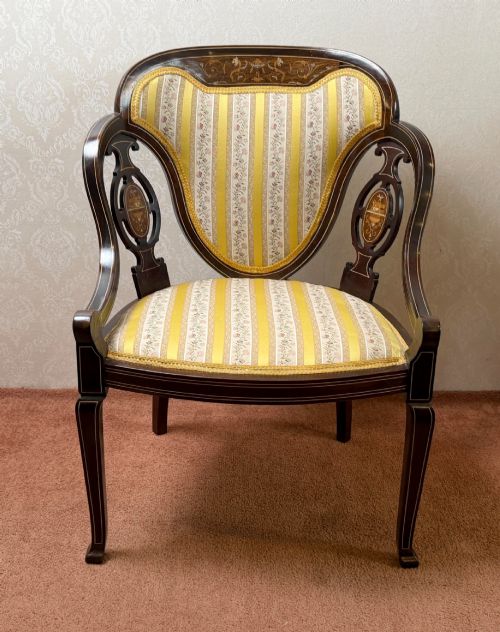
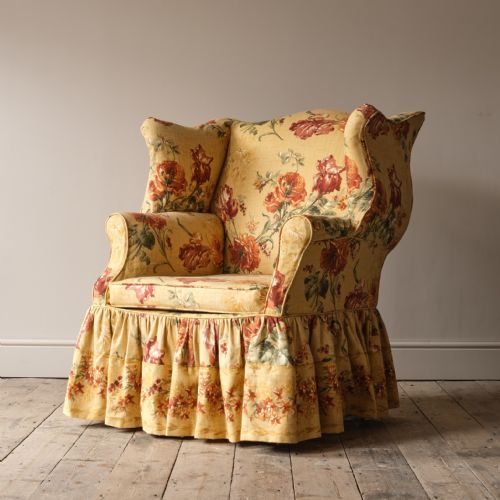
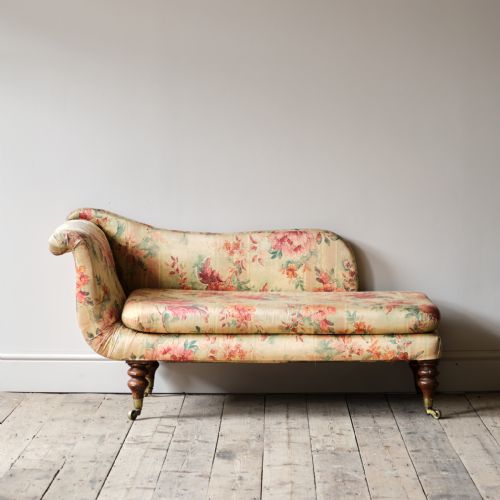
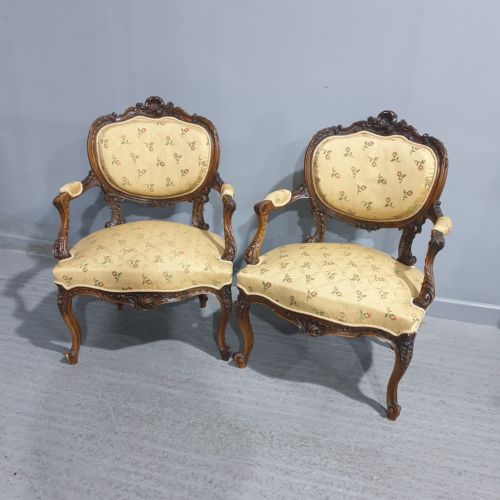
When you search for yellow floral chairs, you encounter a varied collection of seating forms spanning the eighteenth, nineteenth, and early twentieth centuries. The selection includes substantial armchairs, side chairs, stools, chaise longues, and children's high chairs originating from English, French, and Venetian workshops.
You are most likely to meet Victorian and nineteenth-century pieces alongside Georgian and Regency examples, often upholstered in decorative textiles and needlepoint tapestry panels. Frames range from solid brass and mahogany to walnut and painted wood, reflecting diverse historical revival styles.
How they were made
Cabinetmakers and joiners shaped these seats using traditional timbers such as mahogany, walnut, and various painted woods, sometimes incorporating twisted rope legs or solid brass construction. Frames were constructed to support substantial upholstery work, utilising durable internal webbing and padding.
Surface decoration relies heavily on textile arts, featuring needlepoint panels, tapestry work, and printed cotton chintz. Painted finishes on wood frames are frequently detailed to complement the floral and needlepoint motifs of the covers.
The listings feature materials including walnut, brass, textile, painted wood, fabric, mahogany, cotton chintz, and timber across multiple centuries.
What varies in quality
The standard of a piece rests largely on the execution of the timber frame and the finesse of its carved or painted details. Finer examples display crisp joinery, well-proportioned silhouettes, and harmonious proportions across styles from Regency curves to Rococo Revival flourishes.
Upholstery and textile work play a major role in distinction, where hand-stitched needlepoint panels and period-appropriate fabric choices elevate the overall character. The integrity of the underlying structure, whether walnut, mahogany, or brass, determines the enduring firmness of each seat.
The Yellow Floral Chairs Glossary
- Wingback armchair
- A large seat featuring characteristic side panels designed to shield the sitter from drafts. These substantial Georgian frames often anchor a room.
- Needlepoint tapestry
- Hand-stitched canvas embroidery utilising wool or silk yarn to create intricate pictorial or floral patterns. This textile technique appears frequently on nineteenth-century French frames.
- Gondola chair
- A curved-back seat inspired by Venetian watercraft, offering a distinctive enclosed profile. These eighteenth-century forms bring sculptural presence to an interior.
Yellow Floral Chairs: Frequently Asked Questions
What periods do these chairs cover?
The pieces span from the eighteenth century through the Victorian era and into the early twentieth century. You will find examples representing Georgian, Regency, and various revival styles.
Craftsmanship and materials shift across these periods, moving from solid mahogany and walnut frames to painted finishes and brass construction.
Where were these chairs made?
Originating across Europe, these seats include English cabinetmaker productions alongside Continental pieces from France and Venice. Regional preferences influence both the frame carving and the textile choices.
French pieces frequently feature needlepoint panels and painted open arm frames, while English examples often highlight mahogany and walnut timbers.
How do I identify a Regency chair?
Regency seating often displays classical restraint, inspired by ancient Greek, Roman, and Egyptian forms. Look for refined lines, dark timbers like mahogany, and occasionally distinctive details such as twisted rope legs.
These pieces typically date from the early nineteenth century and balance decorative flair with structural simplicity.
What types of seating are included?
The category encompasses a broad array of furniture forms beyond standard seating. You will encounter armchairs, side chairs, dressing table stools, chaise longues, and even child high chairs.
Each form serves a different function within a home, from bedroom and hall seating to prominent living room armchairs.