

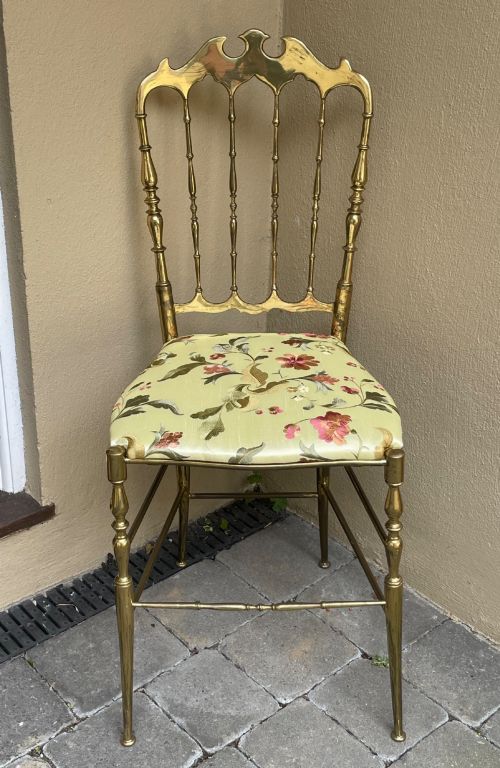


Brass Bedroom Chairs
Brass bedroom chairs bring metallic sheen and compact seating to private quarters, drawing on nineteenth-century and early twentieth-century designs.
Brass Bedroom Chairs
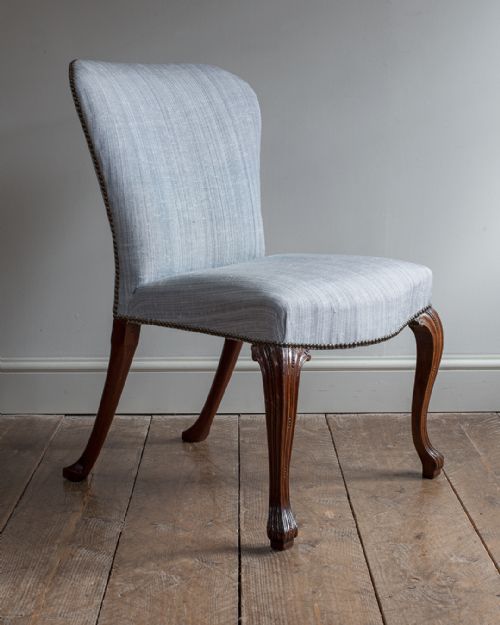
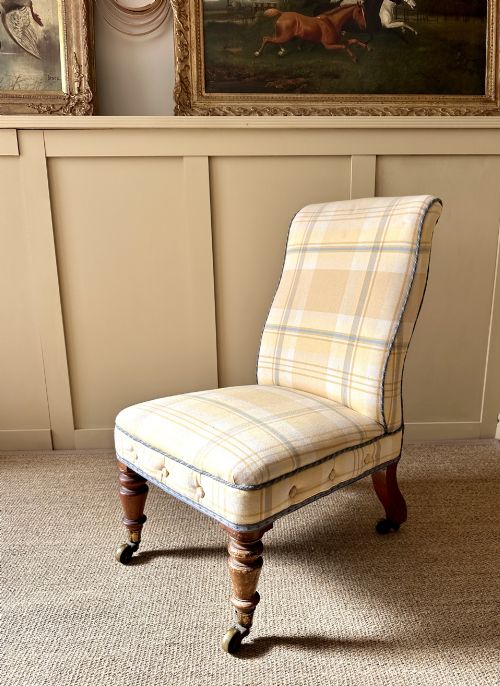
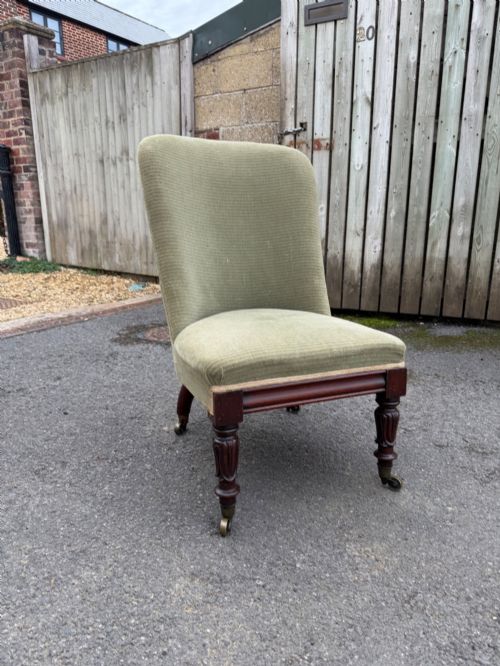
Brass bedroom chairs encompass compact seating forms designed for private chambers, including slipper chairs, occasional chairs, and nursing chairs. The evidence spans the Georgian, Regency, and Victorian periods through to the early twentieth century, capturing diverse historical revivals.
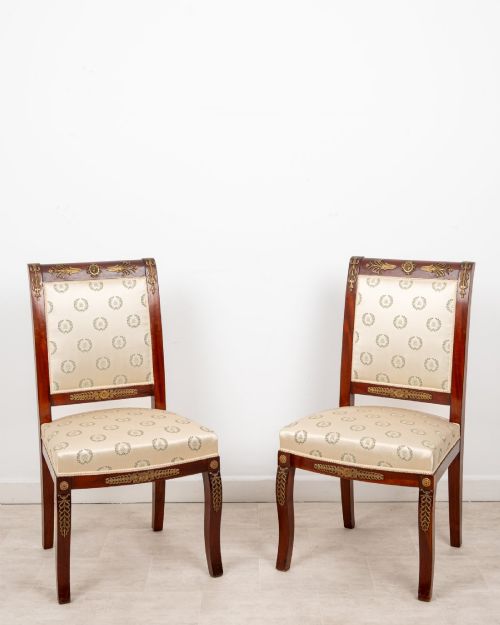
Buyers frequently encounter timber frames augmented with brass mounts, castors, and inlay, alongside occasional solid brass examples from the early twentieth century. Styles range from restrained Regency lines to elaborate French Napoleon III and Empire Revival pieces.
The selection includes low salon chairs, corner chairs, and prayer chairs, offering varied seating heights and back profiles suited to bedroom settings.
Materials and construction
Frames are constructed from hardwoods such as mahogany, beech, walnut, and rosewood, frequently combined with brass components like castors, inlaid stringing, or decorative ormolu mounts. Solid brass construction appears in later twentieth-century pieces.
Upholstery techniques involve button backs, needlepoint panels, and fabric coverings in materials like velvet, utilising wood and timber foundations to support daily use.
Listings feature hardwood frames in mahogany, walnut, and rosewood, alongside upholstered pieces in velvet and needlepoint.
Assessing quality
Quality differentiates through the crispness of brass casting, the precision of wood joinery, and the integrity of internal frame structures. Superior pieces display finely detailed mounts and robust timber frames.
The refinement of stylistic details, such as carved mahogany elements or meticulous brass inlay, separates standard production from exceptional examples.
Harrods, London·Hindley & Sons·Miles & Edward’s·Howard and Sons·Gillows
The Brass Bedroom Chairs Glossary
- Ormolu
- Gilded bronze or brass mounts applied to furniture frames as decorative ornamentation. These mounts enhance the visual richness of French revival pieces.
- Slipper chair
- A low-seated upholstered chair originally designed for bedrooms to assist with putting on footwear. Their low profile makes them practical for modern dressing areas.
- Needlepoint
- Stitched canvas embroidery used for upholstery panels on seats and backs. This textile technique provides decorative texture.
- Castor
- A small wheel mounted on the legs of a chair to ease movement across floors. They appear frequently on nineteenth-century seating.
- Spoon back
- An upholstered chair back shaped in a concave oval resembling a spoon. This form offers ergonomic support and defines Victorian seating.
Brass Bedroom Chairs: Frequently Asked Questions
What is a brass bedroom chair?
A brass bedroom chair is a compact seating piece incorporating brass mounts, castors, or solid metal frames, originating predominantly from the nineteenth and early twentieth centuries.
These chairs serve functional and decorative roles in private spaces, encompassing forms like slipper chairs, occasional chairs, and nursing chairs.
How do I identify a Regency brass chair?
Regency chairs typically feature classical lines, mahogany or simulated rosewood timbers, and precise brass inlay or mounts. They reflect the early nineteenth-century aesthetic.
Look for architectural proportions and restrained ornamentation that distinguish this period from later Victorian revivals.
Where were these chairs used?
These chairs were placed in private bedrooms, dressing rooms, and parlours for seating while dressing or reading. Their compact scale suited smaller domestic spaces.
Today, they function effectively as accent seating in modern bedrooms and studies.
What fabrics are used on antique chairs?
Upholstery materials seen on these pieces include velvet, needlepoint panels, and various traditional woven textiles. Many examples feature button-backed detailing.
Original textiles are supplemented by later reupholstery in sympathetic period fabrics or contemporary velvets.