



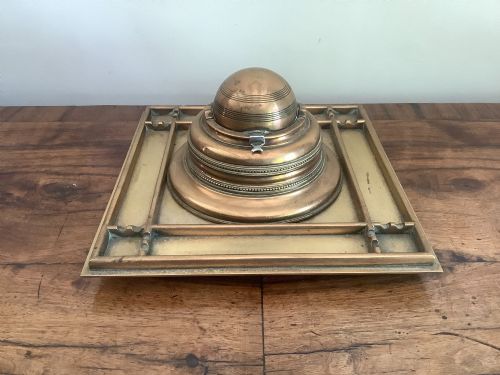


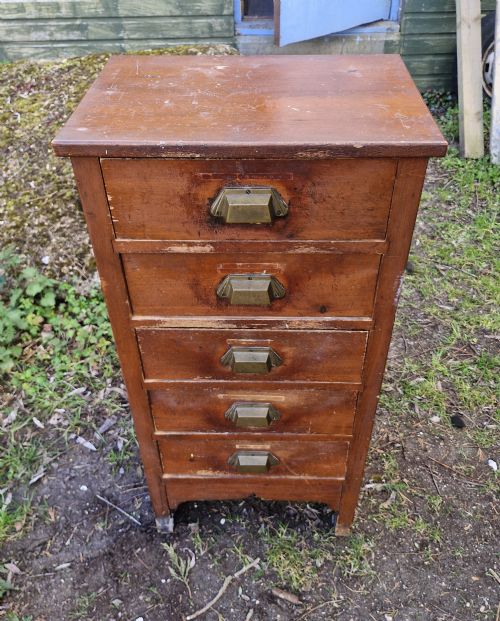


Brass Desk Companion
A brass desk companion brings order and weight to correspondence, combining utility and decorative presence on the working surface.
Brass Desk Companion
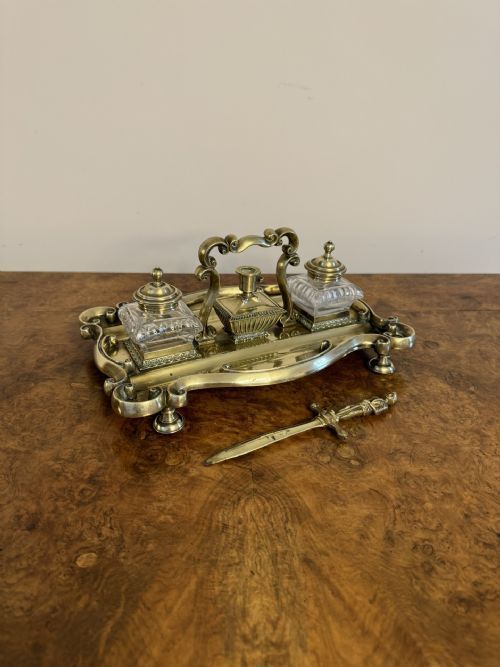
A brass desk companion gathers the necessary implements for writing and organisation into a single designated place upon a table or bureau. These objects encompass inkstands, inkwells, writing slopes, desk sets, and letter boxes spanning from the Georgian and Regency eras through the Victorian and Edwardian periods.
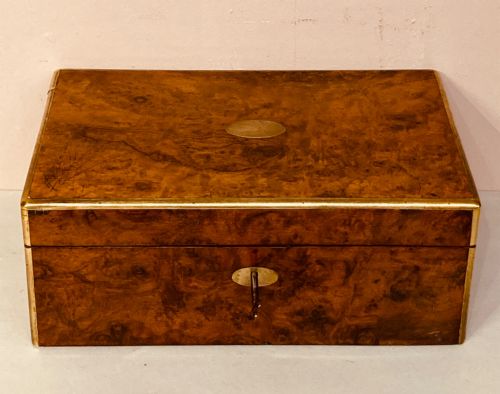
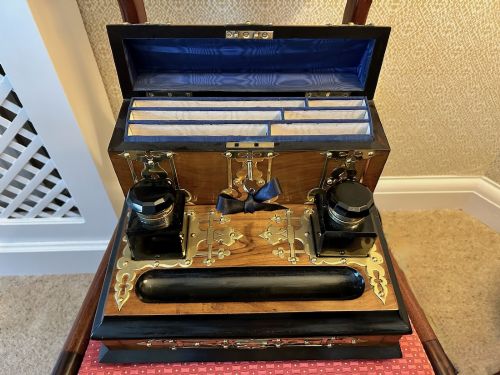
The pieces encountered most frequently on this page date from the nineteenth century, reflecting the Victorian preoccupation with correspondence and desk organisation. Walnut, rosewood, and coromandel foundations frequently host brass mounts, hinges, and handles, turning utilitarian boxes and stands into decorative objects.
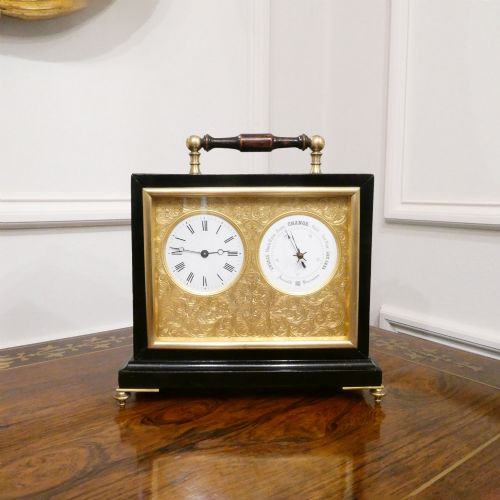
Beyond standard double inkwells and pen trays, the selection includes desk clocks, barometers, and architectural items that served administrative and domestic functions in study rooms and offices. Each iteration responds to the specific writing habits and stationery formats of its decade.
Materials and Construction
Foundations rely predominantly on dense hardwoods such as walnut, burr walnut, rosewood, and coromandel, selected for their rich grain and durability under daily handling. Craftsmen applied brass casting, stamping, and engraving for mounts, handles, corners, and galleries, securing the metal with small brass screws.
Inlaid pieces incorporate brass stringing, mother-of-pearl, or tortoiseshell into the wooden lids and borders, requiring precise hand-fitting. Glass inkwells, sometimes cut or paired with ormolu frames, fit snugly into fitted wooden or brass wells to contain liquid ink without leakage.
Brass Desk Companion Retail Price Guide 2026
Typical asking prices for brass desk companion among the pieces listed under this phrase on Sellingantiques today, from the lower quarter to the upper quarter. They describe what is for sale here now, not the wider market.
Listings feature 19th Century, Victorian, Edwardian, and Regency periods, utilising brass, glass, burr walnut, walnut, rosewood, and coromandel wood.
Assessing Craftsmanship and Material Selection
Quality rests upon the choice of timber and the precision of the brass work rather than sheer ornamentation. Superior examples display carefully matched burr veneers, tight joints in the wooden carcase, and heavy cast brass components rather than thin stamped sheet metal.
The integration of secondary materials such as tortoiseshell, mother-of-pearl, or ormolu demonstrates the ambition of the maker. Finer pieces retain their original glass ink inserts, matching keys, and undamaged brass galleries, whereas simpler utility items rely on straightforward woodwork and minimal fittings.
The Brass Desk Companion Glossary
- Inkstand
- A portable tray or stand holding one or more inkwells, pen trays, and sometimes a sander or wafer box. They form the central element of most writing desk arrangements.
- Writing Slope
- A portable desk with a hinged sloping lid that opens to reveal a lined writing surface and internal compartments for stationery. They were widely used before fitted stationary desks became common.
- Coromandel Wood
- A dense, heavily figured timber from Asia featuring dark brown and black stripes, highly prized for luxury nineteenth-century boxes and desk accessories.
- Ormolu
- Gilt bronze mounted onto furniture or desk accessories, providing a bright golden metallic contrast against dark hardwoods.
Brass Desk Companion: Frequently Asked Questions
What is a brass desk companion?
A brass desk companion is an umbrella term for nineteenth-century writing accessories that incorporate brass mounts, stands, or inkwells.
These items range from simple glass and brass inkstands to elaborate rosewood and coromandel desk sets fitted with clocks and letter boxes.
How were nineteenth-century inkstands used?
Inkstands held liquid ink in glass inserts alongside pens, sealing wax, and sand used to dry wet ink on paper.
Permanently stationed on desks in libraries and studies, they kept writing implements organised before the widespread adoption of the fountain pen.
How do I date a wooden desk set?
Dating relies on timber choices, brass mounting styles, and construction methods characteristic of specific reigns.
Regency and early nineteenth-century pieces often feature rosewood with delicate brass stringing, while Victorian examples lean toward heavy walnut carcases with robust cast brass handles.
Are original glass inkwells important?
Original glass inserts match the exact dimensions and collar style of the desk stand or inkwell housing.
While replacements are common due to breakage over decades of use, matching period glass preserves the integrity of the piece.
How do I care for coromandel and brass?
Maintenance requires dry dusting with a soft cloth and avoiding moisture that can damage polished hardwood surfaces.
Brass mounts should be left unpolished or treated sparingly to maintain the natural patination acquired over generations.