



Victorian Brass Stationery Holder
A victorian brass stationery holder keeps a writing desk ordered with gleaming metal architecture that rewards daily use.
Victorian Brass Stationery Holder
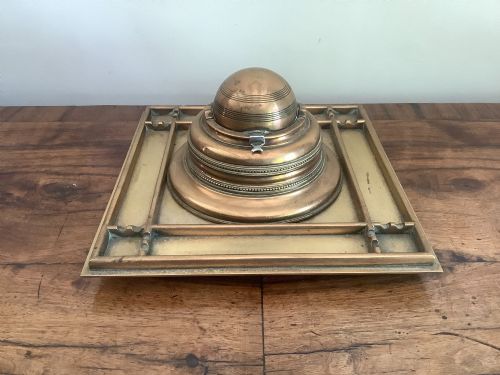
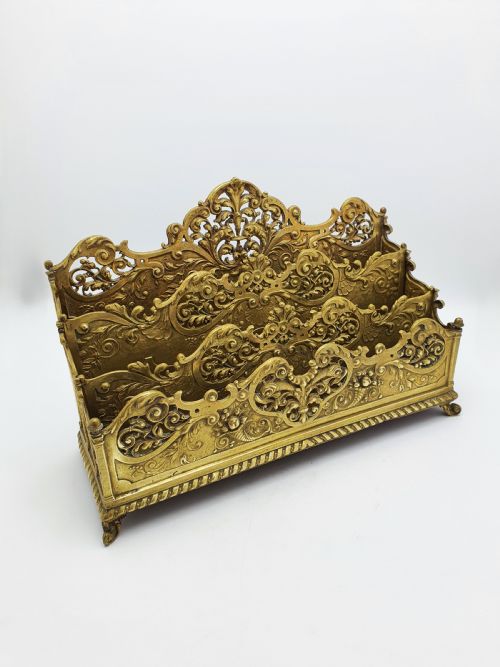
A victorian brass stationery holder encompasses desk sets, wall pockets, letter racks, and letter clips designed for organising correspondence in nineteenth-century studies and parlours. These items emerge from periods spanning the mid-nineteenth century to 1900, reflecting the heavy correspondence culture of the era. Buyers frequently encounter tabletop letter cases, inkstands with integrated inkwells, and sprung brass clips designed for wall hanging or desk placement.
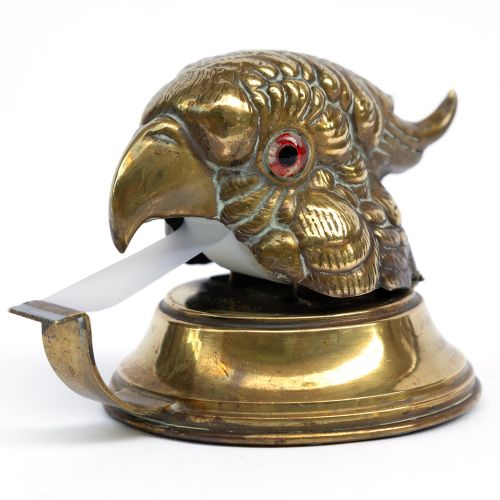
The forms vary from simple cast sheet brass wall pockets commemorating historical events like the HMS Thunderer to ornate desk sets and tabletop stationery boxes. Anglo-Indian examples and Grand Tour Rococo Revival pieces appear alongside utilitarian oak and brass standishes. Most pieces integrate multiple desk functions, combining letter storage with inkwells, tape dispensers, or pen trays.
How they were made
Makers utilised cast brass, sheet brass, and cast brass elements combined with supporting structural materials such as oak, wood, glass, leather, and steel. Desk boxes and tidies typically paired timber carcasses with brass mounts, hinges, and corner reinforcements, while wall pockets and letter clips relied entirely on shaped and cast metal sheets.
Decorative work on these pieces incorporated Rococo Revival scrolls, ornate Edwardian casting, and detailed surface engraving or commemorative detailing. Sprung mechanisms in letter clips relied on tempered steel springs fitted into brass frames to maintain tension for holding papers securely.
Victorian Brass Stationery Holder Retail Price Guide 2026
Typical asking prices for victorian brass stationery holder among the pieces listed under this phrase on Sellingantiques today, from the lower quarter to the upper quarter. They describe what is for sale here now, not the wider market.
One piece incorporates brass salvaged from the Nelson Victory centenary on HMS Thunderer.
What varies in quality
Quality separates robust cast and heavy sheet constructions from lighter, simpler stampings, distinguishing utilitarian desk items from exhibition-standard Grand Tour pieces. The crispness of the casting detail in Rococo Revival scrolls or commemorative motifs defines the upper tier of craftsmanship.
The integration of secondary materials such as figured oak, fitted glass inkwells, and leather interiors elevates the sophistication of a piece. Finer examples maintain original operating hardware, including functional tape dispensers and intact sprung steel clips.
The Victorian Brass Stationery Holder Glossary
- Standish
- A portable desk accessory comprising inkwells, pen holders, and sanders fitted into a tray or stand. These were central to writing furniture before the twentieth century.
- Letter clip
- A spring-loaded metal clip designed to hold papers upright on a desk or mounted on a wall. They often feature decorative cast brass levers.
- Wall pocket
- A hanging receptacle designed to hold letters and documents against a vertical surface. They frequently utilise pressed sheet brass with commemorative or floral designs.
- Rococo revival
- A nineteenth-century design style reviving the asymmetrical scrolls, shell motifs, and naturalistic curves of the eighteenth-century Rococo movement. It appears frequently on grand desk accessories.
- Cast brass
- Molten brass poured into a mould to create three-dimensional decorative and structural components. This technique allowed makers to achieve high relief and ornate detail.
Victorian Brass Stationery Holder: Frequently Asked Questions
What is a brass stationery box?
A brass stationery box is a tabletop letter case enclosed to protect writing paper and envelopes from dust and prying eyes.
These boxes often feature hinged lids and fitted wooden interiors designed specifically for nineteenth-century writing paper sizes.
How were desk sets used?
Desk sets grouped essential writing tools together on a study or library table for daily correspondence.
They provided dedicated spots for ink, blotting paper, and letters, keeping the writing surface tidy.
What is a standish?
A standish is an elaborate inkstand that holds inkwells, sanders for drying ink, and pen trays in a unified metal or wooden tray.
Wealthier Victorian households displayed these prominent accessories on library desks as symbols of literacy and status.
What is an Anglo-Indian desk accessory?
Anglo-Indian desk pieces combine British Victorian forms with regional Indian metalworking traditions and decorative motifs.
These items arrived in Britain via trade and travel during the nineteenth century.