

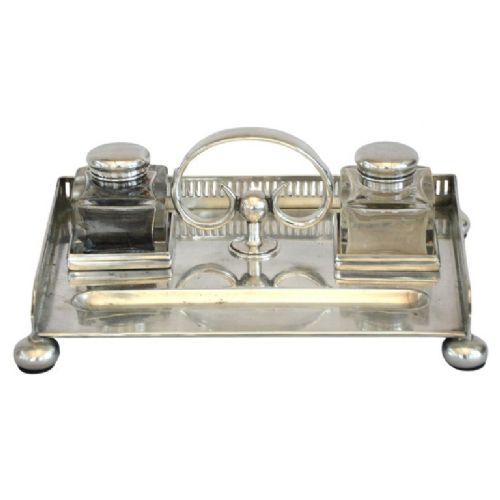
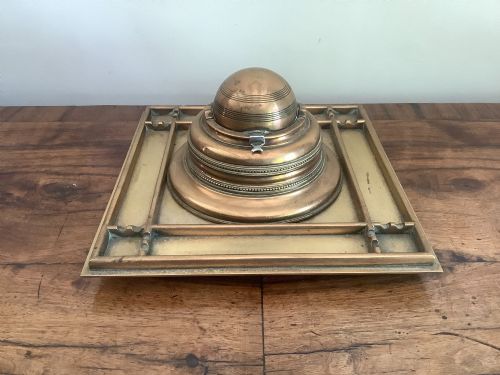





Victorian Inkpot Stand
A victorian inkpot stand is a desk accessory for holding writing ink, and collectors want one for its fine period craftsmanship and utility.
Victorian Inkpot Stand
A victorian inkpot stand is an essential desk accessory designed to hold writing ink and pens securely in place during use. These items serve both a practical function for correspondence and a decorative purpose for the writing desk.
Most examples found on this page date from the Victorian era and the broader nineteenth century, alongside later Edwardian pieces. They appear in forms ranging from simple ceramic vessels to elaborate desk stands incorporating multiple holders.
How they were made
Makers utilised a diverse selection of materials, combining metals such as brass, silver plate, bronze, and ormolu with glass, cut glass, ceramic, porcelain, and horn. Bases and stands frequently paired heavy metalwork with fitted glass or ceramic inkwells.
Artisans applied various decorative styles including Art Nouveau, Art Deco, Chinoiserie, Aesthetic Movement, and novelty designs. Specific examples feature detailed casting, horn manipulation, and painted ceramic finishes.
Victorian Inkpot Stand Retail Price Guide 2026
Typical asking prices for victorian inkpot stand among the pieces listed under this phrase on Sellingantiques today, from the lower quarter to the upper quarter. They describe what is for sale here now, not the wider market.
Several pieces take the delightful form of a boar's foot, a horn of plenty, or Pierrot the clown.
What varies in quality
The standard of workmanship depends heavily on the complexity of the design and the finish of the materials. Elaborate novelty forms and finely cast bronze or ormolu pieces demonstrate greater artisan skill than plain utilitarian vessels.
The integration of mixed materials, such as horn mounted in metal or porcelain fitted to a brass base, distinguishes finer items. Maker involvement and decorative detail across styles like Art Nouveau or Continental porcelain also influence the overall character.
The Victorian Inkpot Stand Glossary
- Inkstand
- A desk stand designed to hold one or more inkwells along with pen rests. These pieces anchor the writing surface.
- Ormolu
- Gilded bronze mounted onto decorative objects and desk stands. This technique provides a bright golden finish.
- Cornucopia
- A horn-shaped vessel symbolising abundance. This form appears in desk accessories fashioned from horn or metal.
- Novelty inkwell
- An inkwell shaped to resemble an animal, figure, or object rather than a standard container. These whimsical items were popular desk ornaments.
- Aesthetic Movement
- A late nineteenth century design style emphasising visual beauty over narrative or moral function. Pieces from this movement often feature refined decorative motifs.
Victorian Inkpot Stand: Frequently Asked Questions
What is a victorian inkpot stand used for?
A victorian inkpot stand was used on writing desks to hold liquid ink safely while individuals wrote letters with dip pens. They kept the ink accessible and prevented spills on important correspondence.
Over time, these desk accessories evolved into decorative centrepieces for the study, reflecting the personal taste and status of the owner through materials like brass, silver plate, and porcelain.
How do I clean a metal inkstand?
Cleaning metal desk stands requires gentle dusting with a soft, dry cloth to preserve the original surface finish. Avoid harsh chemical cleaners that can damage silver plate, bronze, or ormolu.
If the piece incorporates glass or ceramic inserts, remove them carefully for washing with mild soapy water before replacing them securely in their stands.
Are these inkstands suitable for daily use?
While these pieces were originally built for everyday writing tasks, modern use requires care due to their age and delicate components. Collectors often display them as decorative desk ornaments rather than functional ink containers.
Using modern ink in antique glass or ceramic wells can also cause staining if the material is porous or has historic hairline cracks.
How do I identify the period of an inkwell?
Dating an inkwell involves examining the materials, manufacturing techniques, and stylistic markers such as Art Nouveau curves or Victorian ornamentation. Registration marks and maker stamps can also provide specific production eras.
Comparing the construction methods of the brass base, ceramic body, or silver plating helps distinguish nineteenth century pieces from later Edwardian or twentieth century examples.