




Brass Crystal Lamp Pair
These brass crystal lamp pair selections combine cast metal frames with refractive glass drops for a brilliant, reflective glow.
Brass Crystal Lamp Pair
A brass crystal lamp pair brings together metalwork and refractive glass elements to create dual illumination sources for surfaces and walls. When you search for a brass crystal lamp pair, you encounter matched sets originating from the Victorian, Edwardian, and early twentieth-century periods.
The selections on this page span table lamps, wall lights, and candelabra utilising brass, gilt bronze, and cut crystal. French styles predominate alongside English examples, reflecting traditional interior lighting tastes from the nineteenth and twentieth centuries.
Materials and construction methods
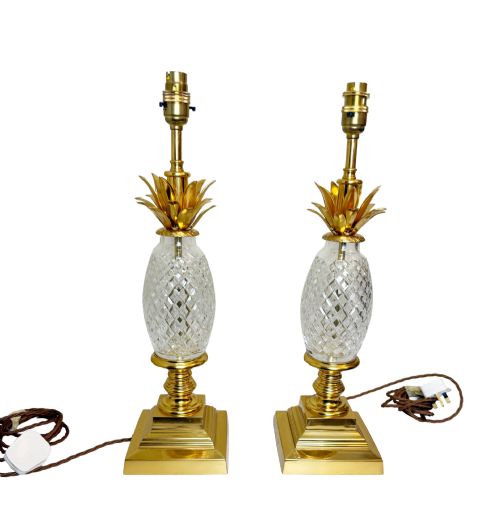
Frames are cast in brass, gilt bronze, or gilt metal, providing a sturdy metallic armature to support hanging glass elements. These structural components are frequently shaped into columns, figural motifs like pineapples, or ornate arms.
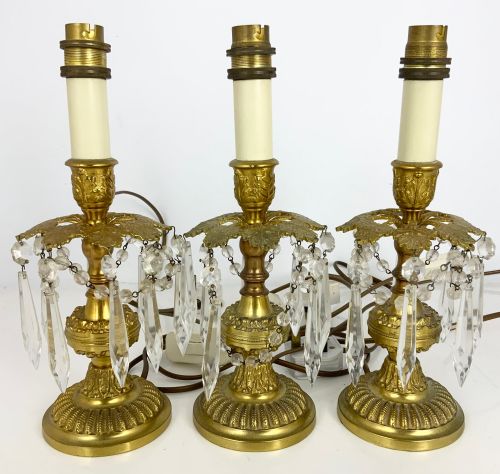
Crystal and cut glass drops, lustres, and beads are suspended from the metal frames using wire or pins to catch and scatter light. The combination of polished metal and faceted glass defines the visual character of these pieces.
Listings feature brass, gilt bronze, and cut crystal across table lamps, wall lights, and chandeliers spanning the Victorian period to the 1930s.
Factors that determine quality
The refinement of the cast metal framework separates standard production from finer examples, with crisper detailing in the chasing and casting distinguishing better workshops. Heavier gauge brass and properly weighted bases provide superior stability and presence.
The clarity and cut of the crystal pendants dictate the refractive brilliance of the fixture, where deeply faceted glass creates sharper light dispersion than pressed alternatives. Completeness of the hanging drops and matched prisms across both items preserves the integrity of the pair.
F. and C. Osler·Clarkes
The Brass Crystal Lamp Pair Glossary
- Girandole
- A branched candleholder or light fixture fitted with mirrors or crystal drops to multiply the reflected light. These decorative pieces often feature elaborate gilt bronze or brass frames.
- Ormolu
- Gilded bronze mounts and decorative elements applied to furniture and lighting fixtures. The technique involves fusing a mercury and gold amalgam to a bronze base.
- Cricklite
- A proprietary brand of patent glass candlesticks and night lamps popular in the Victorian era. These pieces frequently incorporate brass fittings and specialised shade designs.
- Lustre
- A table decoration or lighting fixture hung with cut glass pendants that catch and reflect ambient illumination. They appear in both single candle forms and wired lamp configurations.
- Spike chandelier
- A compact hanging lighting fixture featuring a central vertical spike surrounded by arms and crystal drops. These small-scale chandeliers suit lower ceiling heights.
Brass Crystal Lamp Pair: Frequently Asked Questions
How were these lamps used historically?
These matched pairs were placed symmetrically on mantelpieces, sideboards, or dressing tables to provide both functional illumination and decorative symmetry. In the Victorian and Edwardian eras, pairing lighting fixtures maintained balanced interior aesthetics in formal rooms.
Candle versions lit evening spaces before widespread electrification, while later examples adapted these designs for early electric bulbs or boudoir use.
How do I care for brass and crystal pairs?
Dust crystal pendants regularly using a soft brush or specialised glass cleaner applied to a cloth rather than sprayed directly onto the fixture. This prevents moisture from reaching old wiring or tarnishing the metal armature.
Polish the brass or gilt bronze gently with a dry cloth, avoiding harsh chemical cleaners that strip the original patination or gilding from the surface.
How can I tell the period of a lamp pair?
Examine the casting quality, fixing methods, and electrical wiring where present, as Victorian and Edwardian pieces show different construction marks than later revivals. Style indicators like French Neoclassical or Belle Epoque motifs often align with specific decades between 1880 and 1930.
Patina on the brass and the cut style of the crystal drops also offer clues to the manufacturing era, distinguishing nineteenth-century work from later twentieth-century interpretations.
Can older lamps be used safely today?
Many antique fixtures have been rewired during their history to meet modern electrical standards for safe domestic use. It is standard practice to have any vintage lighting checked by a qualified electrician before installation.
Original components like frames and crystal drops remain intact while modern internal wiring ensures the piece functions reliably in a contemporary home.