






Brass Crystal Candlestick
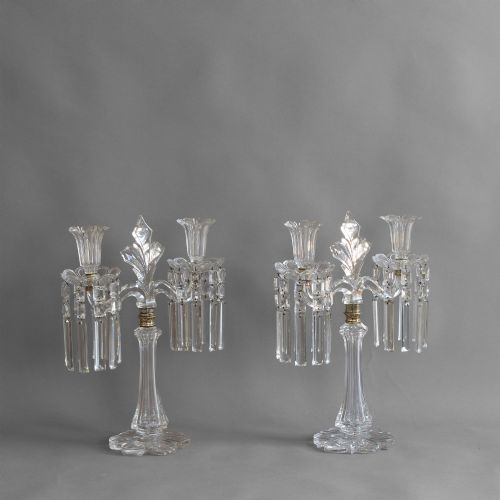
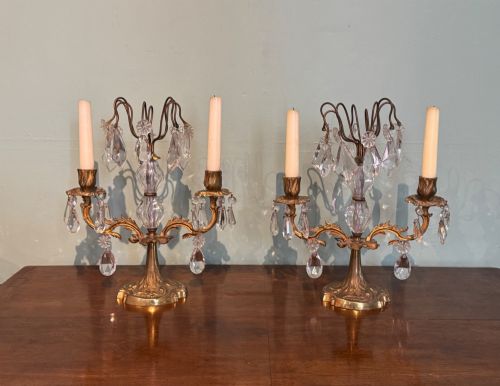
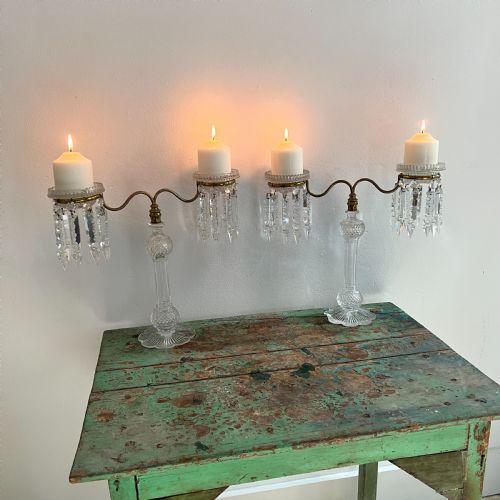
These brass crystal candlestick pieces combine heavy metal bases with refractive glass drops, catching the candlelight across several centuries.
Brass Crystal Candlestick
A brass crystal candlestick brings together cast metal frames and cut glass elements designed to hold candles and illuminate rooms. When searching for a brass crystal candlestick, buyers encounter forms ranging from single sconces to elaborate multi-arm candelabra and lustre sets.
The pieces listed on this page span several distinct periods including the Regency, Victorian, and Edwardian eras. Buyers will frequently find paired items featuring hanging glass drops, storm shades, and branch configurations.
Origins vary from English workshops to French and Italian makers working in styles such as Rococo Revival, French Empire, and Italian Baroque. These items function both as functional lighting and decorative centrepieces for mantelpieces and dining tables.
Materials and Construction
Makers utilised brass, gilt bronze, gilt metal, and ormolu to form the structural mounts and candle nozzles. These metal components provide the necessary weight and rigidity to support glass elements.
Cut glass and crystal form the hanging lustres, drip pans, and central shafts that refract the flame. Artisans shaped these glass components through cutting and polishing to maximise sparkle under artificial or natural light.
Green marble makes an unexpected cameo among the brass and crystal.
Factors of Quality
Quality rests upon the crispness of the metal casting and the depth of the hand-cut facets on the glass drops. Finer examples display sharp chasing on the brass or ormolu alongside heavy, clear crystal components with minimal inclusions.
Proportion and structural integrity separate standard production from superior pieces. Well-balanced arm assemblies and complete sets of matching lustre drops indicate higher workshop standards during the manufacturing process.
Clarke’s
The Brass Crystal Candlestick Glossary
- Lustre
- A decorative tabletop piece featuring hanging glass pendants designed to reflect candlelight. These pendants are suspended from a ring beneath the candle nozzle.
- Ormolu
- Finely ground high-carat gold applied to a bronze or brass base metal object. This technique provides a rich, durable golden finish found on French pieces.
- Cricklite
- A patented night-light and candelabra system introduced during the Victorian period. These items typically incorporate specialised glass shades and Clarke's patent fittings.
- Storm shade
- A tall cylindrical glass shade fitted over a candle to protect the flame from draughts. They appear on specific nineteenth-century candlestick and lustre forms.
- Candelabra
- A multi-branched lighting device holding two or more candles. These differ from single candlesticks by distributing light across several arms.
Brass Crystal Candlestick: Frequently Asked Questions
What is a lustre?
A lustre is a decorative candlestick or candelabrum fitted with hanging glass pendants that catch and multiply the light from the candle flame.
These pieces were popular dining table and mantelpiece ornaments throughout the nineteenth century, combining metal bases with cut glass elements.
How do I date these pieces?
Dating relies on stylistic clues such as the heavy neoclassical forms of the Regency period versus the ornate revival styles of the Victorian era. Material finishes like ormolu, gilt bronze, and cast brass also point to specific nineteenth-century manufacturing decades.
Examining the cut of the crystal and the construction of the candle sockets helps narrow the period of production further.
Were these electrified?
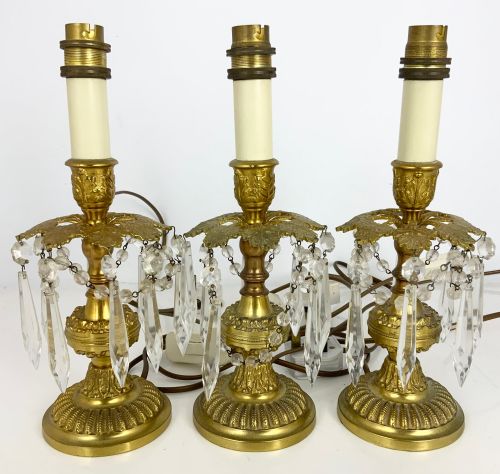
Most pieces from the eighteenth, nineteenth, and early twentieth centuries were originally designed solely for wax or tallow candles. Many were adapted for electricity later in their lifespans.
Buyers find both unadapted candle-bearing examples and those converted into table lamps.
How do I clean them?
Cleaning requires removing dust with a soft brush and washing glass drops in lukewarm soapy water while keeping moisture away from antique metal surfaces. Brass and gilt components should be dusted gently without harsh metal polishes that remove historic patination.
Careful handling prevents damage to delicate glass arms and hanging crystal pendants.