


Crystal Prism Candelabra
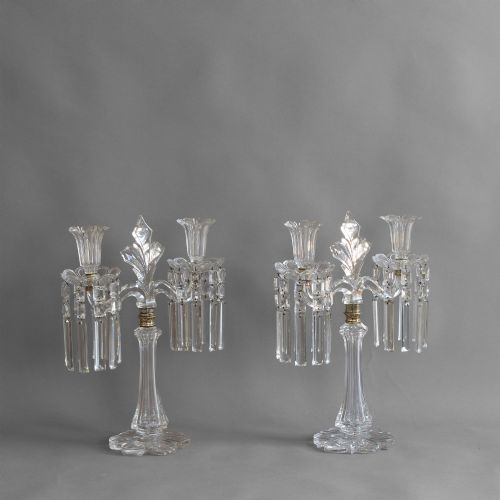
Crystal prism candelabra catch the light across a room and reward close inspection with exceptional glass-cutting and metalwork detail.
Crystal Prism Candelabra
Crystal prism candelabra encompass multi-branch candle holders, table candelabra, girandoles, and lustre candlesticks fitted with hanging glass drops. When people search for crystal prism candelabra, they seek these decorative lighting pieces to add atmosphere and sparkle to a room.
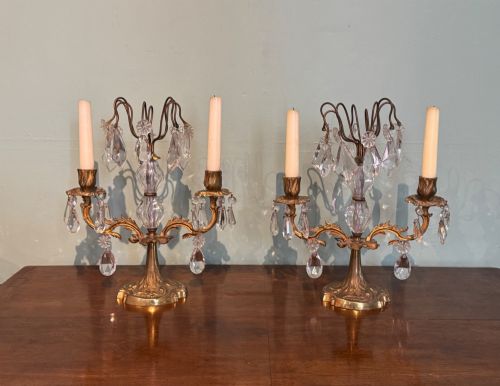
The selections available range from Regency bronze and ormolu examples to Edwardian glass pieces and 19th-century French rococo revival designs. Buyers most frequently encounter pairs of lustres or table candelabra featuring cut glass and crystal components.
Formations include twin light fixtures, five-branch candelabra, and single candlesticks hung with prisms, spanning periods from the Regency era through to the 1930s. Each style reflects the decorative tastes of its originating period, from French chateau elegance to ornate Victorian motifs.
How they were made
Maker workshops combined cast metals such as brass, ormolu, gilt bronze, gilt brass, and silvered bronze with blown and hand-cut glass or crystal. Metal bases and arms provided structural support for the branches while securing the suspended glass pendants.
Prisms and lustres were faceted by hand to maximise light refraction, then hung from the bobêches or drip pans using delicate wire loops or pins. Green marble occasionally served as a solid plinth material beneath the metal mounts.
Foundry workers cast the bronze and brass elements using traditional moulds before chasing the surfaces and applying ormolu or silvered finishes. Glass components were shaped by hand, resulting in subtle variations across each assembled candelabrum.
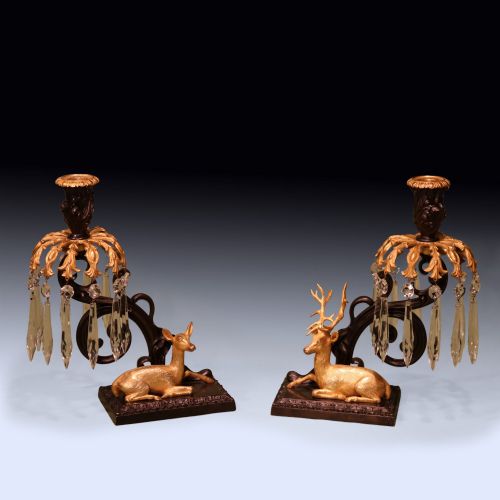
Stag and doe figures occasionally guard the base of a candelabrum, bringing an unexpected touch of woodland wildlife to the dining table.
What varies in quality
The precision of the glass-cutting separates standard items from finer examples, as sharp facets throw cleaner light patterns than rounded edges. Deep hand-polishing on the crystal and glass pendants creates a noticeable weight and brilliance.
Metalwork execution dictates the overall calibre of the piece, with crisp chasing on the ormolu and bronze mounts indicating skilled craftsmanship. Heavy, stable casting in the base and arms ensures the candelabrum holds its branches true without sagging.
The integrity of the matching set or pair influences desirability, particularly when all original hanging prisms remain intact. High-quality pieces integrate the marble, metal, and glass components harmoniously rather than relying on later replacements.
The Crystal Prism Candelabra Glossary
- Lustre
- A candlestick or candelabrum hung with cut glass pendants that refract candlelight. These hanging drops sway gently and catch ambient light.
- Ormolu
- Finely chopped high-karat gold applied to a bronze base using a mercury amalgamation process. This technique gives the metal a rich, enduring golden lustre.
- Girandole
- A decorative branched candlestick or candelabrum, frequently designed to be mounted on a wall or placed on a mirror bracket. The term often describes ornate table pieces with reflective backing or extensive crystal drops.
- Bobêche
- A small collar or disc fitted below the candle nozzle to catch dripping wax. It frequently serves as the attachment point for hanging glass prisms.
Crystal Prism Candelabra: Frequently Asked Questions
What are crystal prism candelabra?
Crystal prism candelabra are decorative lighting fixtures designed to hold candles while suspending faceted glass drops that reflect and scatter light.
They combine metal frames in brass, bronze, or ormolu with hand-cut glass elements, ranging from simple single candlesticks to multi-branched candelabra and girandoles.
How do I date a candelabrum?
Dating relies on examining the metal casting techniques, the style of the mounts, and the cut of the glass prisms. Regency and 19th-century pieces often feature heavier bronze and ormolu work, whereas Edwardian and later pieces display different design proportions.
Comparing the decorative motifs, such as rococo scrolls or neoclassical lines, to known period styles helps narrow down the origin.
Where should I place them?
These pieces suit mantelpieces, sideboards, or dining tables where they can catch daylight and evening illumination. Placing them near a light source enhances the sparkle of the hanging crystal prisms.
Ensure they sit on a stable, level surface away from heavy foot traffic to protect the dangling glass components.