


Glass Table Candelabra
Glass table candelabra catch the light across a room, bringing nineteenth-century and Edwardian sparkle to a dining table or sideboard.
Glass Table Candelabra
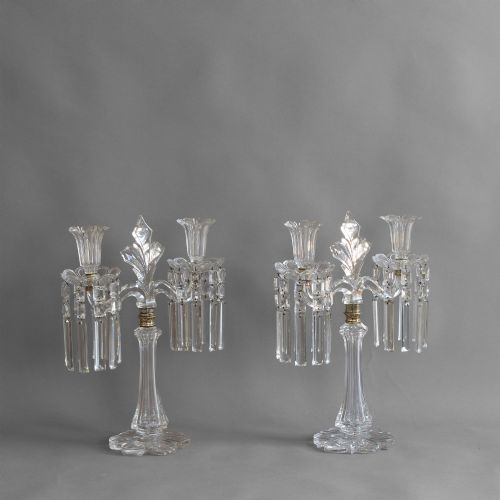
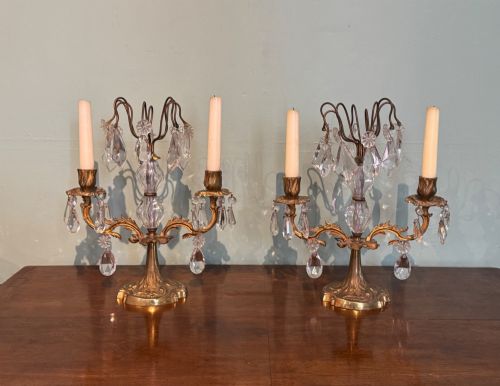
When you search for glass table candelabra, you find multi-branch lighting fixtures designed to sit upon furniture rather than the floor. The examples seen here include Victorian and Edwardian pairs, French rococo revival pieces, and twentieth-century adaptations with multiple candle branches or wired fittings.
Most pieces date from the nineteenth century into the early twentieth century, spanning periods such as 1880, 1900, and the Edwardian era. Forms range from simple two-piece pairs of lustres to large five-branch and six-armed centrepieces hung with cut glass drops.
Makers and origins lean towards French chateau and Louis XVI styles, alongside English and Scottish designs in silver plate and cut glass. You frequently encounter pairs designed to balance each other at either end of a room or along the length of a formal table.
How they were made
Makers combined heavy metal frames of brass, gilt brass, and silver plate with blown and moulded glass components. Frames were cast, chased, and mounted to hold arms and candle nozzles securely.
Glass elements such as crystal, lead crystal, cut glass, and green marble formed the central columns and drip pans. Cut glass drops and lustres were suspended from the arms using small brass wire pins to maximise the reflection of candlelight.
Some nineteenth-century pieces include patented Cricklite fittings, designed to burn small Clarke's night lights safely inside decorative glass shades.
What varies in quality
The weight and depth of the metal casting set the baseline for quality, moving from simple spun brass to heavily chased gilt-brass or silver-plated mounts. Superior pieces display crisp definition in the foliage and scrollwork of French revival frames.
Glass quality depends on the clarity and depth of the cut. Richly faceted lead crystal drops and heavy hand-cut glass bowls catch and refract light far more sharply than thin, moulded glass variants.
The Glass Table Candelabra Glossary
- Lustre
- A tabletop ornament featuring glass pendants hung around a central stem. These pieces use crystal drops to reflect the light of candles or lamps.
- Gilt brass
- Brass coated with a thin layer of gold or gold-coloured alloy. This treatment gives the metal a rich, warm surface that resists tarnishing.
- Silver plate
- A base metal coated with a thin layer of silver. This technique provided the appearance of solid silver at a lower cost for nineteenth-century lighting.
- Garniture
- A set of matching decorative objects designed to be displayed together on a mantelpiece or table. These sets often include a central candelabra flanked by matching candlesticks or urns.
Glass Table Candelabra: Frequently Asked Questions
How do I clean cut glass?
Wash glass components gently in warm water using a mild soap, removing any drops or pendants beforehand.
Dry each piece thoroughly with a lint-free cloth to restore the sparkle of the crystal.
Are these wired for electricity?
Some pieces were adapted later in their lives to function as table lamps with electrical fittings.
Others retain their original configuration for holding candles or Clarke's Cricklite inserts.
How do I spot French styles?
Look for ornate rococo revival scrolls, gilt-brass mounts, and elaborate arrangements of cut glass drops.
These pieces often reflect Louis XVI or Chateau aesthetics from the nineteenth century.