


French Crystal Lustre
These French crystal lustre pieces catch and throw candlelight across a room, bringing the brilliant sparkle of a nineteenth-century salon to any interior.
French Crystal Lustre
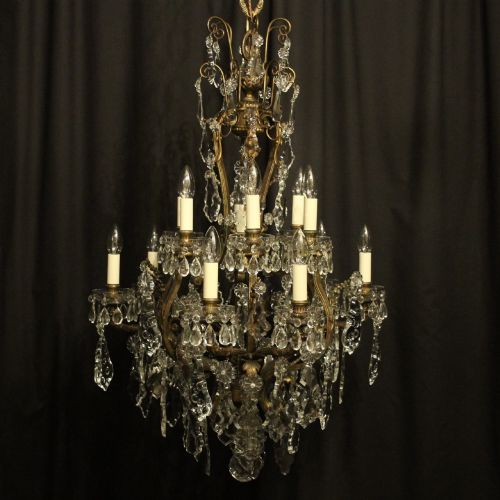
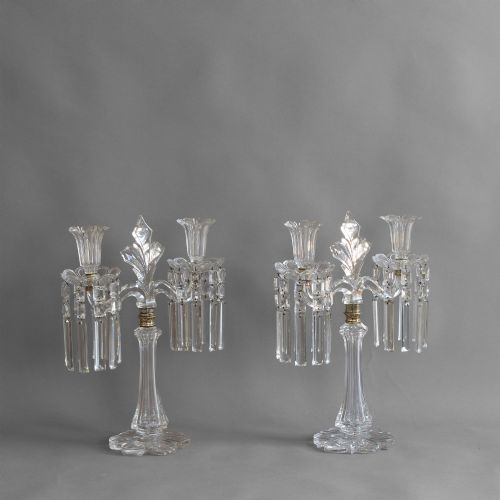
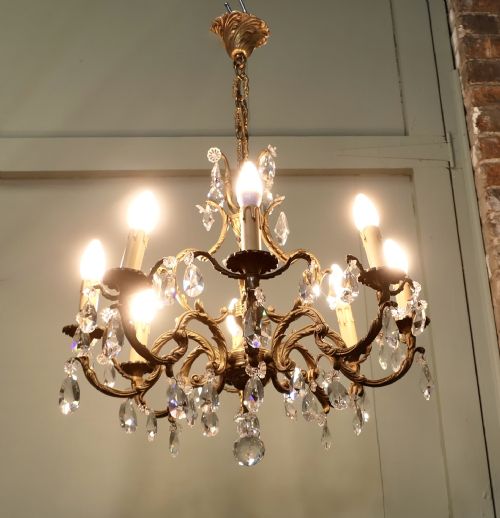
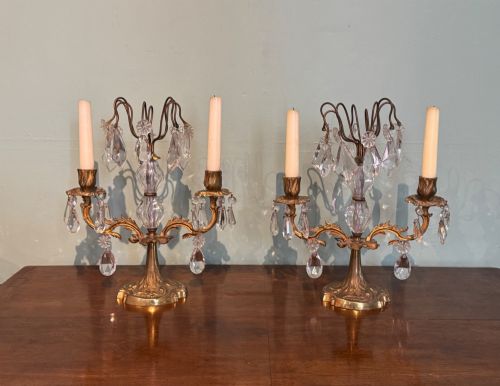
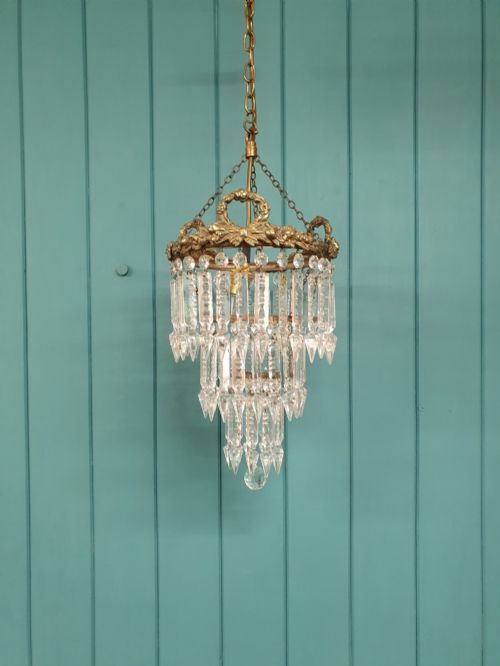
When you search for a French crystal lustre, you are looking at decorative lighting and mantel ornaments designed to refract candlelight and gaslight through cut glass prisms. The selection spans grand multi-arm chandeliers, pairs of table candlesticks, and wall lights decorated with hanging glass drops.
You are most likely to meet nineteenth-century examples and early twentieth-century designs on this page, particularly pieces from the Edwardian era and the 1930s. These range from heavy bronze and ormolu candelabras hung with crystal to smaller table lustres and opaline glass ornaments.
Materials and construction
The foundation of these pieces relies on cast metals such as brass, gilt bronze, and ormolu, which provide structural support and gilded surface brilliance. Manufacturers combined these metal mounts with hand-cut crystal and glass drops suspended by wire loops.
Makers shaped the glass through cutting and moulding, producing faceted drops that maximise light reflection. Gilding applied to bronze and brass elements created the rich metallic sheen characteristic of French styles like Rococo and Empire.
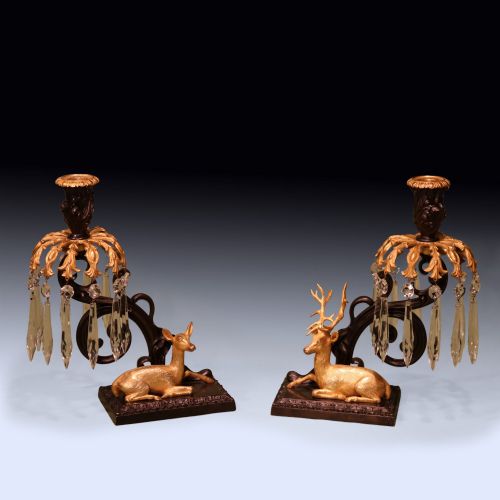
Certain nineteenth-century bronze candlesticks on display incorporate charming figures of stags, does, and cherubs holding the light.
Assessing quality
The excellence of a French crystal lustre lies in the depth of the metal casting and the precision of the glass cutting. Superior examples display crisp chasing on the bronze or ormolu mounts alongside heavy, hand-faceted crystal drops that show sharp edges rather than soft moulding.
Proportion and completeness also separate finer items from simpler production. The best pieces maintain a balanced arrangement of branches and drops where every individual crystal matches in clarity and cut.
The French Crystal Lustre Glossary
- Lustre
- A candlestick, candelabrum, or chandelier hung with cut glass pendants designed to refract light.
- Ormolu
- Gilded bronze, where a layer of gold amalgam is applied to a bronze base and heated to leave a rich metallic finish.
- Opaline
- A delicate, translucent type of glass popular in nineteenth-century decorative objects and table wares.
- Candelabra
- A branched candlestick holding multiple candles, frequently ornamented with hanging glass prisms in French lighting.
French Crystal Lustre: Frequently Asked Questions
What is a French crystal lustre?
It is a decorative lighting fixture or mantel ornament, such as a chandelier or candlestick, decorated with hanging cut glass pendants.
These pieces use the crystal drops to amplify the illumination of candles or early electric bulbs by scattering the light.
How do I hang a chandelier?
Ch chandeliers require secure ceiling anchorage capable of supporting the combined weight of the metal frame and glass drops.
Professional installation is recommended to ensure the electrical wiring and ceiling hooks safely bear the heavy bronze and crystal structure.
How do I clean crystal lustres?
Dust the glass drops regularly with a soft brush and wash them occasionally with a mild soapy solution.
Care must be taken around gilded bronze and ormolu surfaces to avoid stripping the historical metallic finish.
What periods do these pieces come from?
The selection includes items from the Regency period, the nineteenth century, and early twentieth-century Edwardian and 1930s workshops.
Stylistic influences range from French Rococo and Neoclassical designs to later revival pieces.
Were these used for candles?
Many table lustres and candelabras were originally created to hold wax candles before the widespread adoption of domestic electricity.
Some chandeliers and wall lights have since been adapted for modern bulbs while retaining their historic glass drops.