
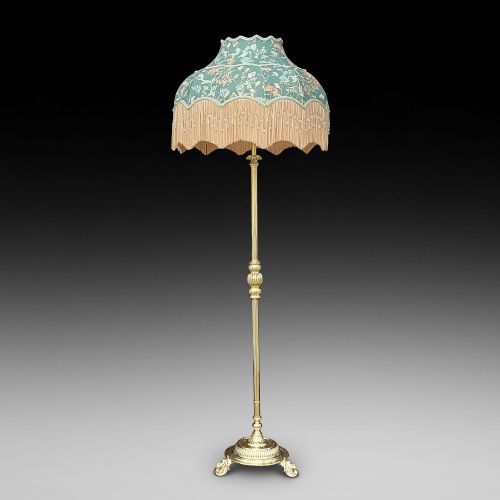
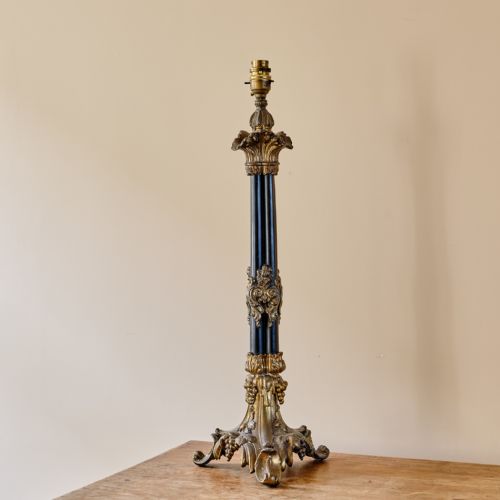
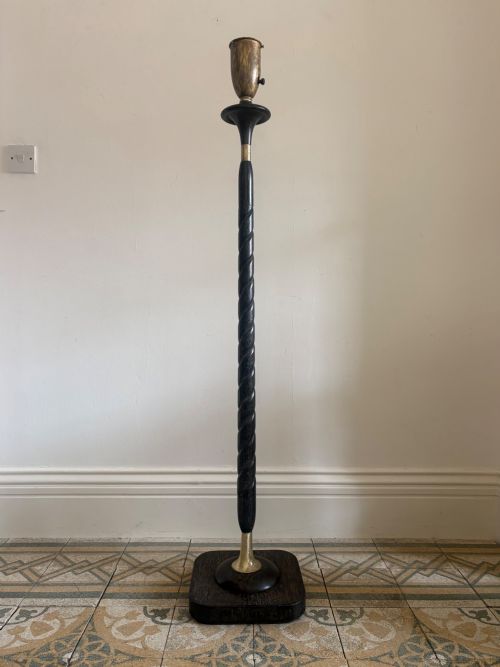
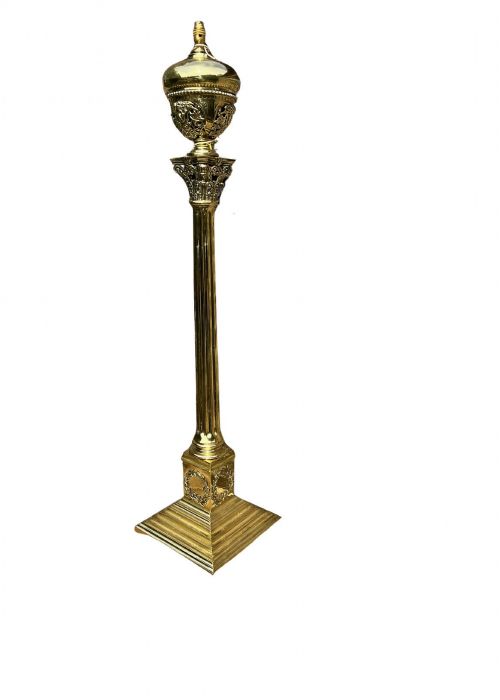



Brass Column Standard Lamp
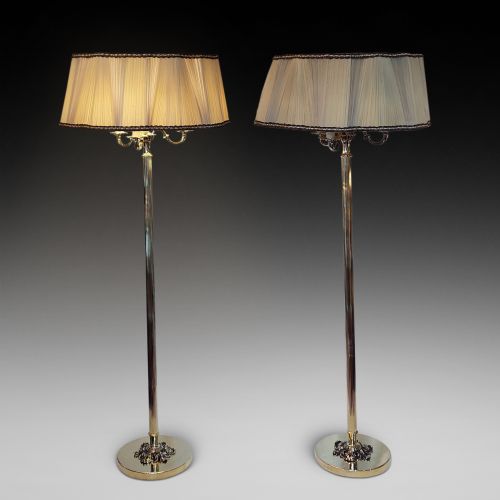
These pieces illuminate a room with architectural dignity, providing the classic presence of a brass column standard lamp in period interiors.
Brass Column Standard Lamp
A brass column standard lamp brings formal proportion and vertical height to a room, drawing the eye upward with classical order. When searching for a brass column standard lamp, buyers encounter pieces spanning the Victorian, Edwardian and early twentieth-century periods.
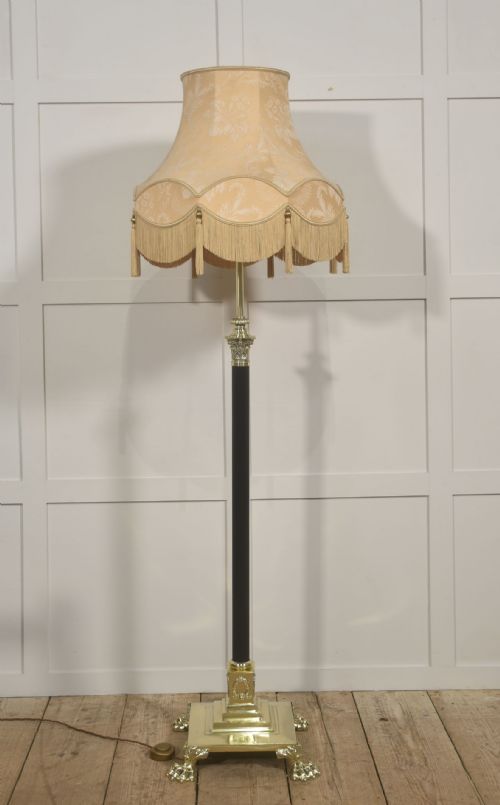
The prevalent form adapts the architectural orders, notably the Corinthian capital atop a fluted or plain shaft. These tall floor lamps frequently incorporate telescopic mechanisms or adjustable stems designed originally for oil lighting or early electricity.
How they were made
Maker's workshops cast brass components, turning columns on lathes and detailing capitals with intricate acanthus leaves. Heavy stepped bases, often loaded with cast iron or weighted materials, provide stability for the tall upright shaft.
Many examples combine cast and spun brass with supplementary materials such as ebonised wood, marble, gilt bronze and copper. Telescopic inner tubes allow the height to be adjusted smoothly via collar screws.
Some telescopic columns still retain their original oil wick adjusters, whispering of evenings spent trimming flames before the switch to the light bulb.
What varies in quality
Quality rests in the crispness of the casting on the capital and the gauge of the brass used for the column. Heavier, solid brass construction with substantial stepped bases distinguishes finer productions from lighter, utilitarian alternatives.
The engineering of the extending mechanism and the retention of original threading and collars separate standard workshop output from exceptional examples.
Hinks
The Brass Column Standard Lamp Glossary
- Corinthian column
- An architectural order featuring an ornate capital decorated with rows of acanthus leaves. This motif appears frequently on the upper shaft of nineteenth-century floor lamps.
- Telescopic
- An extending stem mechanism allowing the overall height of the lamp to be adjusted up and down. This feature relies on inner and outer sliding brass tubes secured by a tightening key.
- Neoclassical
- A style drawing inspiration from classical antiquity, favouring symmetry, columns and restrained enrichment. It dominates the design vocabulary of these standard lamps.
- Uplighter
- A lighting configuration directing illumination upwards toward the ceiling rather than down through a shade. These fittings often utilise specialised reflectors or multi-arm arrays.
Brass Column Standard Lamp: Frequently Asked Questions
How do I adjust the height?
Many of these lamps feature a telescopic mechanism with a thumb screw or collar on the upper shaft. Loosening this screw allows the inner column to slide up or down to the desired position.
Care should be taken to support the weight of the upper section while adjusting to prevent sudden slipping or damage to internal wiring.
Were these originally for oil or electricity?
Numerous surviving examples began life as oil lamps during the Victorian era before being converted to electrical wiring in the twentieth century. The presence of burners, reservoirs or specific galleries often indicates a former oil-burning function.
Later Edwardian and 1920s versions were frequently manufactured specifically for electric lighting, incorporating weighted bases from the outset.
How do I clean the brass?
Gentle dusting with a soft, dry cloth preserves the aged patina that accumulates over decades of use. Avoid harsh abrasive polishes that strip away the authentic character and softer tones built up on the metal.
Applying a microcrystalline wax can protect the surface from tarnishing further without altering the historic finish.