
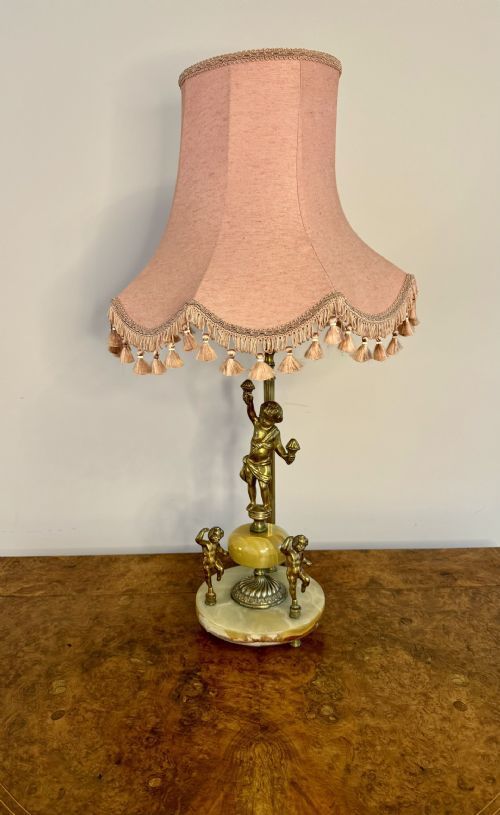


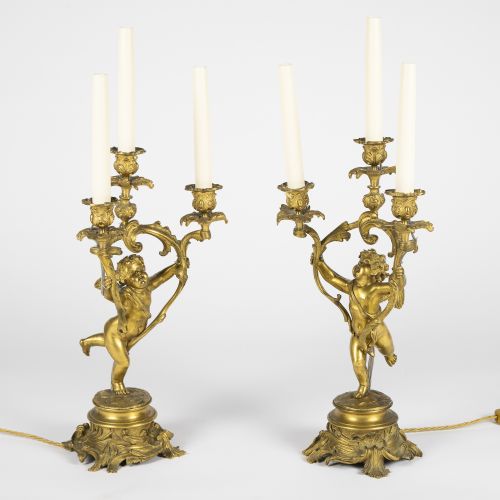

Brass Cherub Table Lamp
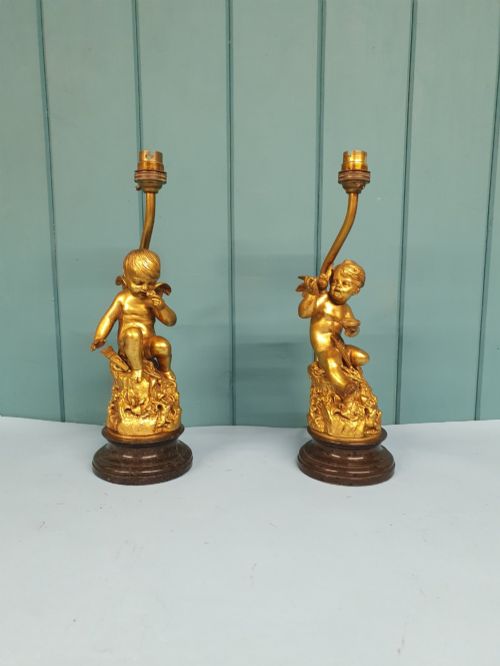
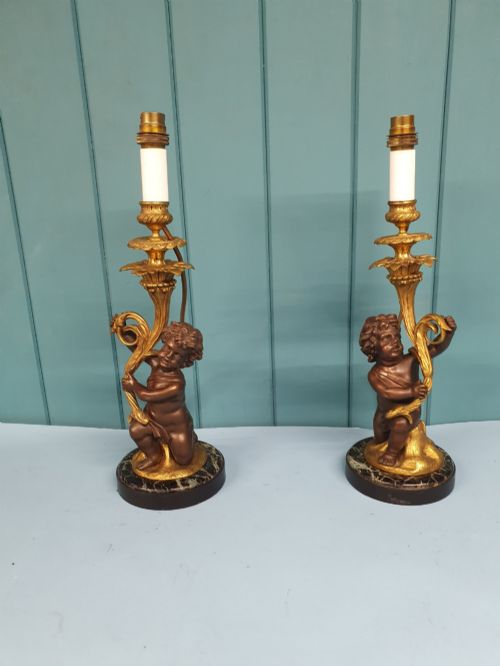
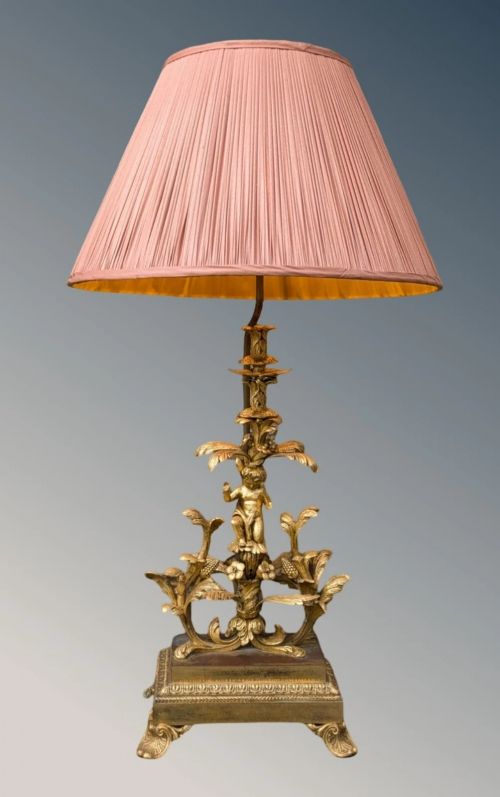
A brass cherub table lamp brings sculptural presence and warm illumination to a room, combining cast metal figures with period wiring.
Brass Cherub Table Lamp
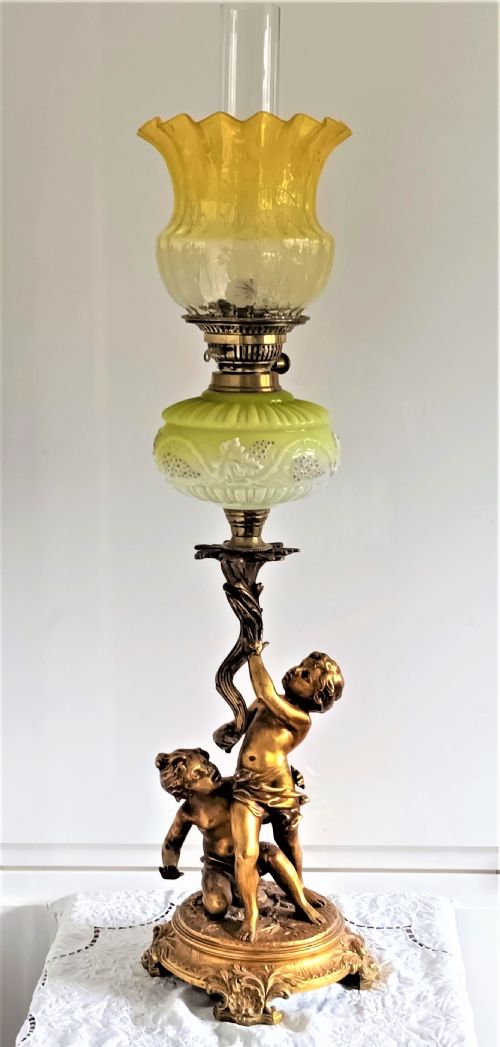
A brass cherub table lamp unites figurative metalwork with functional lighting, spanning oil lamps converted for electricity alongside purpose-built electric designs. These pieces draw from nineteenth-century and early twentieth-century traditions, including Victorian and Edwardian examples.
The materials paired with brass include bronze, gilt bronze, marble, glass, porcelain, onyx, and fabric shades. Forms range from single figures to monumental French ormolu pieces and matched pairs.
What varies in quality
The crispness of the metal casting defines the upper tier, where facial expressions and wing feathers on the cherubs remain sharp rather than softened by wear or secondary tooling. Heavier bases involving solid marble, onyx, or substantial gilt bronze indicate superior original manufacture.
Original material combinations, such as intact Sitzendorf or Meissen porcelain components paired with quality brass work, separate standard production items from finer studio or continental workshop pieces.
One determined cherub stands alongside a dolphin, proving that nineteenth-century foundry workers enjoyed aquatic mammalian company.
Sitzendorf porcelain·Meissen porcelain
The Brass Cherub Table Lamp Glossary
- Ormolu
- Gilded bronze produced by applying a mercury and gold amalgam to a bronze object. This historic technique creates a warm, durable finish seen on French table lamps.
- Putto
- A plump, naked child figure, frequently winged, used widely in Renaissance and revival decorative arts. They appear constantly supporting lamps or standing beside columns.
- Tole Peinte
- Painted sheet metal used historically for lamp components and shades. It brings decorative colour and smooth surfaces to lighting fixtures.
- Converted Oil Lamp
- A fuel-burning lamp adapted for electric wiring. These pieces retain their original glass or porcelain reservoirs while housing modern lamp holders.
Brass Cherub Table Lamp: Frequently Asked Questions
Are these lamps safe to use?
Many older pieces have been rewired during their history to meet modern standards, though testing by a qualified electrician remains sensible before regular use.
Original brass and bronze frames handle modern electrical components reliably once any vintage wiring is replaced.
How do I clean a brass lamp?
Dusting with a soft, dry cloth preserves the aged patina on nineteenth-century brass and gilt surfaces without removing the finish.
Harsh metal polishes should be avoided, particularly on gilt bronze and ormolu, to prevent stripping the historic surface.
Can I replace the lampshade?
Shades can be swapped to suit interior lighting needs, provided the fitting matches the harp or shade carrier on the lamp.
Fabric and glass shades both appear across the period styles, allowing flexibility in styling.
How do I date these lamps?
Dating relies on casting styles, material combinations, and manufacturing marks found on porcelain reservoirs or metal bases.
Victorian and Edwardian pieces often show distinct revival motifs, such as French Rococo or Neoclassical details.