
Brass Chandelier with Crystals
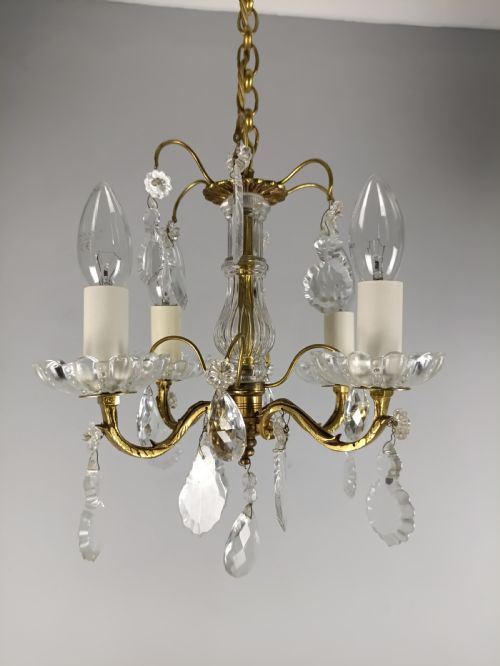
A brass chandelier with crystals brings unmistakable presence to a room through the way cut glass catches and refracts candlelight or electric illumination.
Brass Chandelier with Crystals
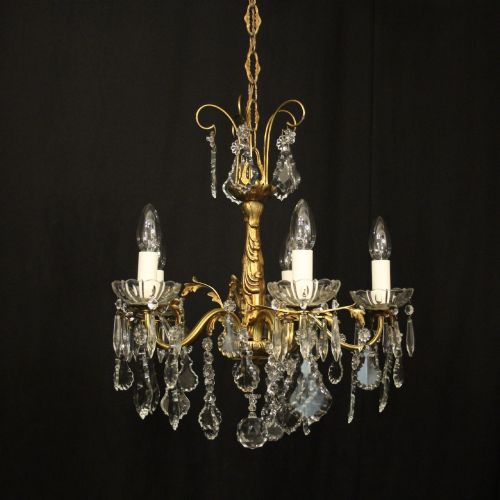
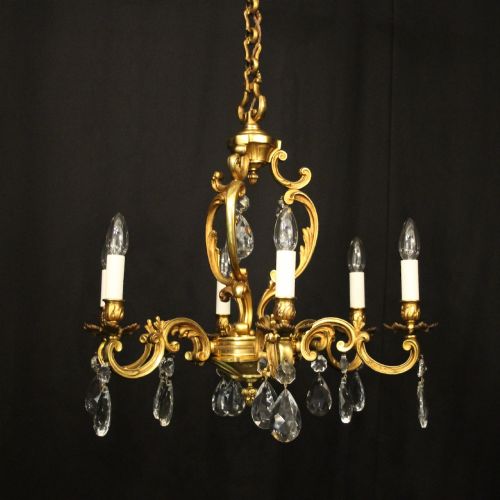
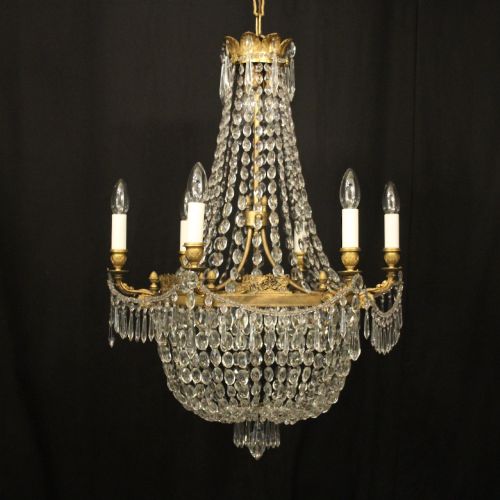
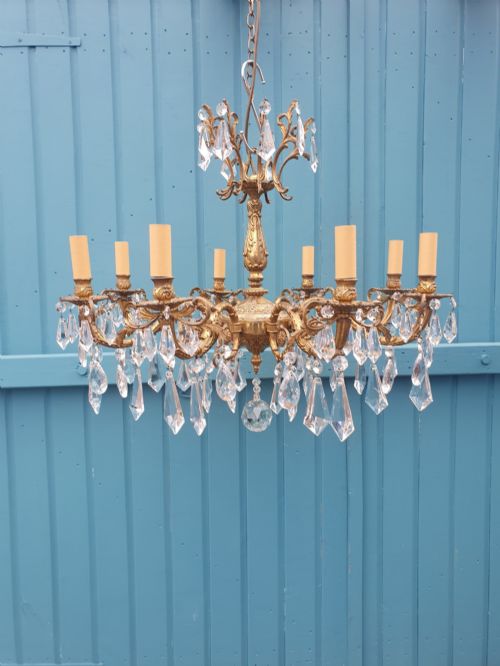
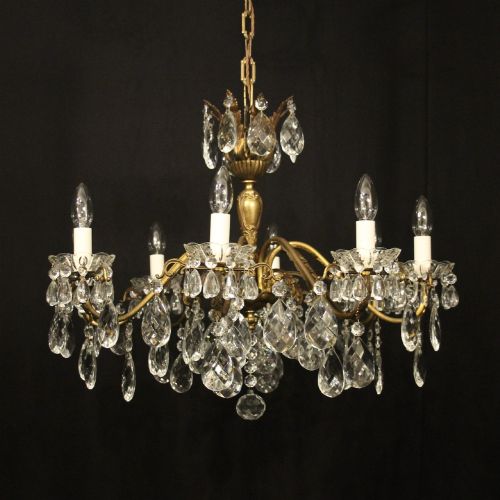
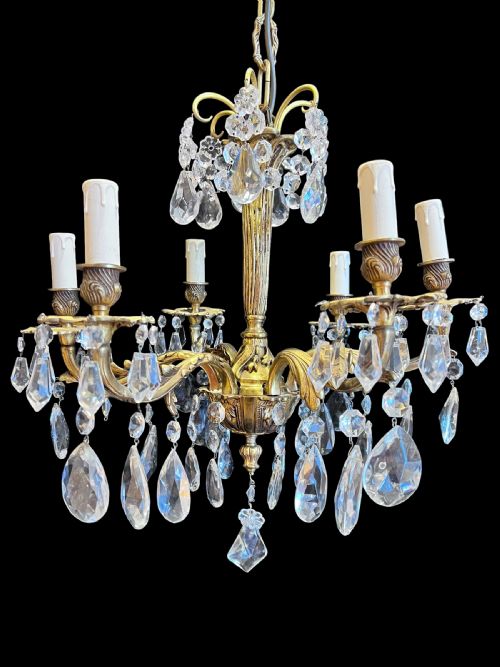
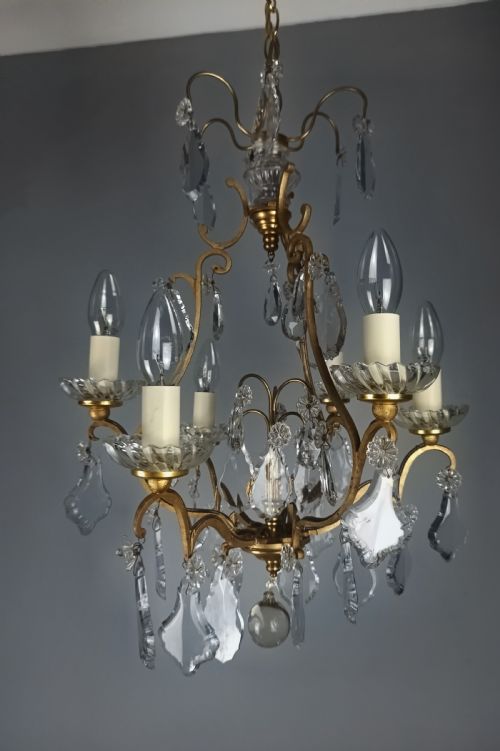
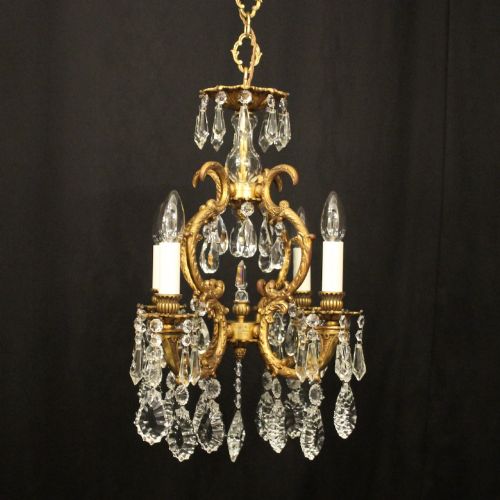
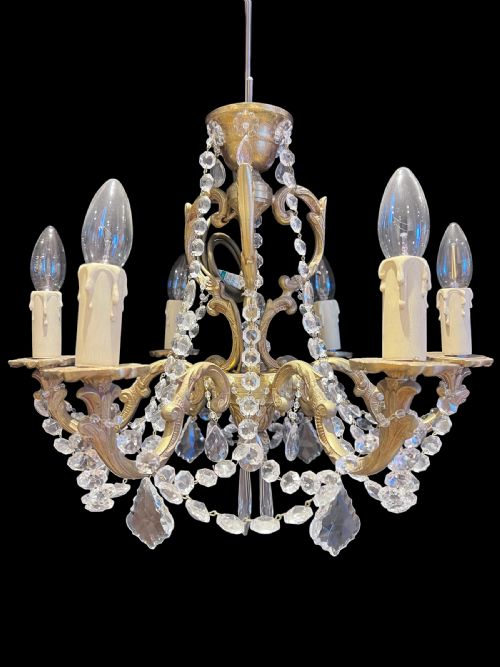
When someone searches for a brass chandelier with crystals, they encounter overhead light fixtures primarily originating from the late nineteenth and early twentieth centuries. The selection spans distinct regional aesthetic traditions, notably French Empire, Italian Rococo Revival, and Edwardian designs.
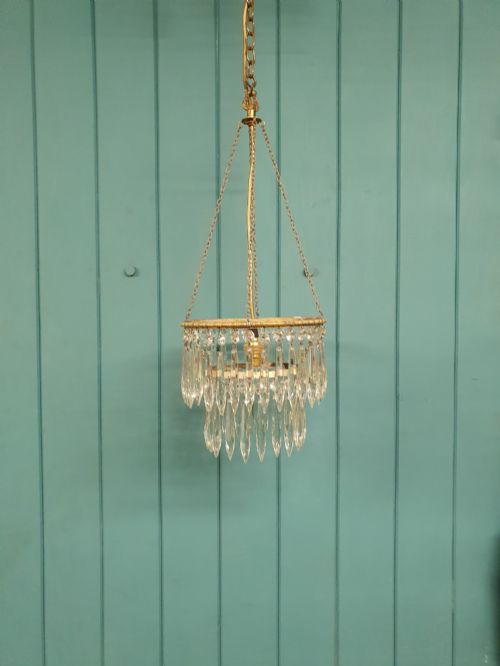
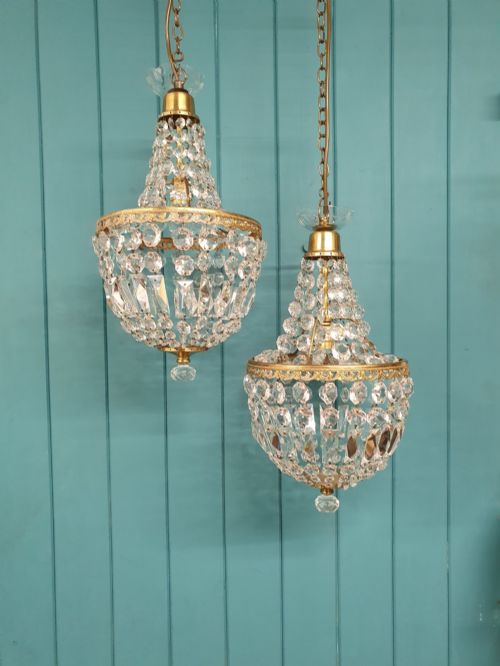
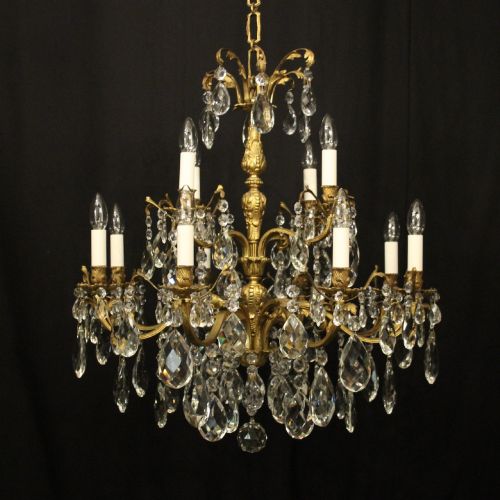
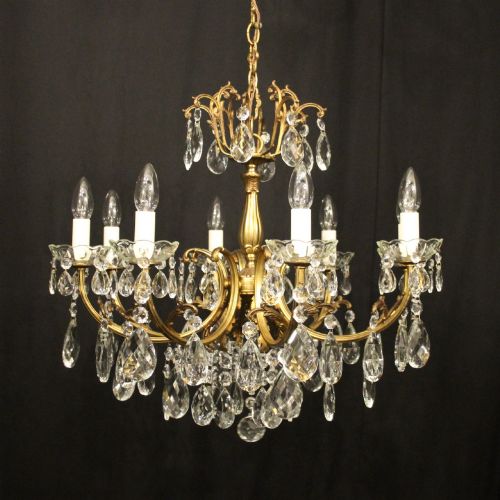
Most examples found here date between 1880 and 1930, taking the form of multi-arm hanging ceiling lights, pendant lights, and tent-and-bag configurations. French and Italian workshops dominate the available forms, ranging from modest single-tier models to large twelve-light statements.
The varieties span strict classical silhouettes decorated with leaf motifs, lion masks, or cherubs, alongside more fanciful creations featuring coloured crystals shaped as fruits, flowers, or teardrops. Buyers regularly find configurations employing swags, beaded arms, and lower bag sections.
Materials and construction
Makers constructed these fixtures using cast brass, ormolu, and gilded bronze for the structural frames, arms, and mounts. These metal elements often incorporated detailed chasing, leaf decoration, and figural accents.
The refractive components rely on clear cut glass, crystal, and specialised crystal glass fashioned into prisms, lustres, beads, and drops. Coloured elements in amber, mauve, orange, red, and blue appear across numerous examples to introduce varied chromatic effects.
Several early twentieth-century examples incorporate decorative glass fruits, hanging cherries and grapes among the crystal drops.
Distinctions in craftsmanship
Quality separates fixtures by the crispness of the metal casting and the depth of hand-cut facets on the glass elements. Superior examples display sharply defined details on bronze or brass mounts like lion masks and foliate swags rather than soft or smoothed-over edges.
The method of suspension and the integration of the crystal drops also dictate overall standard. Tightly strung beaded assemblies and securely wired prismatic drops demonstrate a higher grade of workshop execution than loose or mismatched additions.
The Brass Chandelier with Crystals Glossary
- Tent chandelier
- A lighting fixture featuring an upper canopy of concentric strings of glass beads that slope outward like a tent before dropping to the lower arms.
- Bag chandelier
- A design incorporating a gathered, bag-shaped lower section composed of dense glass drops or bead netting suspended beneath the main tier.
- Ormolu
- Gilded bronze or brass utilised for decorative mounts and structural frames, achieving a rich golden finish through mercury amalgamation or electroplating.
- Prism
- A cut glass or crystal pendant designed to refract light into spectral colours, appearing in forms such as coffin, oblong, or spike shapes.
- Lustre
- A hanging glass or crystal drop suspended from the arms or crown of a fixture to enhance visual brilliance.
- Candelabra
- A branched lighting holder designed for multiple candles or electrified imitation candles, sharing stylistic vocabulary with ceiling equivalents.
Brass Chandelier with Crystals: Frequently Asked Questions
How do I date a brass chandelier with crystals?
Dating relies on stylistic clues, framing materials, and the specific cut of the glass. Fixtures from the late nineteenth century often display heavier cast bronze cage frames and hand-cut facets.
Twentieth-century examples frequently lean toward Edwardian or French Provincial lightness, utilising refined brass mountings and varied coloured crystal fruits or swags.
What is a tent and waterfall chandelier?
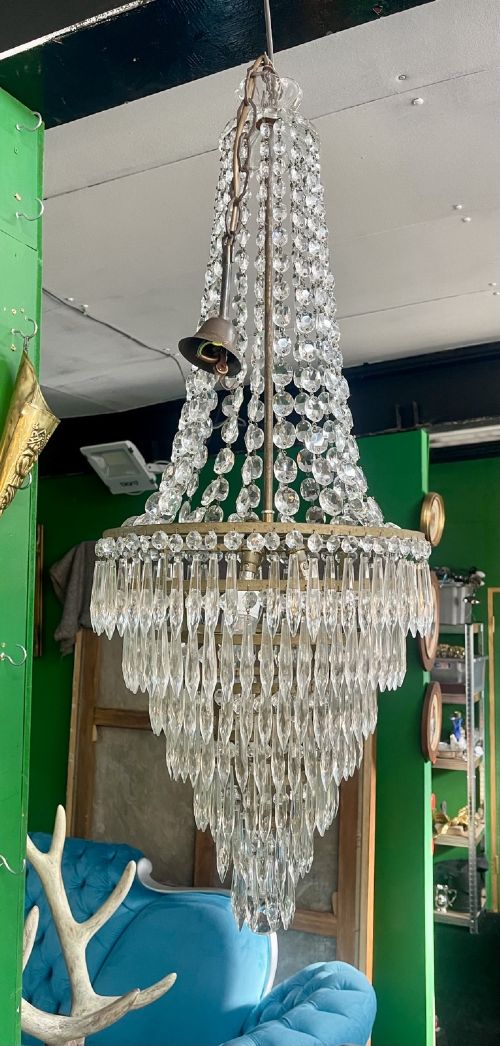
A tent and waterfall chandelier combines an upper conical section of beaded swags with a cascading lower tier of hanging crystals. This profile creates a layered, multi-dimensional silhouette.
These configurations are strongly associated with French Empire and provincial aesthetics found throughout the early twentieth century.
Are these chandeliers suitable for standard ceiling heights?
Sizes vary considerably, ranging from compact nine-inch small fixtures to expansive twenty-five-inch multi-tier statements. Measuring the available vertical drop is essential before selection.
Smaller single-tier or flush styles suit modest domestic rooms, while larger multi-arm versions require substantial clearance to balance their visual weight.
Do coloured crystals indicate a specific period?
Coloured crystals in amber, mauve, blue, orange, and red appear predominantly on pieces produced around the Edwardian era and the early decades of the twentieth century. These tones reflect a taste for playful, decorative chromatic accents.
Clear cut glass remains common throughout all periods, but coloured glass fruits and drops introduce distinct regional charm.