


Crystal Tent and Waterfall Light
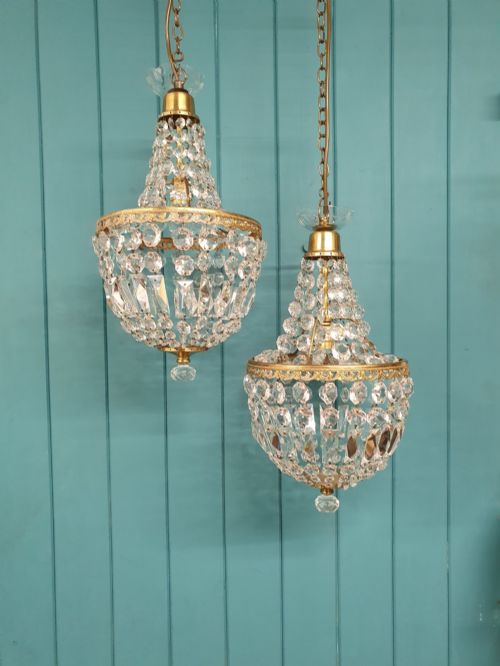
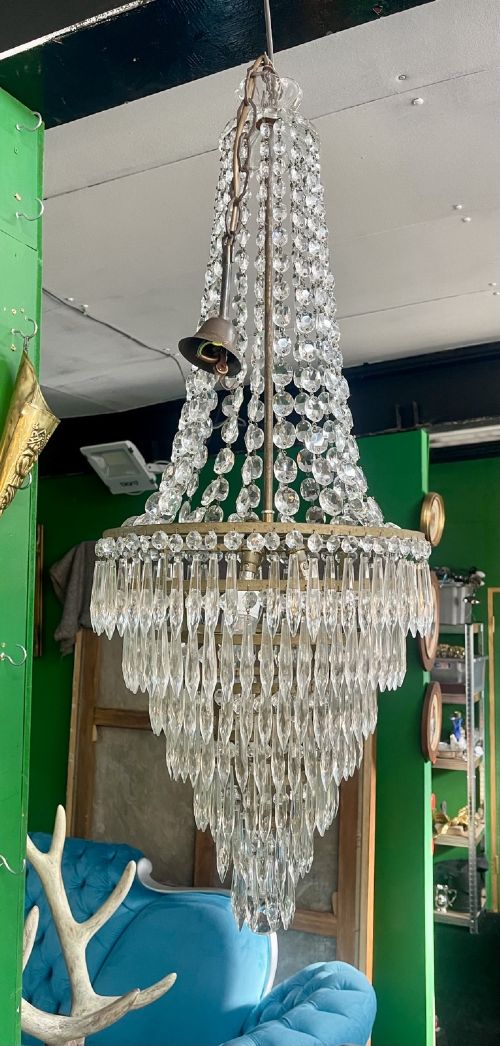
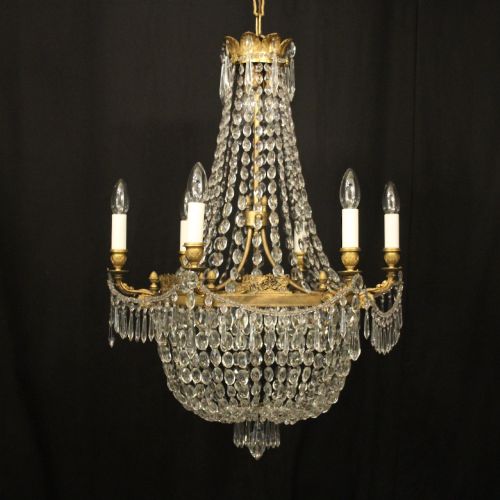
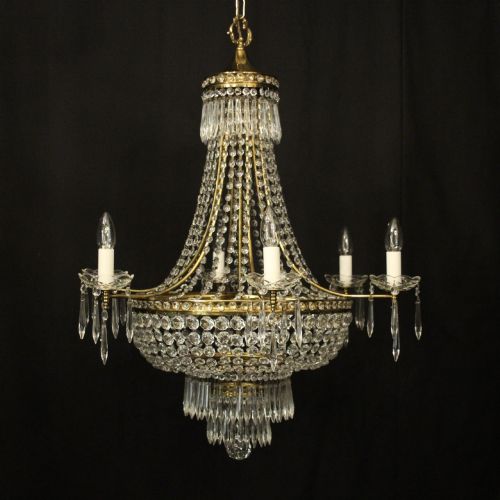
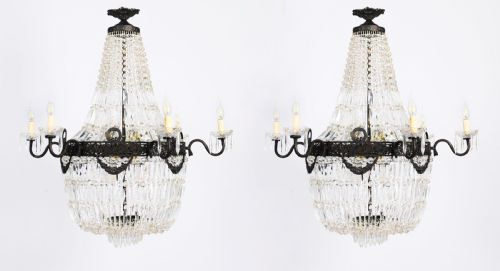
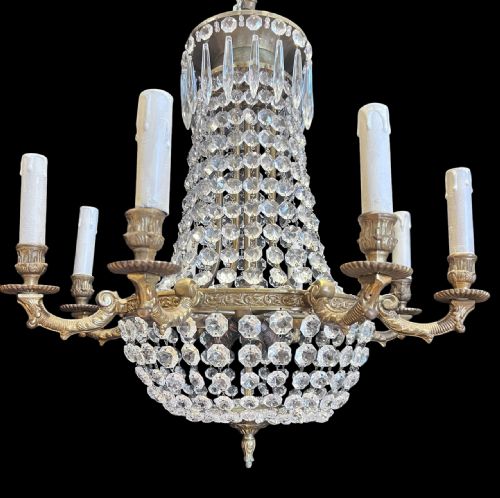
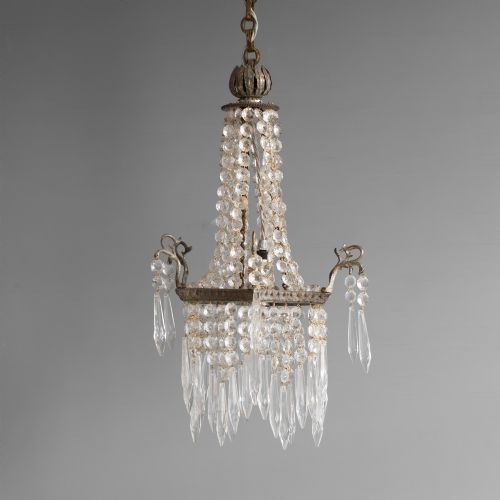
These crystal tent and waterfall light fixtures offer a dramatic cascade of cut glass and brass that transforms any room.
Crystal Tent and Waterfall Light
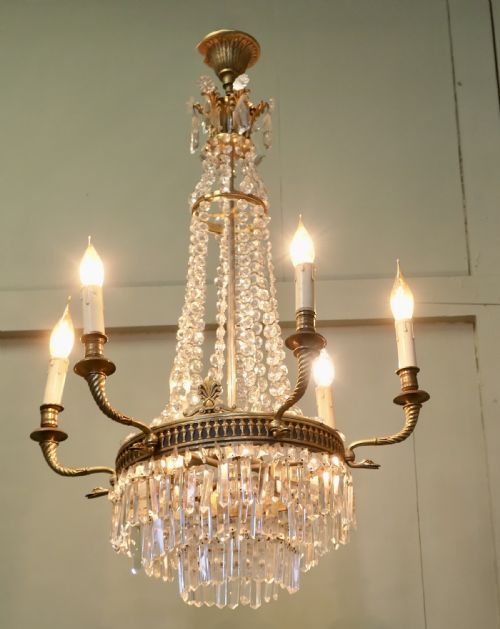
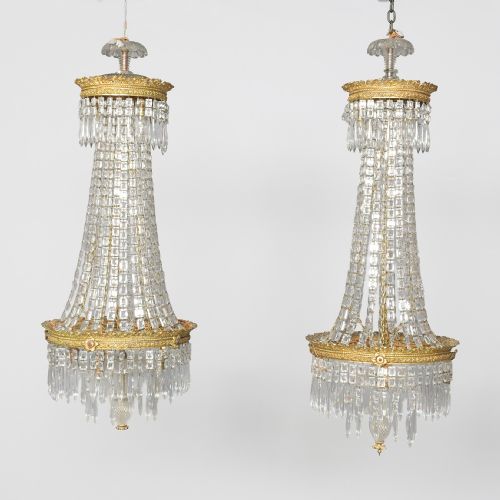
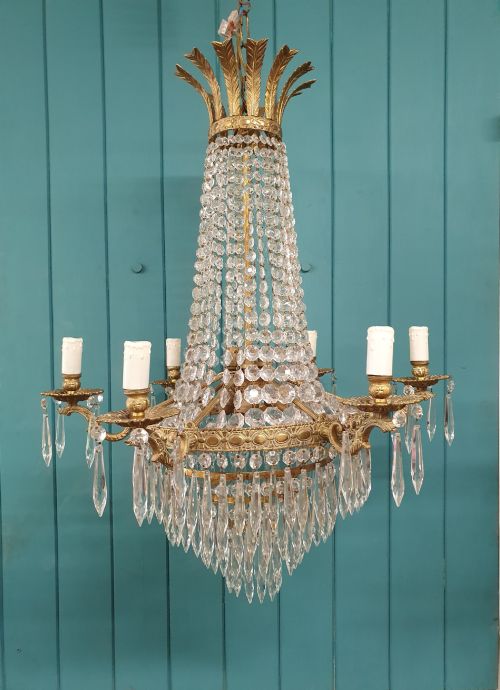
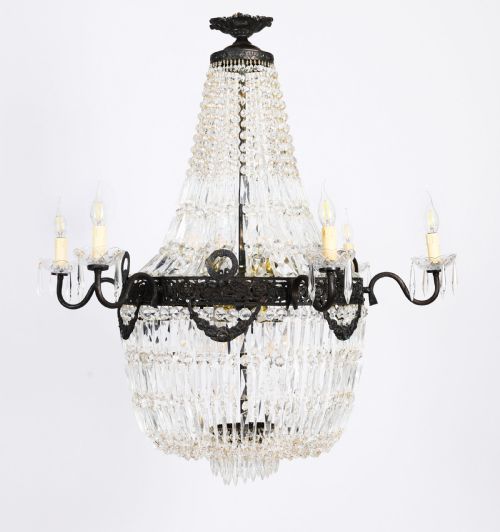
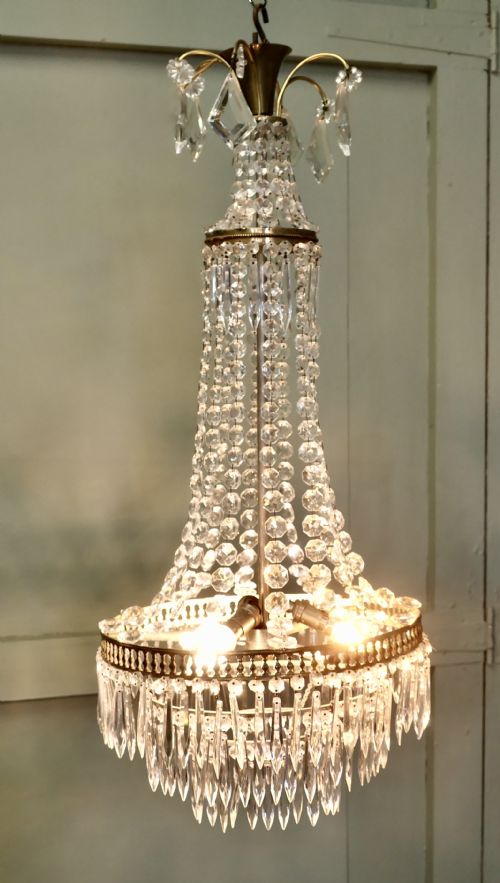
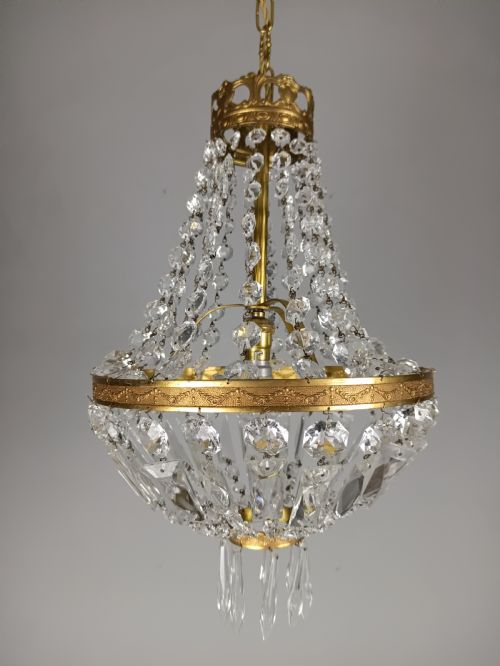
A crystal tent and waterfall light combines an upper corona or canopy with strings of beads forming a tent shape, dropping down into a dense cascade of glass prisms known as a waterfall. These grand fixtures draw heavily on French Empire, Regency, and Louis Revival aesthetics, originating mostly from the nineteenth and early twentieth centuries.
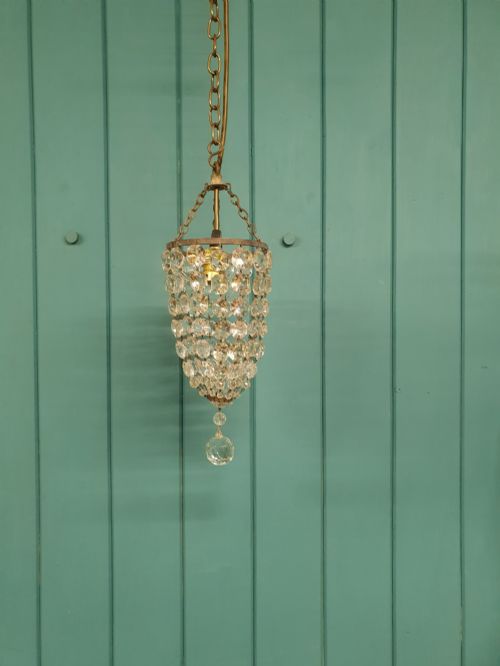
The pieces on this page span wall lights, ceiling lights, and substantial chandeliers ranging from compact pairs to large sixteen-light ballroom fixtures. Most examples display structured brass or gilded bronze frames supporting tiers of cut glass drops, bag sections, and spiked terminals.
Materials and construction methods
Maker workshops built the structural frames using cast brass, metal, and gilded bronze, which provided the necessary rigidity to support heavy arrangements of glass. These metal mounts often feature detailed leaf decoration or simple classical banding to anchor the upper swags.
Artisans wired and pinned thousands of individual crystal glass and cut glass prisms, drops, and beads to the frame to create the characteristic tent and bag profiles. The integration of cut crystal and moulded glass components maximises light refraction across the entire fixture.
Some early twentieth-century swag chandeliers manage to sneak in cheeky carved cherubs perched right above the crystal spikes.
Markers of distinction in lighting
Quality rests in the depth of the metal casting and the precision of the glass cutting, where sharper facets on the crystal produce a far crisper refraction of light. Heavier gilded bronze frames and complex multi-tiered arm configurations indicate ambitious workshop production compared to simpler brass and glass assemblies.
The integrity of the hanging system and the uniformity of the glass drops dictate the overall visual weight of the piece. Superior examples maintain balanced proportions between the upper tent swags and the lower waterfall or bag sections without crowding the metal armature.
Wedgwood
The Crystal Tent and Waterfall Light Glossary
- Tent
- The upper triangular section of glass swags draping from a central ring to the outer corona. This configuration defines the classic Empire silhouette.
- Waterfall
- A dense cascading arrangement of glass drops or prisms falling below the main body. It creates the illusion of flowing water when illuminated.
- Bag chandelier
- A lighting form featuring a flattened or rounded lower basket packed tightly with crystal drops. These often accompany upper tent swags in Edwardian and later pieces.
- Gilt bronze
- Metal alloy treated with a gold finish to enrich the decorative appearance of the frame. This material was favoured in high-end French manufacturing.
- Prisms
- Cut glass pendants suspended from the arms and tiers to scatter light. Their specific shape helps date the stylistic period of the fixture.
Crystal Tent and Waterfall Light: Frequently Asked Questions
What rooms suit a crystal tent and waterfall light?
These grand fixtures suit high-ceilinged reception rooms, dining spaces, and hallways where their vertical drop can be appreciated without obstruction. Compact pairs of wall lights or smaller single-bulb versions work well in more intimate settings.
Placing the fixture centrally allows the cut glass prisms to cast dispersed patterns across surrounding walls and ceilings. Consideration must be given to the total hanging height to ensure proper clearance below.
How do I date a crystal tent and waterfall light?
Dating relies on examining the mounting style, metal composition, and the specific cut of the glass drops. Eighteenth and nineteenth-century examples frequently employ heavy gilded bronze and hand-cut crystal, while Edwardian pieces often incorporate lighter brass frames and pressed glass.
Stylistic cues such as Louis Revival motifs or French Empire influences help narrow the manufacturing era. Fasteners like hand-turned screws and pins also offer clues to the period of assembly.
Are these lights compatible with modern wiring?
Most antique fixtures require rewiring to meet current electrical standards before installation in a home. Professional electricians can safely update internal lamp holders while preserving the historic exterior structure.
Using low-heat LED bulbs helps protect fragile nineteenth-century glass and brass components from thermal stress. The original aesthetic remains entirely undisturbed when modern wiring is routed discreetly through the frame.