
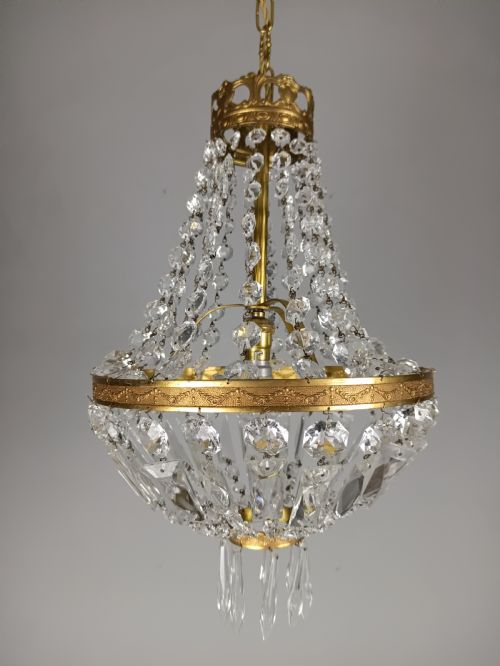


Empire Style Crystal Pendant
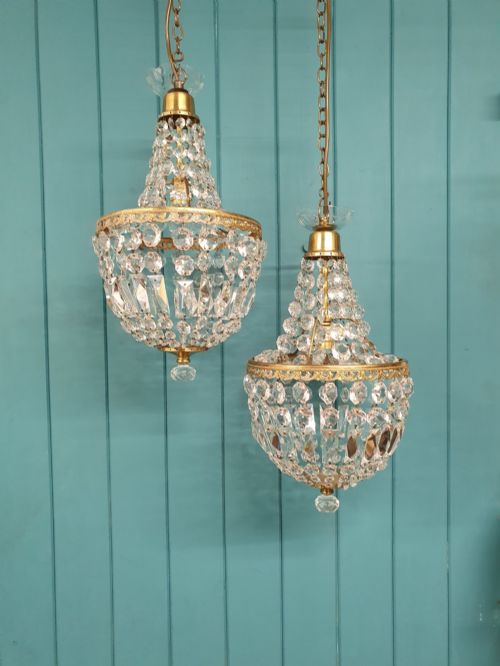
These empire style crystal pendant fixtures bring neoclassical grandeur to a room, using tiers of glass drops and brass frames to catch the light.
Empire Style Crystal Pendant
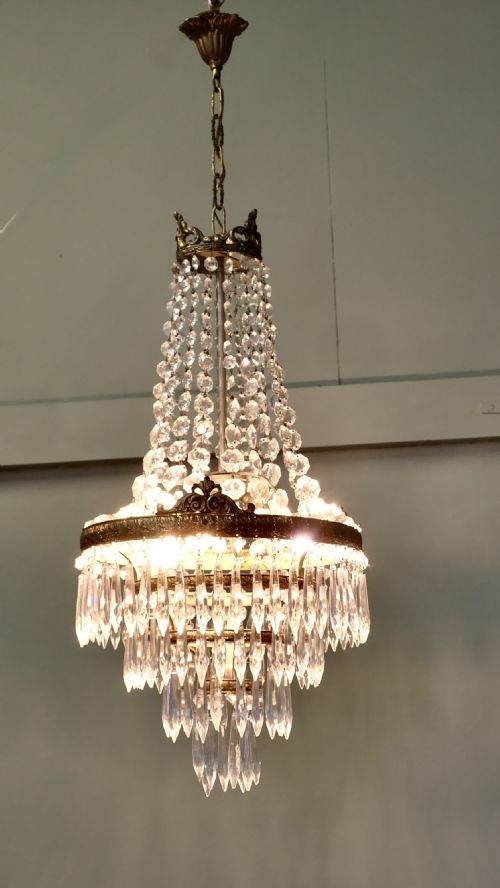
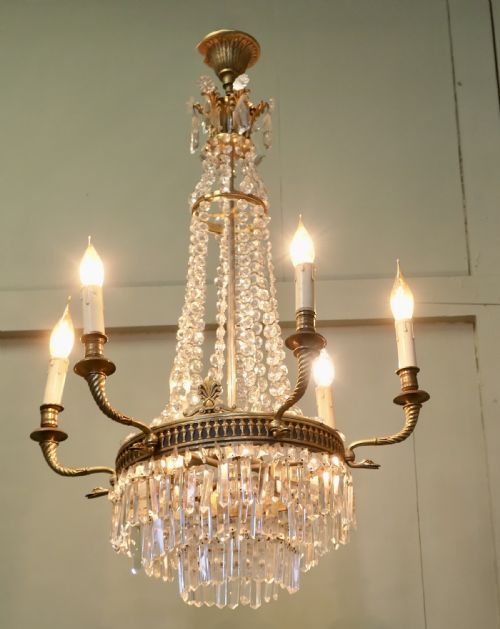
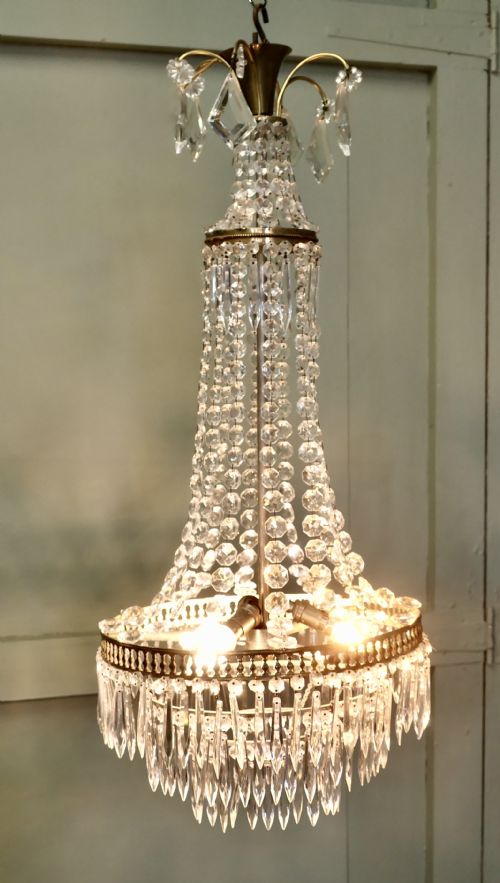
An empire style crystal pendant sits as a focal point in a high-ceilinged room, combining classical forms with glittering glass. Buyers searching for an empire style crystal pendant will find ceiling lights and chandeliers spanning the late nineteenth century up to the nineteen-thirties.
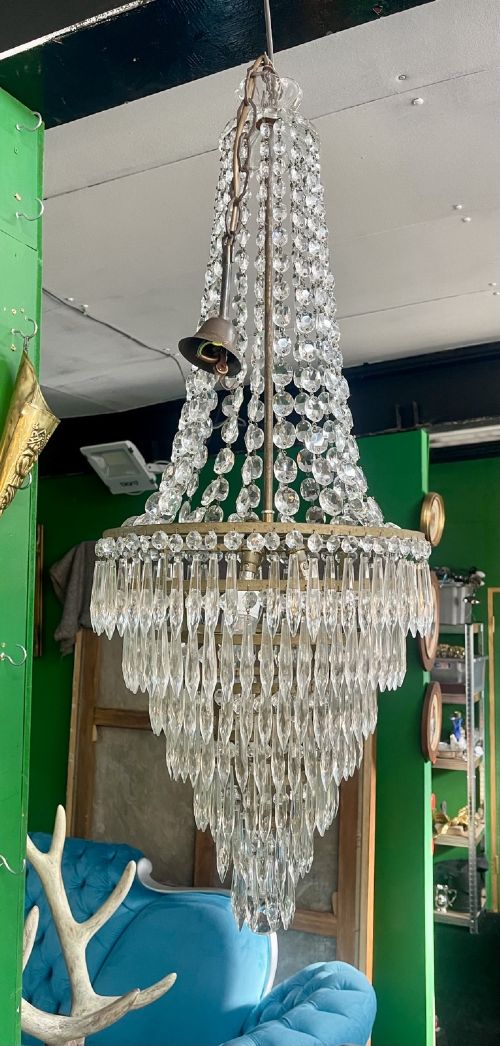
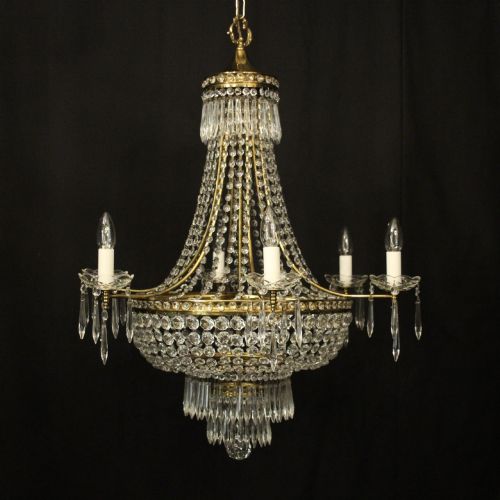
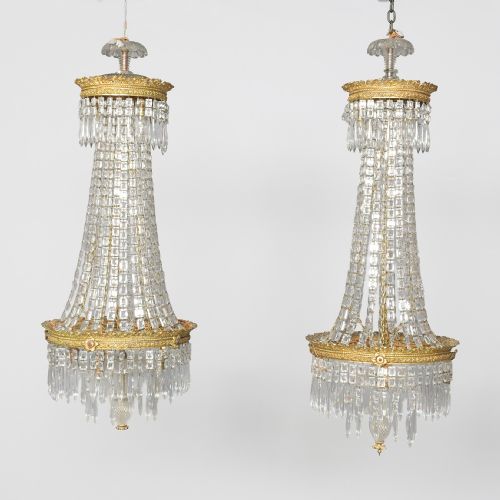
The most common formats on this page are tent and waterfall chandeliers, alongside simpler single-light baskets and bag designs. These fixtures draw heavily on French Neoclassical, Regency, and Art Deco design vocabularies.
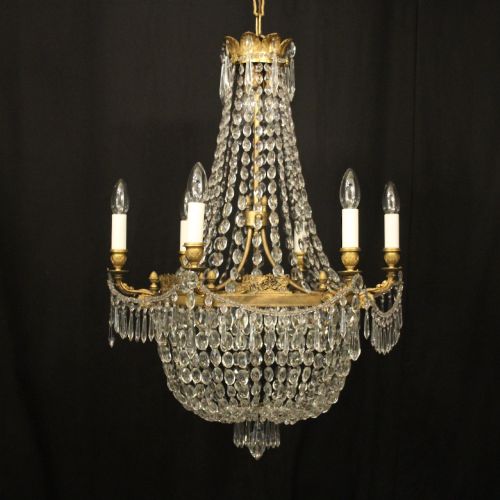
Origins lean strongly toward French workshops, with brass and gilded bronze framing configurations of cut crystal, glass, and prisms. Examples stretch from compact bead chandeliers up to large multi-light fixtures.
How they were made
The structural framework relies on brass, gilded brass, nickel, or gilded bronze, cast and shaped to support hanging weight. Frames often incorporate rings and crowns from which tiers of glass droplets are suspended.
Cut glass, crystal, and crystal glass elements are shaped into prisms, beads, and bag formations to refract light across the room. Individual glass pieces are wired or pinned together by hand to form intricate waterfalls, tents, and baskets.
The listings span from the eighteenth century through the Edwardian period, nineteen-tens, twenties, and thirties, dominated by French stylistic influences.
What varies in quality
Quality shows in the precision of the metal casting and the clarity of the crystal components. Finer pieces display crisp definition in the brass or gilded bronze work, with heavier metal gauges providing structural stability.
The brilliance of the lighting effect depends on the cut of the glass and the composition of the crystal. Superior items use sharp-edged cut crystal that disperses light cleanly, rather than softer pressed glass that mutes the reflection.
The Empire Style Crystal Pendant Glossary
- Tent and waterfall
- A lighting configuration featuring an upper conical section of beads above a cascading lower tier of crystal drops. This arrangement creates a dense curtain of sparkling glass.
- Bag chandelier
- A lighting fixture where glass drops form a solid bag or teardrop contour beneath the main metal ring. The structure holds numerous small prisms tightly contained within a net-like silhouette.
- Prism
- A cut glass or crystal pendant designed to refract light into spectral colours. These elements hang from the frame and catch illumination from the internal bulbs.
Empire Style Crystal Pendant: Frequently Asked Questions
How do I hang a heavy chandelier safely?
These metal and glass light fittings require direct anchorage into ceiling joists using a steel mounting hook. Professional installation is essential to bear the substantial combined weight of the brass frame and crystal drops.
Electrical wiring must be assessed by a qualified person to ensure the vintage internal components meet current safety standards. Adequate drop height should be planned so the fixture clears pathways while remaining centred in the room.
What rooms suit an empire style pendant?
High ceilings provide the ideal clearance for multi-tiered tent and waterfall designs, allowing the cascading crystal to catch natural and artificial light. Dining spaces, hallways, and formal reception rooms benefit most from the grand vertical proportions.
Smaller single-light basket fixtures work well in compact bedrooms or landings where a touch of period elegance is desired without overwhelming the floor plan.
How do I clean antique crystal chandeliers?
Routine maintenance involves dusting the glass drops with a soft feather duster while the fixture remains hung. For deeper cleaning, dismantle removable crystal prisms and wash them in warm soapy water before drying thoroughly with a lint-free cloth.
Avoid spraying liquid cleaners directly onto the brass or gilded bronze frame to prevent moisture damage to the metal surfaces and electrical fittings.
How do I date these crystal pendants?
Dating relies on examining the metal composition, wiring style, and cut of the glass components. Pieces from the early twentieth century often show specific transitional traits between Edwardian opulence and Art Deco geometry.
Earlier nineteenth-century examples tend to feature heavier cast brass and hand-cut crystal drops with subtle imperfections distinct from later machine-produced glass.