
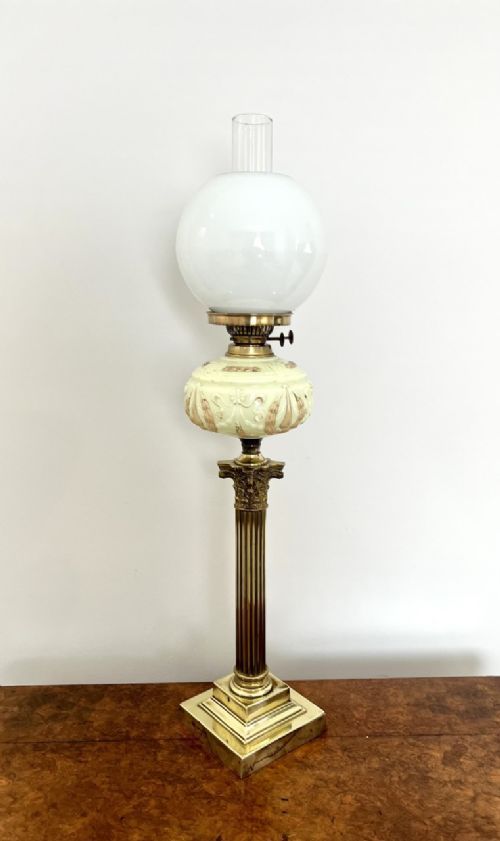


Brass Ceramic Desk Lamp
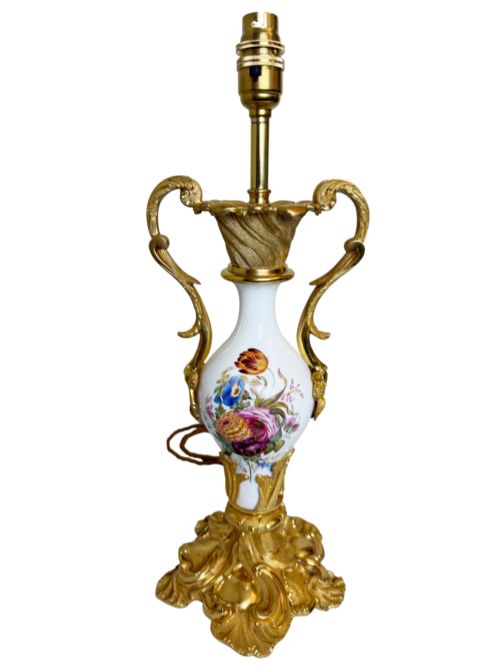
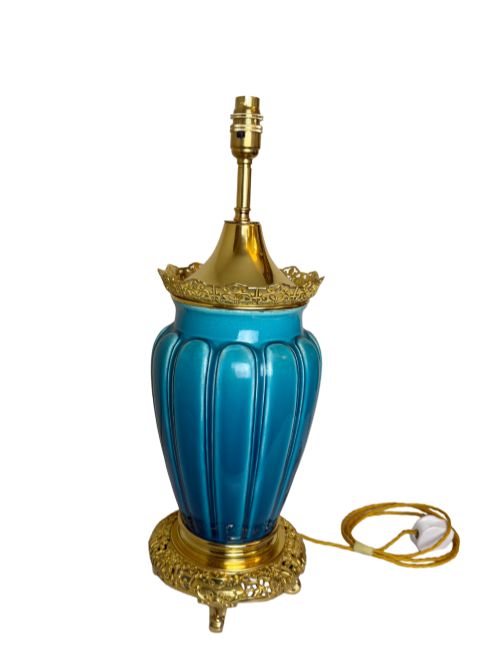
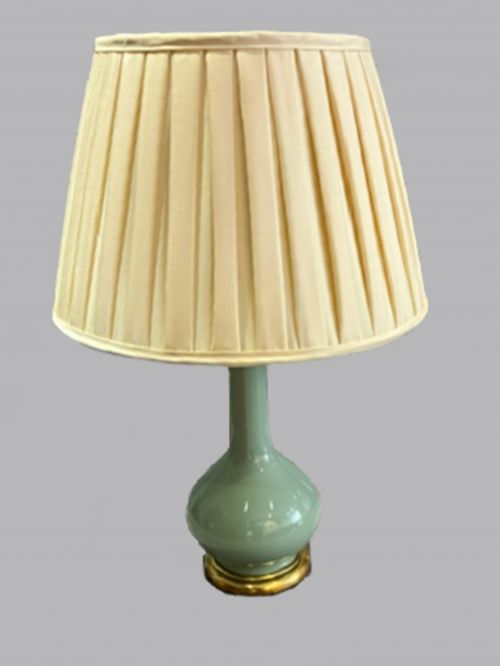
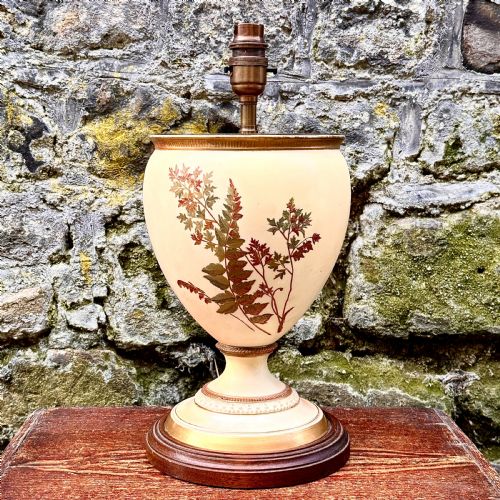
A brass ceramic desk lamp brings substantial weight and decorative ceramic colour to a work space through nineteenth-century and early twentieth-century forms.
Brass Ceramic Desk Lamp
When you search for a brass ceramic desk lamp, you are looking at domestic lighting fashioned from metal and fired clay, frequently adapted from earlier vessels or oil burners. The pieces on this page span the eighteenth century to the 1920s, encompassing Victorian, Edwardian, and Art Deco eras alongside French and Chinese aesthetic traditions.
The ceramic components often take the form of converted vases, including Chinese blue and white, famille verte, celadon, and Japanese Imari porcelain, or European majolica, faience, and Paris ware. These bodies are paired with brass, gilt bronze, or ormolu mountings, frequently resting on glass or ceramic bases.
Many of these items began life as oil lamps or decorative vases before conversion into electric table lamps. You will encounter table lamps and oil lamps featuring floral motifs, figural designs, and hand-painted glazes supported by sturdy metal structures.
Materials and construction
Makers combined cast and spun brass or gilt bronze with high-fired ceramics, porcelain, and faience. Metal mounts, collars, and bases were secured to ceramic vase bodies using threaded rods or collars, while oil lamp reservoirs integrated brass burners with ceramic fonts.
Ceramic bodies display hand-painted overglaze enamels, celadon glazes, and blue and white underglaze decoration originating from European potteries and East Asian kilns. Metal elements often exhibit chased or cast detailing in styles ranging from Rococo Revival to Art Nouveau and Art Deco.
Among the ceramic menagerie, a German porcelain spitz dog lamp stands ready to illuminate your desk with Victorian canine charm.
Judging the standard of execution
Quality rests in the harmony between the metal mountings and the ceramic body, where precision in the brass casting elevates the piece. Finer examples display crisp chasing on gilt bronze or ormolu mounts that conform exactly to the contours of the porcelain or faience.
The merit of the ceramic vessel itself dictates the standing of the lamp, with hand-painted detail, depth of glaze, and provenance driving the distinction. Converted vases demonstrate varying degrees of sensitivity in how burners or electrical fittings were integrated without compromising the historic body.
Royal Worcester·Samuel Alcock
The Brass Ceramic Desk Lamp Glossary
- Ormolu
- Gilded bronze mounts used extensively on French nineteenth-century lighting and decorative objects. This technique involves applying a mercury-gilt finish to cast bronze.
- Famille Verte
- A Chinese porcelain palette dominated by green enamels, frequently seen on nineteenth-century vases adapted into lamps. It translates to the green family.
- Majolica
- A type of earthenware coated with an opaque tin glaze and painted with brightly coloured metallic oxide glazes. Popular during the Victorian and Edwardian periods.
- Faience
- European tin-glazed earthenware, often hand-painted in vibrant palettes as seen in French and Art Deco lighting. The term denotes pottery with a porous buff body.
- Spill vase
- A small cylindrical container originally intended to hold tapers for lighting pipes or candles, sometimes listed among lamp conversions. These form compact bases for small desk lighting.
Brass Ceramic Desk Lamp: Frequently Asked Questions
What is a brass ceramic desk lamp?
A brass ceramic desk lamp combines a metal base and fittings with a ceramic or porcelain body, often originating as an oil lamp or a converted vase.
These pieces utilise materials like brass, gilt bronze, porcelain, and faience, dating from the eighteenth century through the Art Deco era.
How do I date a brass ceramic lamp?
Dating relies on stylistic clues in the brass mountings, ceramic glazes, and manufacturing techniques characteristic of Victorian, Edwardian, or Art Deco periods.
Marks on the ceramic base or the style of the brass burner and wiring components also assist in establishing the age of the piece.
Were these lamps originally electric?
Most antique examples began as oil lamps or decorative ceramic vases before being converted to accept electrical fittings.
Conversions often integrate nineteenth-century Chinese porcelain or European majolica with brass hardware added during subsequent decades.
What styles are common in these lamps?
Common styles include French nineteenth-century gilt bronze, Chinese Qing Dynasty porcelain, Victorian brass, and brightly painted Art Deco faience.
Designs range from Greek Revival and Rococo Revival to Japanese Imari and Satsuma motifs.