


Brass Censer Vessel
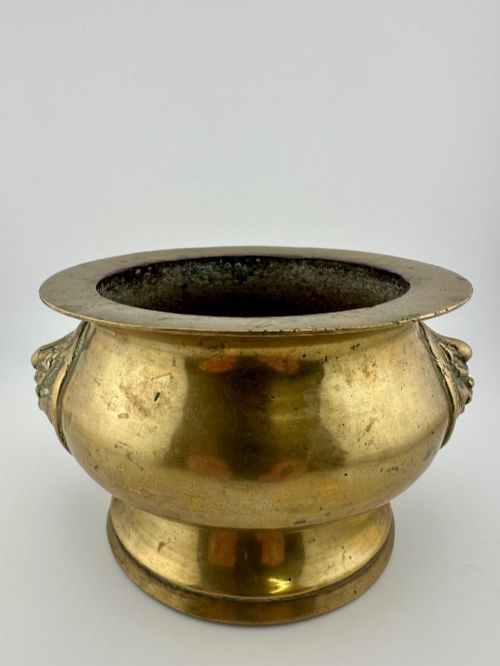
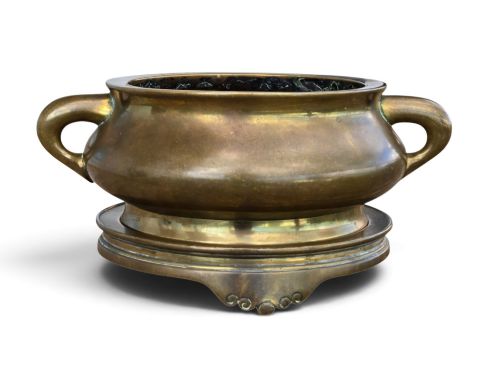
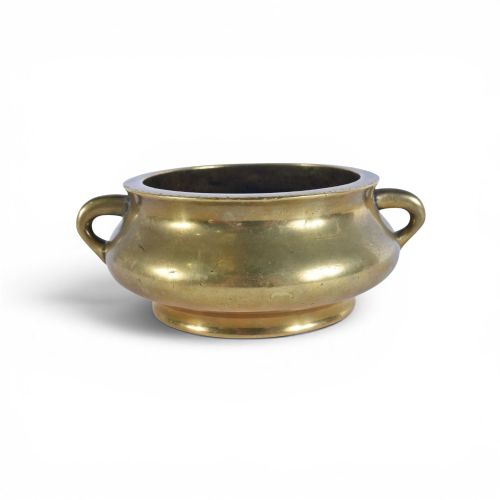
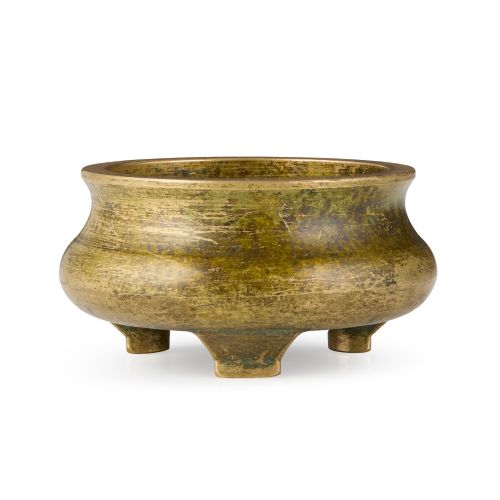
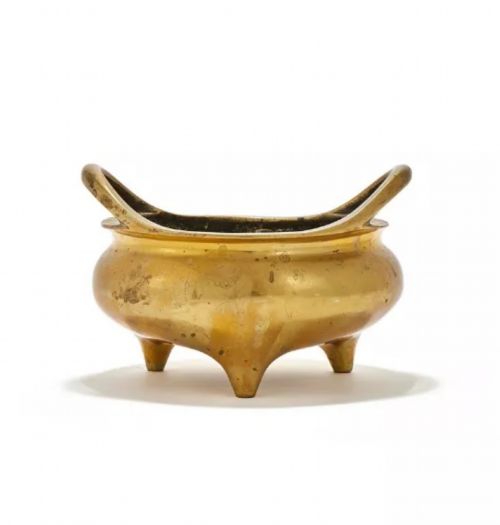
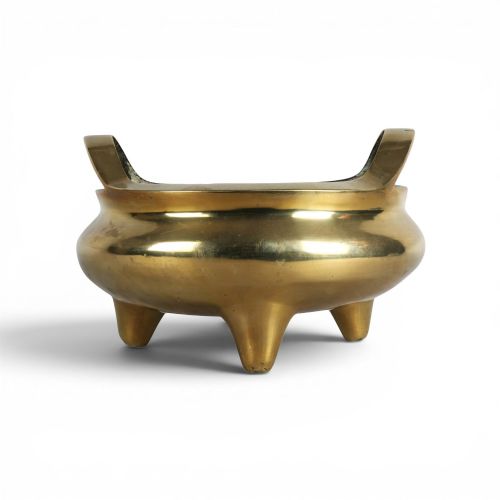
These brass censer vessel examples are heavy ritual and domestic burners created to hold burning incense in traditional settings.
Brass Censer Vessel
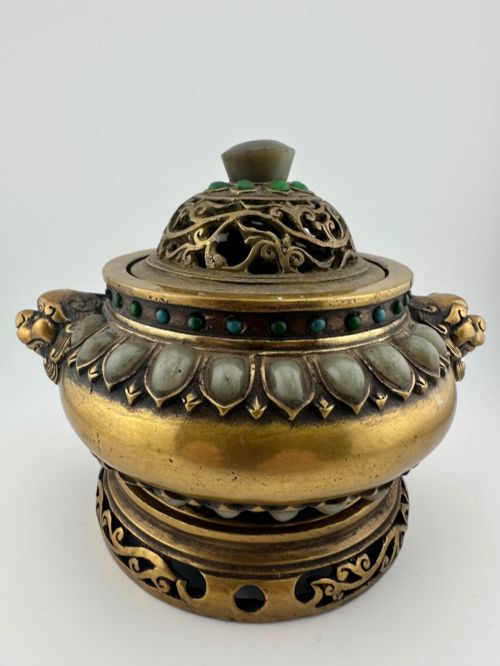
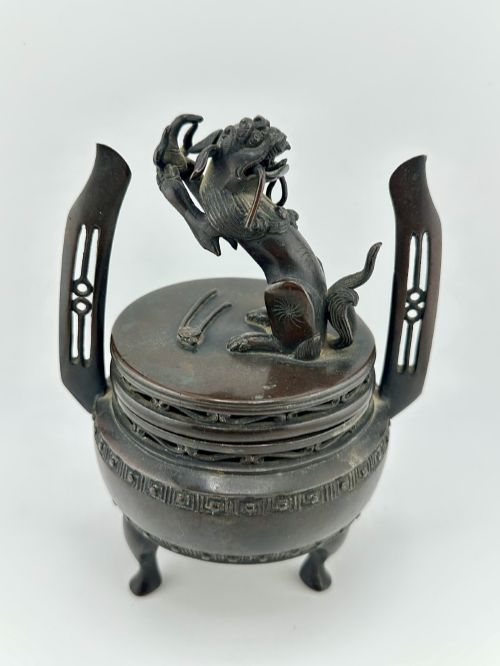
A brass censer vessel functions primarily as an incense burner or ritual container, often taking the form of a tripod bowl, a lidded censer, or a decorative planter. These pieces arrive from Asian and Chinese traditions, with a strong representation of Qing Dynasty workmanship alongside 18th-century, 19th-century, and Victorian periods.
The objects span practical scholar's studio pieces to monumental ritual bronzes, occasionally featuring matching stands, covers, and sculpted handles such as lion masks. Buyers most frequently encounter heavy bronze or brass forms shaped as bombé bowls, bamboo-moulded vessels, or tripod burners.
Originating largely from Chinese workshops, these vessels encompass both archaic ritual styles and decorative items intended for domestic display or scholarly contemplation. The material execution balances utility with sculptural presence, utilising bronze and brass alloys sometimes enhanced with jade or hardstone inlays.
Materials and construction
These vessels are cast in bronze and brass using traditional metalworking techniques, resulting in substantial weight and durable walls. The manufacturing process often involves lost-wax casting to achieve complex forms like tripod legs, qilin finials, and bamboo-sectioned bodies.
Surface details such as lion mask handles or archaic-style motifs are integrated directly into the casting or finished through chiselling and patination. Selected examples incorporate inlaid jade and hardstone elements, combining metalwork with mineral ornamentation.
A remarkably heavy ritual censer scales in at over seven kilograms, proving that ancient scholars enjoyed substantial desk ornaments.
Distinctions in quality
The hierarchy of these vessels rests upon the crispness of the casting, the heaviness of the metal, and the presence of significant reign or studio marks such as those attributed to Wu Bangzuo or Xuande. Superior examples display balanced proportions, integrated handles, and detailed finials rather than simplified or purely utilitarian surfaces.
The sophistication of the surface patina and the inclusion of matching covers or stands elevate certain pieces above standard domestic wares. Masterful execution is evident in the sharpness of archaic motifs and the seamless assembly of multi-part compositions.
The Brass Censer Vessel Glossary
- Archaistic
- Design elements emulating ancient ritual bronzes from earlier dynasties. This style relies on formal geometric or taotie motifs.
- Bombé
- A rounded, bulging body shape curving outward from the base and tapering near the rim. This profile is frequently seen on classical incense burners.
- Qilin
- A mythical hooved chimerical creature often depicted as a finial on censer covers. It symbolizes good omen and protection.
- Tripod
- A vessel supported by three feet, typical of ancient ritual bronzes and later scholar's table items. These legs provide stability on wooden stands.
Brass Censer Vessel: Frequently Asked Questions
What is a brass censer vessel used for?
These vessels were primarily designed for burning aromatic incense in temples, scholarly studios, and domestic interiors. They held burning joss sticks or fragrant powders to purify spaces and create a contemplative atmosphere.
Over time, many of these pieces transitioned into decorative objects, appreciated on desks or mantelpieces for their sculptural form and historical association with Chinese metalwork traditions.
How do I identify an 18th-century censer?
Eighteenth-century examples often feature substantial weight, deep patination, and specific reign or studio marks, such as those referencing Xuande or Wu Bangzuo. The bronze alloy tends to show a rich, warm tone developed through age and handling.
Stylistic cues include archaic revival motifs and balanced bombé proportions characteristic of Qing Dynasty production under imperial patronage.
Where should I place a heavy bronze bowl?
Because of their substantial weight, these vessels require sturdy placement on tables, desks, or specialised wooden stands. They function well as standalone decorative objects or as functional planters for small indoor plants.
Keeping them away from damp environments helps preserve the original bronze or brass patination achieved over centuries of exposure.