

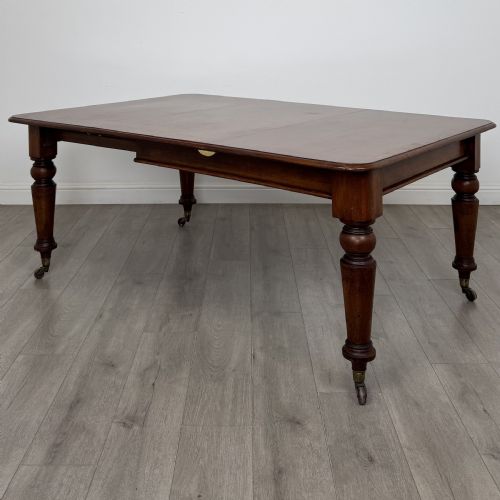
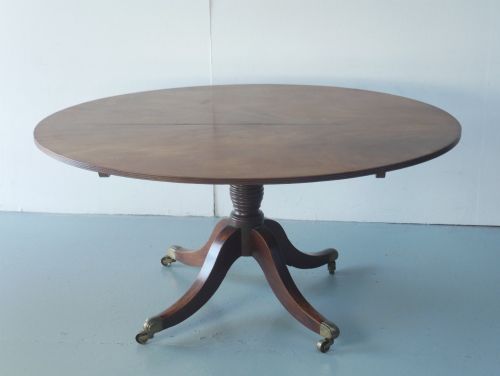
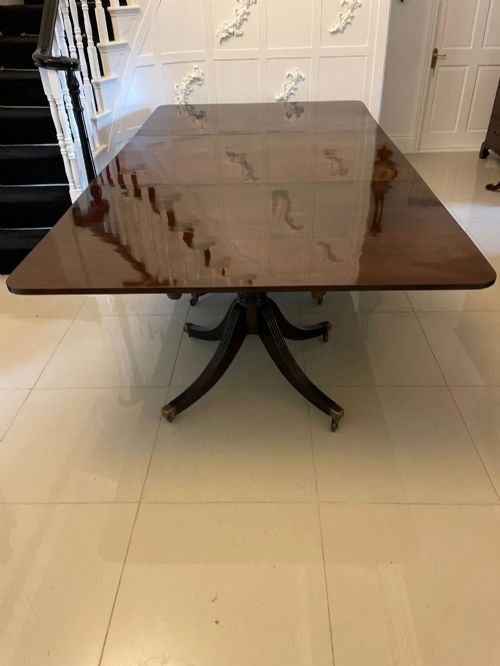
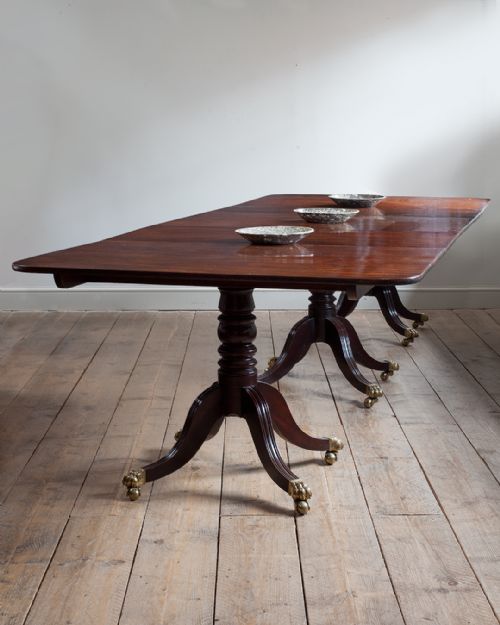
Brass Castored Dining Table
A brass castored dining table brings robust mobility and classic timber grain to the dining room, offering sturdy pedestals and useful drop leaves for daily meals.
Brass Castored Dining Table
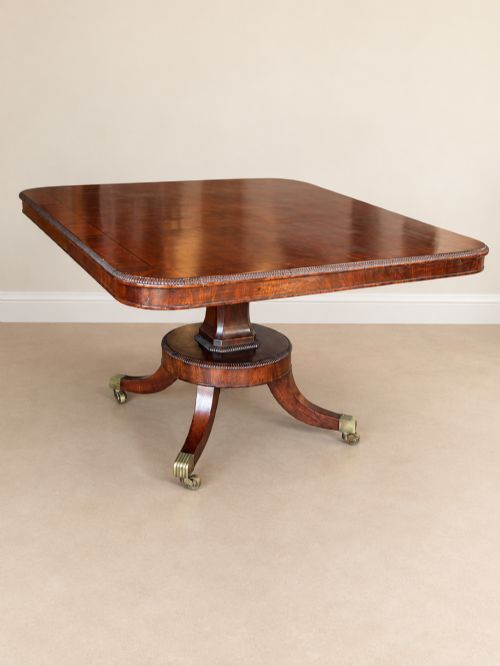
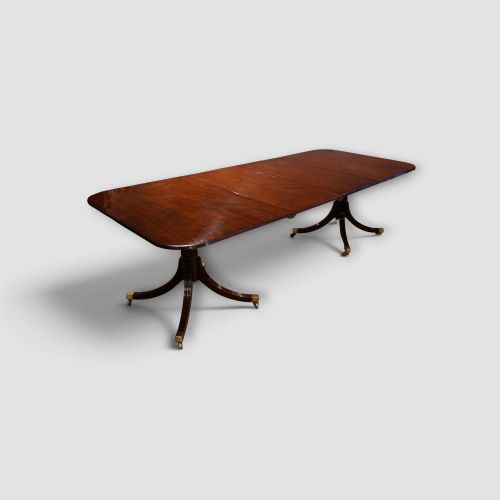
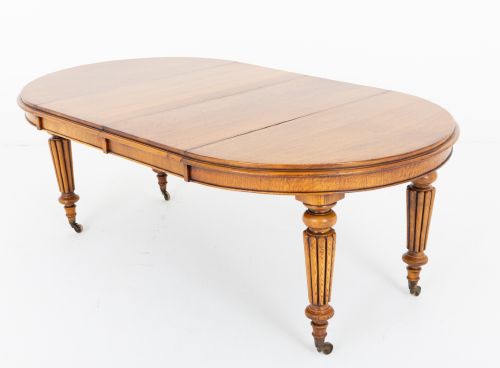
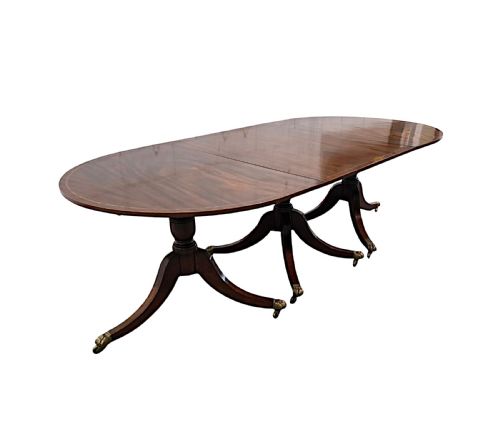
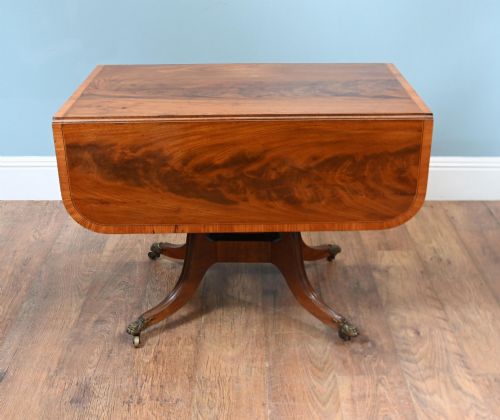
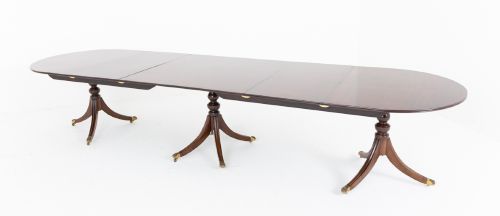
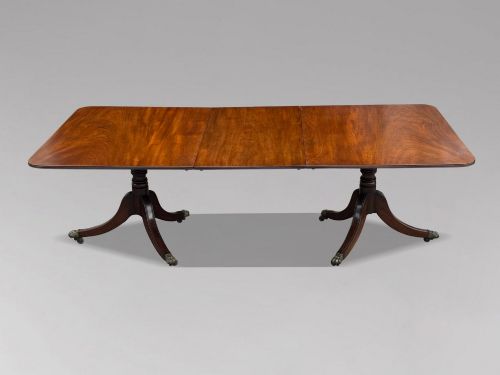
A brass castored dining table represents the practical and formal dining furniture of the Georgian and Regency periods, alongside later revival pieces. These tables frequently appear as multi-pedestal extending formats, twin-pillar designs, or smaller pembroke and drop-leaf forms.
The primary forms found here span grand multi-pillar extending tables designed to seat large parties down to compact pembroke tables with drop leaves. Buyers encounter genuine 18th-century and 19th-century examples alongside early 20th-century revival pieces modelled on Regency and Georgian archetypes.
How they were made
Cabinet makers utilised dense timbers such as mahogany, oak, and rosewood for the structural tops and pedestals, frequently incorporating satinwood and boxwood inlay for decorative contrast. Table tops were constructed from solid boards or figured veneers applied to stable sub-frames.
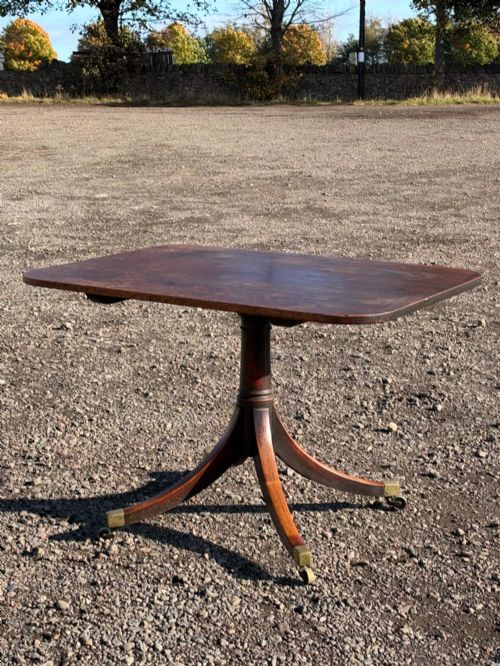
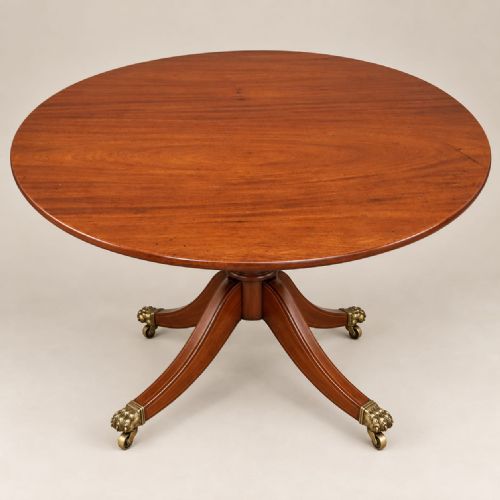
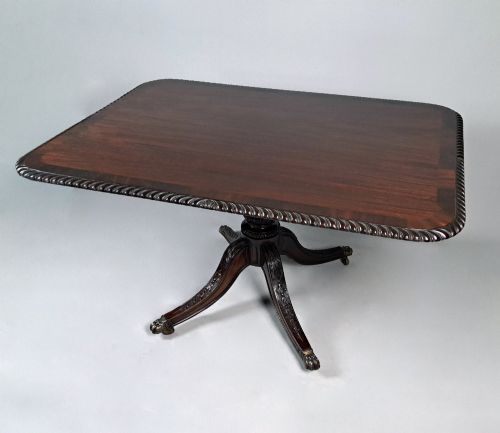
Support mechanisms rely on heavy central pillars or multiple pedestals fitted with metal fittings, allowing extending tables to accept removable leaves. Brass castors were integrated directly into the foot of each pillar or leg to enable smooth movement across floor surfaces.
Brass Castored Dining Table Retail Price Guide 2026
Typical asking prices for brass castored dining table among the pieces listed under this phrase on Sellingantiques today, from the lower quarter to the upper quarter. They describe what is for sale here now, not the wider market.
Several tables extend far enough to seat over twenty guests, requiring a small expedition just to pass the salt.
What varies in quality
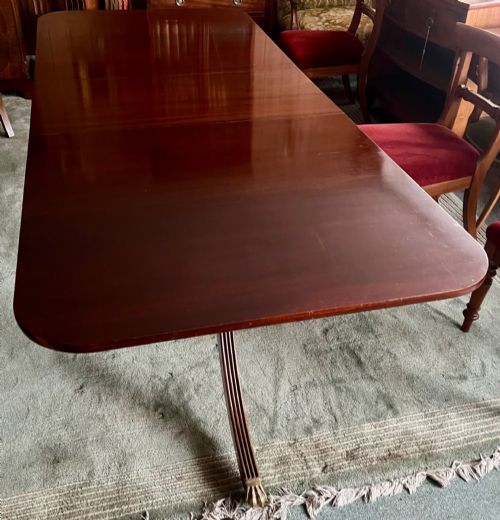
The grade of timber selected for the top dictates visual distinction, with highly figured mahogany and precise crossbanded borders marking out superior workshops. Grain matching across added leaves and pedestal junctions demonstrates the skill applied during construction.
Solid construction of the underlying pillar assembly and the weight of the brass fittings influence the operational stability of extending mechanisms. Tables retain better integrity when timber movement is managed effectively through sound joinery and robust sub-frames.
Gillows of Lancaster·Thomas Butler of London·Whytock and Reid
The Brass Castored Dining Table Glossary
- Pedestal
- A central columnar support resting on splayed legs, carrying the weight of the table top. Multiple pedestals allow dining tables to extend significantly in length.
- Pembroke table
- A small rectangular table featuring two hinged drop leaves on opposing sides. It often includes a drawer and rests on legs fitted with castors.
- Crossbanding
- A decorative border of veneer laid perpendicular to the grain of the main table top. This technique frames the perimeter of the surface.
- Tilt-top
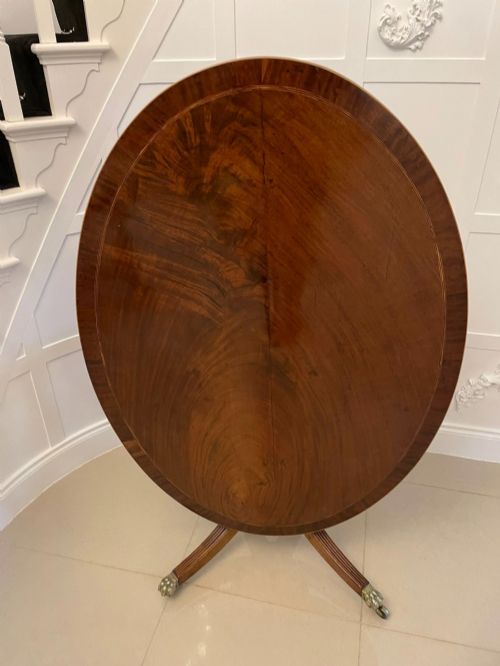
- A mechanism allowing the table top to pivot to a vertical position when not in use. This design saved valuable floor space in historical interiors.
- D-end
- A table end shaped in the semi-circular profile of the letter D. These sections often form the rounded ends of extending dining tables.
Brass Castored Dining Table: Frequently Asked Questions
How do I seat more guests?
Extending dining tables incorporate removable leaves supported by additional central pillars. Operators slide the pedestal sections apart to insert extra timber panels.
Larger tables accommodate upwards of twenty diners when fully extended with multiple leaves in place.
How do I identify a revival piece?
Revival pieces date from the late 19th century and early 20th century while strictly copying Georgian or Regency forms. Examination of timber seasoning, internal fixings, and tool marks helps differentiate these from original 18th-century items.
Stylistic cues remain consistent across periods due to the enduring popularity of Regency design.
Why are castors fitted?
Metal castors allowed heavy timber dining tables to move easily across carpets and wooden floors when clearing rooms or reconfiguring layouts. Brass was chosen for its durability and appearance.
Castors sit at the base of pillar legs or drop-leaf supports across various table types.