
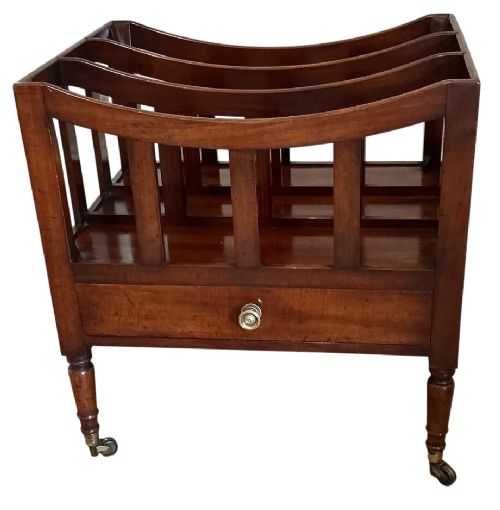
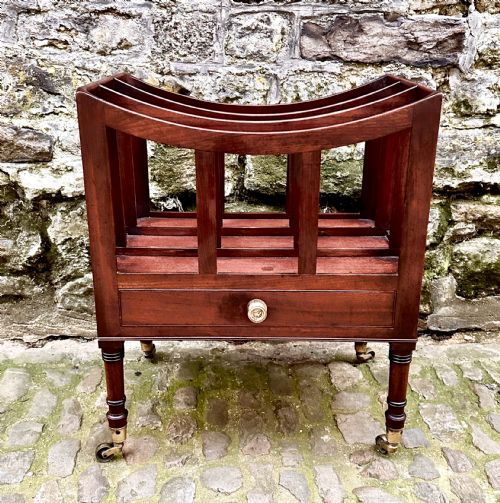


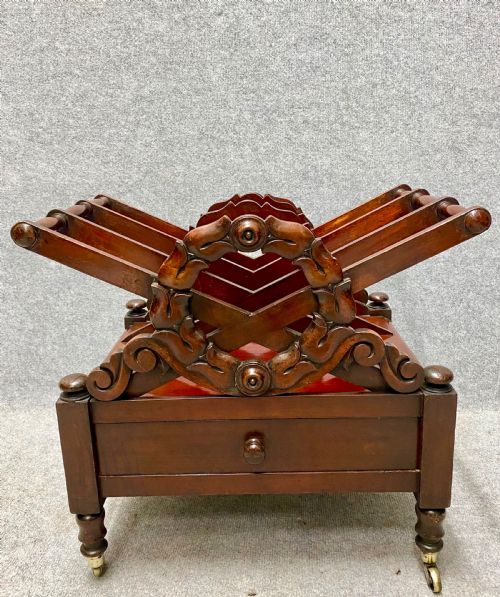

Brass Castor Magazine Holder
These brass castor magazine holder pieces are sturdy nineteenth-century canterburys and newspaper racks designed to keep daily reading close at hand.
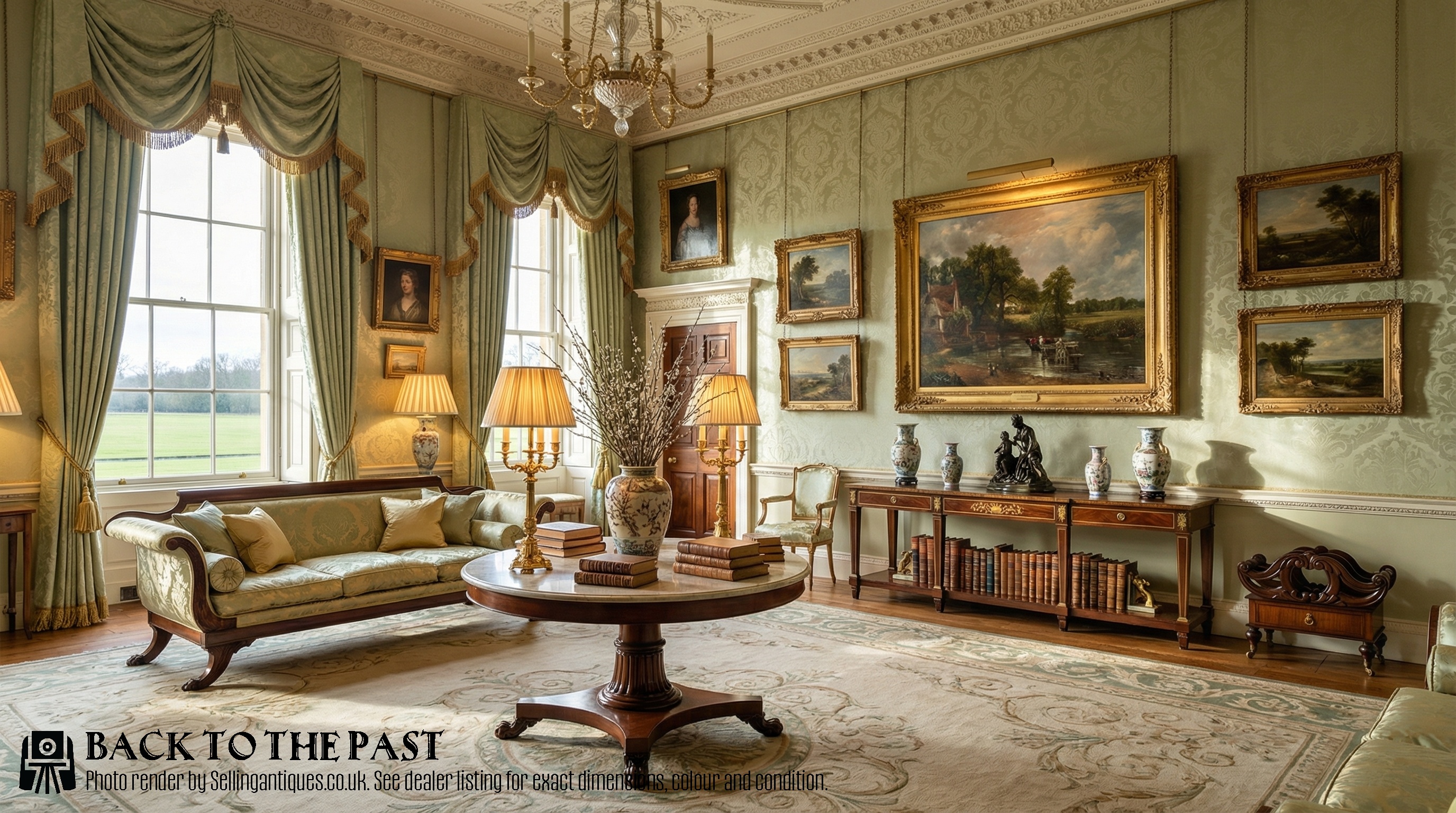
Brass Castor Magazine Holder
A brass castor magazine holder primarily takes the form of a canterbury, music rack, or folio stand dating from the Georgian, Regency, and Victorian periods. These pieces serve to organise newspapers, magazines, and sheet music within domestic interiors.
Most examples found here date from the Regency era, constructed as divided wooden troughs raised on small brass castors for easy movement across floors. The selection also includes Victorian ebonised mahogany and rosewood pieces alongside larger George III designs.
Makers and workshops of the period utilised multiple partitions to separate different publications, often incorporating carrying handles or lower drawer compartments for smaller items. Their practical design made them fixtures in nineteenth-century sitting rooms and libraries.
How they were made
Cabinet makers constructed these canterburys using solid timbers and veneers of mahogany, rosewood, and ebonised mahogany, shaping the divisions with joined slats or turned spindles. The choice of rich hardwoods gave each piece structural integrity and a deep grain.
Fitted brass castors were screwed to the base of the legs to allow the heavy wooden stands to roll smoothly across carpets and wooden floors. Metal fittings such as carrying handles and drawer pulls were cast and polished to complement the dark wood tones.
Listings feature pieces spanning the Georgian, Regency, and Victorian periods, constructed from mahogany, rosewood, and ebonised mahogany.
What varies in quality
The distinction between standard domestic pieces and finer works lies in the choice of timber figurations, such as highly grained rosewood or select mahogany. Higher quality examples often display refined turning on the upright spindles and precise joinery in the division frames.
Proportion and scale also separate ordinary models from exceptional country house pieces, such as oversized folio stands or items attributed to known workshops. The integration of lower drawers and cleanly cast brass wheels indicates a higher standard of original production.
Gillows of Lancaster·J.C.Loudon
The Brass Castor Magazine Holder Glossary
- Folio stand
- A larger piece designed to hold oversized books, prints, or portfolios. These often feature adjustable sides and substantial wooden frames.
- Ebonised mahogany
- Mahogany timber treated with a dark stain or finish to imitate ebony. This technique was particularly popular during the Victorian period.
- Castor
- A small wheel mounted on a swivel attached to the foot of a piece of furniture. It permits smooth relocation of heavy wooden stands across rooms.
- Regency
- An English design period spanning the early nineteenth century. Furniture from this era often draws inspiration from classical antiquity.
Brass Castor Magazine Holder: Frequently Asked Questions
What is a canterbury used for?
A canterbury was originally designed to hold sheet music, newspapers, and unbound publications near a piano or seating area. The vertical divisions kept papers upright and sorted for daily reading.
Over time, these pieces adapted easily to modern magazines while retaining their traditional function as movable storage stands.
How do I identify a Regency period piece?
Regency pieces typically date from the early nineteenth century and feature classical architectural lines, dark mahogany timbers, and elegant turned supports. They often display crisply carved details rather than heavy ornamentation.
The presence of original brass castors and boat-shaped frames also points directly to this specific design era.
Can I use these for modern magazines?
These nineteenth-century stands accommodate modern weekly and monthly publications within their wooden divisions. The sturdy timber frames provide reliable support for contemporary reading materials.
Their compact footprint allows them to sit beside modern armchairs and sofas while maintaining period character.