



Traditional Wooden Magazine Rack
A traditional wooden magazine rack offers a sturdy, elegant way to keep journals and papers organised beside a seat.
Traditional Wooden Magazine Rack
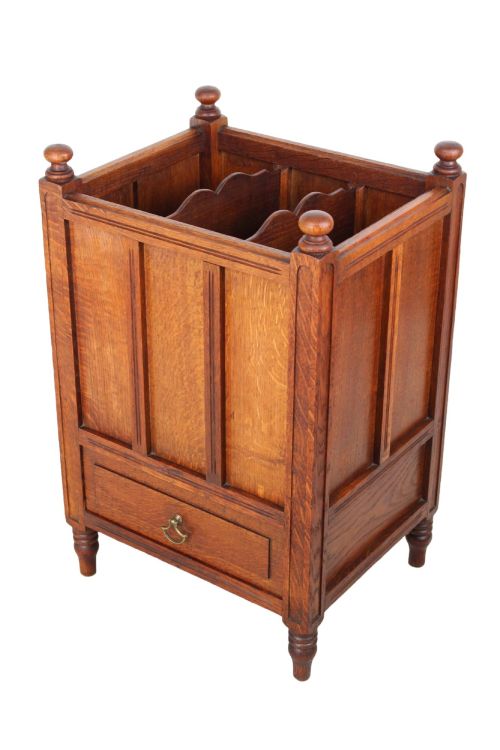
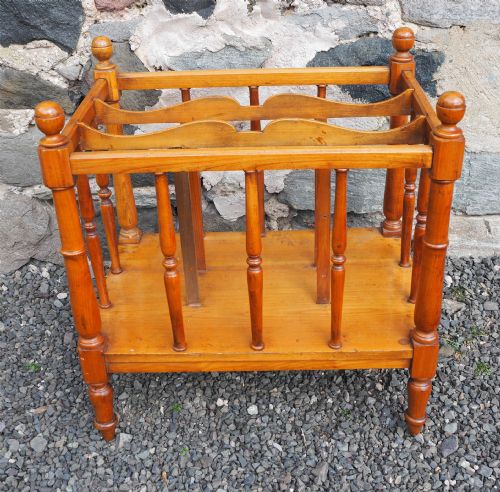
When you search for a traditional wooden magazine rack, you encounter a mix of dedicated magazine holders, music stands, and partitioned canterburys spanning the nineteenth and early twentieth centuries. The pieces seen here encompass Victorian, Edwardian, Arts and Crafts, Regency, and Georgian styles built to hold periodicals in domestic rooms.
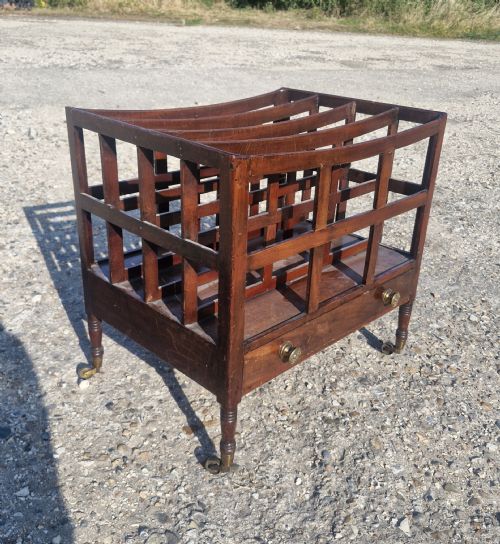
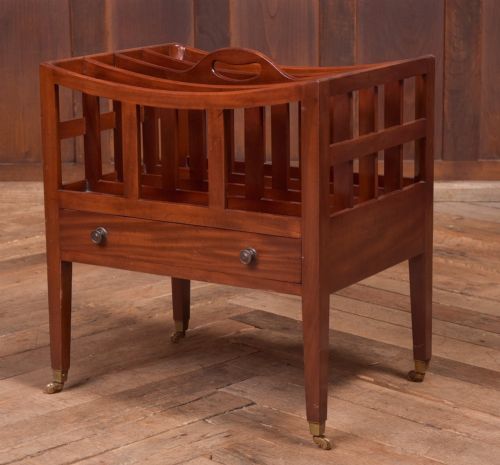
You are most likely to meet mahogany or oak canterburys and magazine racks featuring slatted dividers, carrying handles, and sometimes small drawers beneath the main compartments. These designs serve both functional storage needs and decorative roles in traditional interiors.
The objects on this page bridge several eras, ranging from early nineteenth-century Regency and George III examples to later Edwardian and 1920s interpretations. Each piece reflects the domestic habits of its period, prioritising accessible storage for daily reading material.
How they were made
Cabinet makers utilised timbers such as mahogany, oak, fruitwood, rosewood, and flame mahogany veneer to construct these magazine racks and canterburys. Surfaces often display satinwood inlay to add contrast and visual detail to the timber framework.
Brass fittings frequently appear as castors, handles, or structural accents on nineteenth-century canterburys, supporting mobility and daily use. Joinery techniques varied according to the period, securing slatted partitions and upright posts to withstand regular handling.
Some nineteenth-century canterburys rolled across parlour floors on brass castors so music could follow the pianist around the room.
What varies in quality
The refinement of the timber selection and the precision of the joinery distinguish higher grade examples from simpler utility pieces. Rich grain patterns in flame mahogany veneer or carefully chosen fruitwood elevate the visual presence of a rack.
The integration of decorative elements like satinwood inlay and original brass castors separates standard production items from more ambitious cabinet work. Structural integrity in the slatted dividers and frame joints remains central to the enduring utility of each piece.
The Traditional Wooden Magazine Rack Glossary
- Satinwood inlay
- A decorative technique where contrasting light-coloured wood is inserted into recesses within a darker primary timber to form geometric or floral patterns.
- Flame mahogany veneer
- A thin slice of mahogany timber cut from the point where a branch joins the main trunk, showing a distinctive flickering flame-like grain pattern.
- Fruitwood
- A dense timber harvested from fruit-bearing trees such as pear, apple, or cherry, valued by makers for its smooth texture and warm tone.
Traditional Wooden Magazine Rack: Frequently Asked Questions
What is a canterbury?
A canterbury is a low wooden stand featuring upright partitions designed originally to hold sheet music and later adapted for magazines and newspapers. They often include a low drawer underneath the main sections.
Cabinet makers in the nineteenth century built these pieces to sit beside seating areas in parlours and libraries for easy access to daily reading.
How do I date a wooden rack?
Dating relies on identifying the prevailing style, such as Regency, Victorian, or Edwardian, along with the specific timbers and construction methods employed. For instance, satinwood inlay and rosewood indicate specific nineteenth-century preferences.
Examining the underside, joinery, and hardware also helps determine whether a piece originates from the early nineteenth century or the 1920s.
Where should I place it?
These racks suit living rooms, studies, and hallways where periodicals or books benefit from neat, accessible storage. Their compact footprints allow them to fit beside armchairs or sofas.
Keeping them away from direct heat sources protects the timber and veneer from drying out or splitting over time.
How do I care for the wood?
Maintenance involves dusting with a soft cloth and occasionally applying a traditional beeswax to nourish the polished timber surface. Avoid using liquid cleaners that can damage vintage finishes.
Placing the piece out of direct sunlight preserves the rich colour of mahogany, rosewood, and inlaid details.