
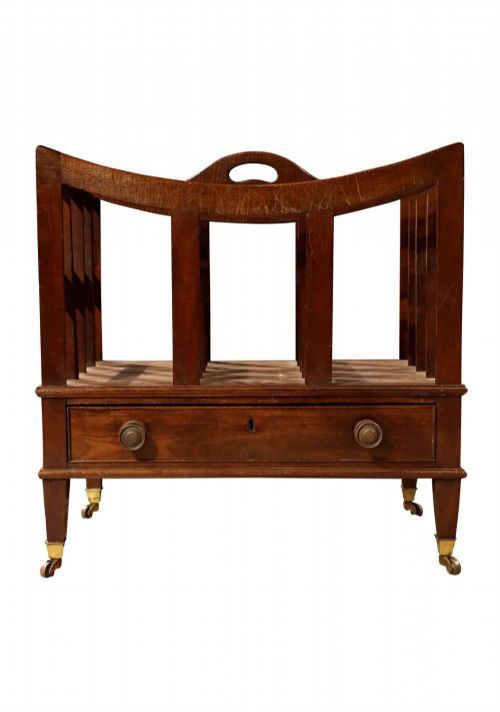


Mahogany Canterbury Drawer
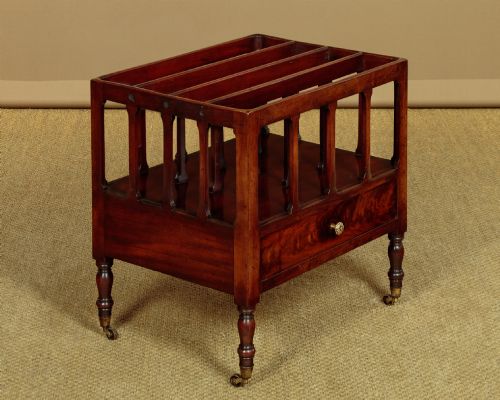
A mahogany canterbury drawer holds sheet music and periodicals within divided upright sections above a useful base compartment.
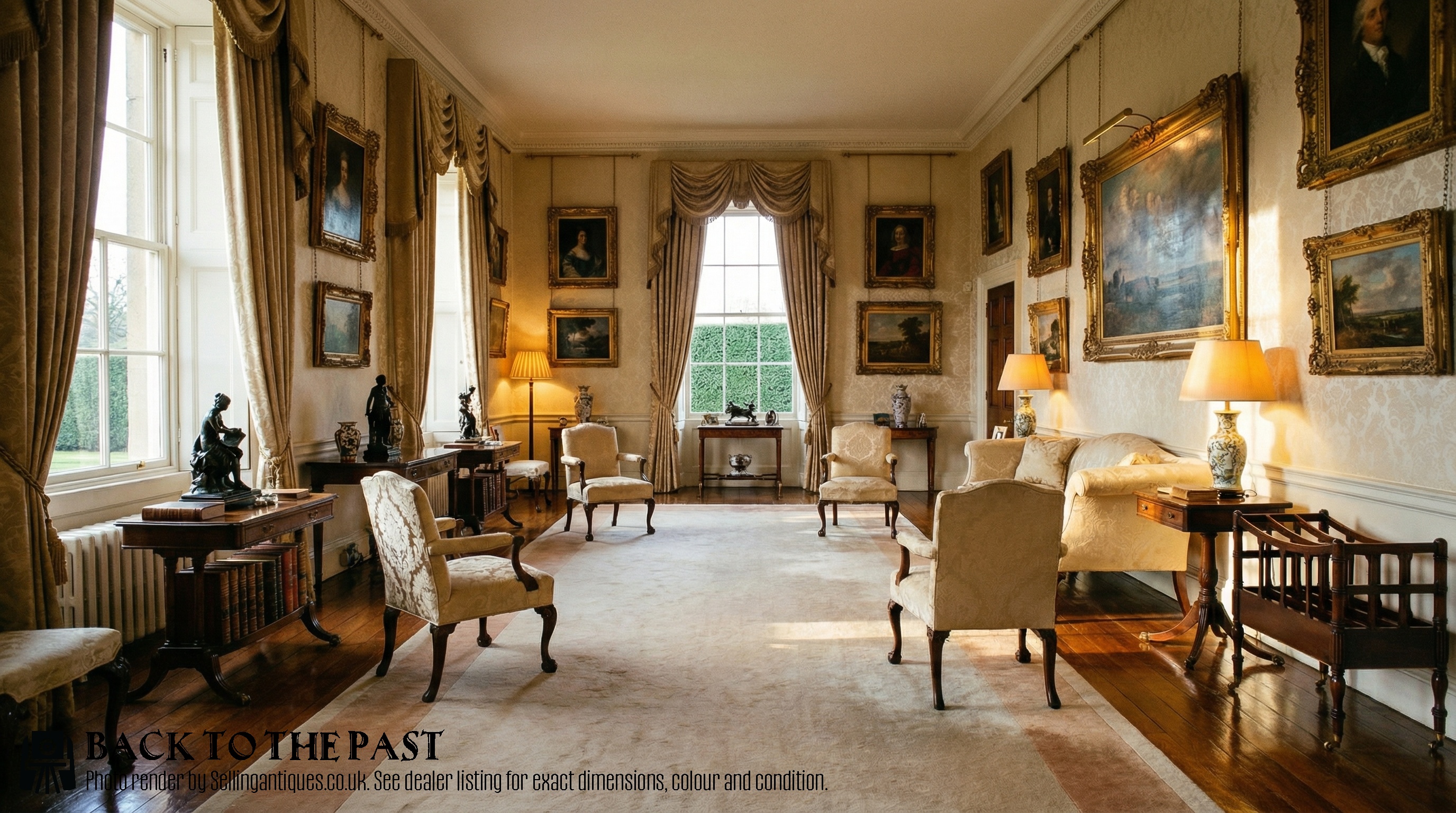
Mahogany Canterbury Drawer
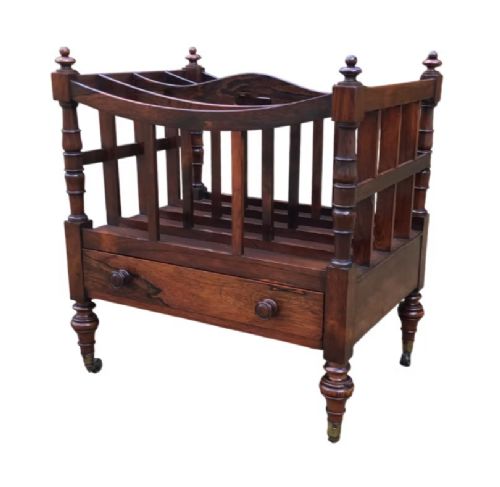
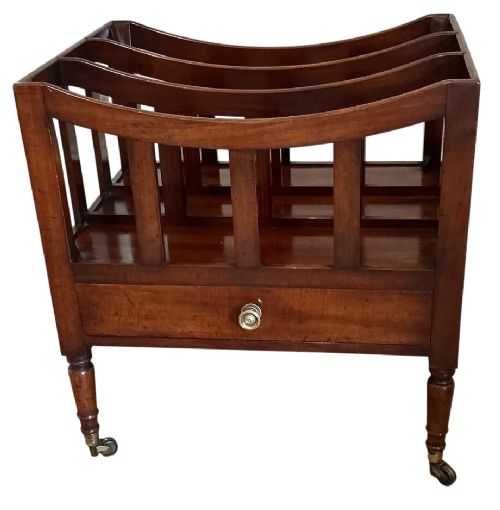
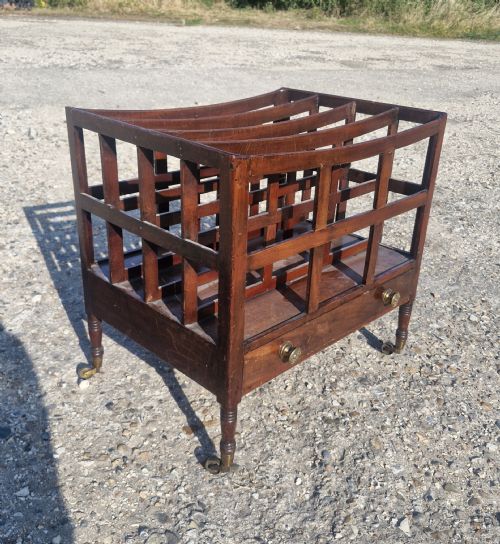
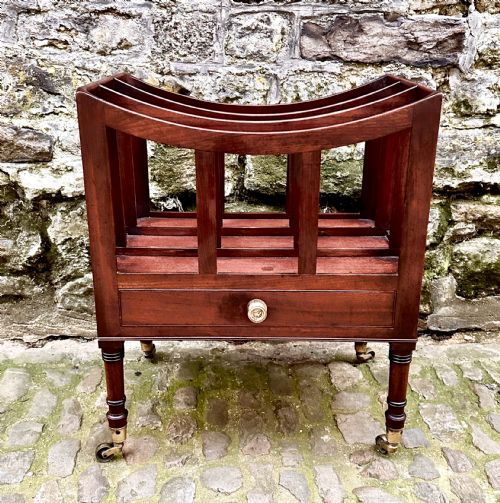
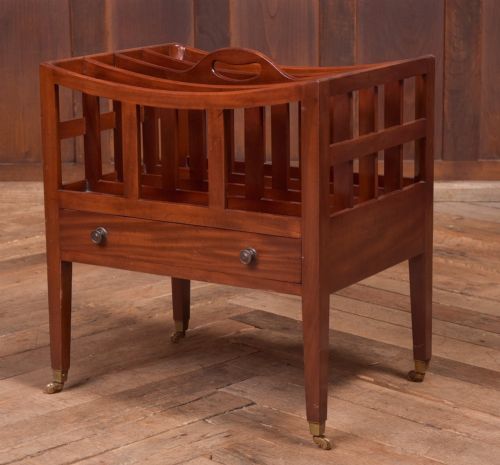
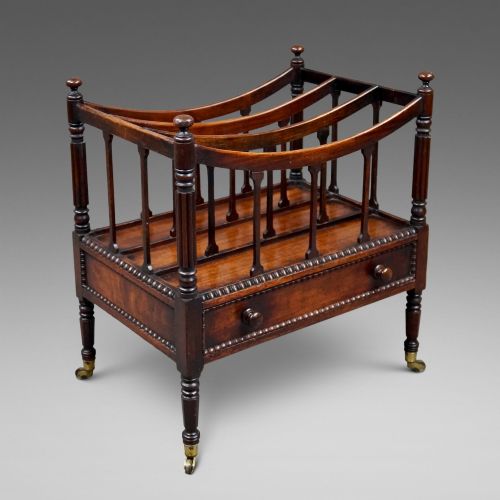
A mahogany canterbury drawer combines open slatted upright divisions for holding newspapers, magazines, and sheet music with a single enclosed frieze drawer positioned below. The form emerged in the Georgian and Regency periods and continued through the Victorian, William IV, and Edwardian eras.
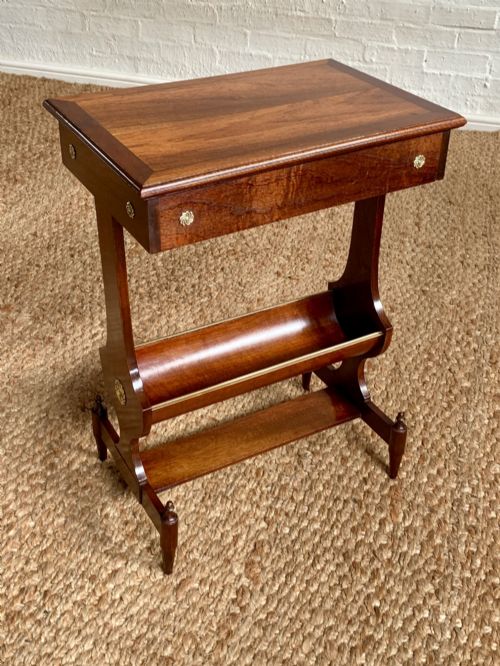
The version most commonly met on this page is the freestanding table or floor-standing rack featuring four distinct partitions and slender turned or tapered legs raised on castors. Variations include boat-shaped frames and combination pieces that double as music cabinets or side tables.
Examples span several decades from the late eighteenth century through to early twentieth-century revivals. Makers of the period utilised rich tropical hardwoods and applied fine brass details to elevate the functional stand into a refined piece of drawing room furniture.
Materials and construction
Craftsmen built these pieces primarily using solid mahogany and mahogany veneers, occasionally incorporating contrasting timber accents such as boxwood inlay or rosewood. Structural integrity relied on traditional joinery for the slatted divisions and the internal framing of the frieze drawer.
Metal components played a dual role in utility and decoration, with brass castors fitted to the legs for mobility and occasional brass handles or rods used to secure the partitions. Wood turning and pierced scrollwork defined the ornamental vocabulary of the upright divisions.
Early cabinet makers named these useful music stands after an archbishop, ensuring clergymen and musicians shared a lasting architectural legacy.
Distinctions in craftsmanship
The refinement of the slatted divisions and the crispness of the turned legs dictate the visual success of the piece. Superior examples display balanced proportions in the boat-shaped or rectilinear frames and careful grain matching across the drawer front.
The integration of the drawer into the under-tier reveals the maker's hand, where smooth running timber runners and precise dovetail joints separate standard workshop production from high-end cabinet work.
Howard and Sons of London·Gillows of Lancaster
The Mahogany Canterbury Drawer Glossary
- Canterbury
- A low stand with upright partitions designed for holding sheet music and periodicals. The name is traditionally linked to the Archbishop of Canterbury who reportedly requested the first such rack.
- Frieze drawer
- A single horizontal drawer set immediately beneath the main rack section. It provides concealed storage for smaller musical accessories or papers.
- Boat shaped
- A curved profile to the partition rails that dips gracefully towards the centre. This distinctive outline appears frequently on Regency era examples.
- Castors
- Small swivelling wheel attachments fixed to the base of the legs. They allowed the stand to be easily repositioned around a drawing room.
- Pierced divisions
- Openwork fret or scroll patterns cut into the wooden uprights of the rack. These decorative cut-outs lighten the visual weight of the timber.
Mahogany Canterbury Drawer: Frequently Asked Questions
What was a canterbury used for originally?
These stands served primarily to hold sheet music near a piano or to organise periodicals and newspapers in a parlour.
The lower drawer kept smaller items such as manuscript books, tuning keys, or reading accessories out of sight.
How do I date a mahogany canterbury?
Dating relies on observing structural characteristics, timber choice, and leg styling across different eras. Georgian and Regency pieces favour clean lines, square tapering legs, or delicate turning, while later Victorian and Edwardian versions often introduce heavier mouldings or revival details.
Drawer construction also provides clues, with hand-cut dovetails generally pointing towards earlier manufacture.
Are all canterburys fitted with drawers?
Many examples feature an open rack design without any lower compartment. The addition of a frieze drawer beneath the partitions became a popular configuration for those requiring both open storage and enclosed space.
Listings on this page include both open stands and versions equipped with the drawer.
Can I use one as a bedside table?
The compact footprint and lower storage drawer make these racks adaptable for modern domestic use beside a bed or sofa. The vertical divisions provide convenient slots for books, magazines, or a tablet.
Care should be taken to protect the polished mahogany surface from moisture or heavy objects.