


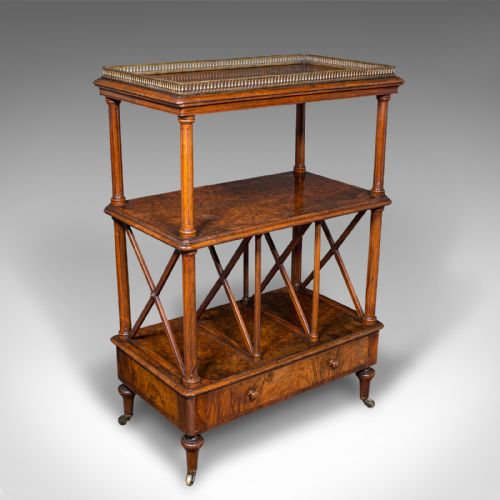


Brass Canterbury Rack
These pieces of brass canterbury rack bring functional elegance to a room, holding papers and folios with traditional grace.
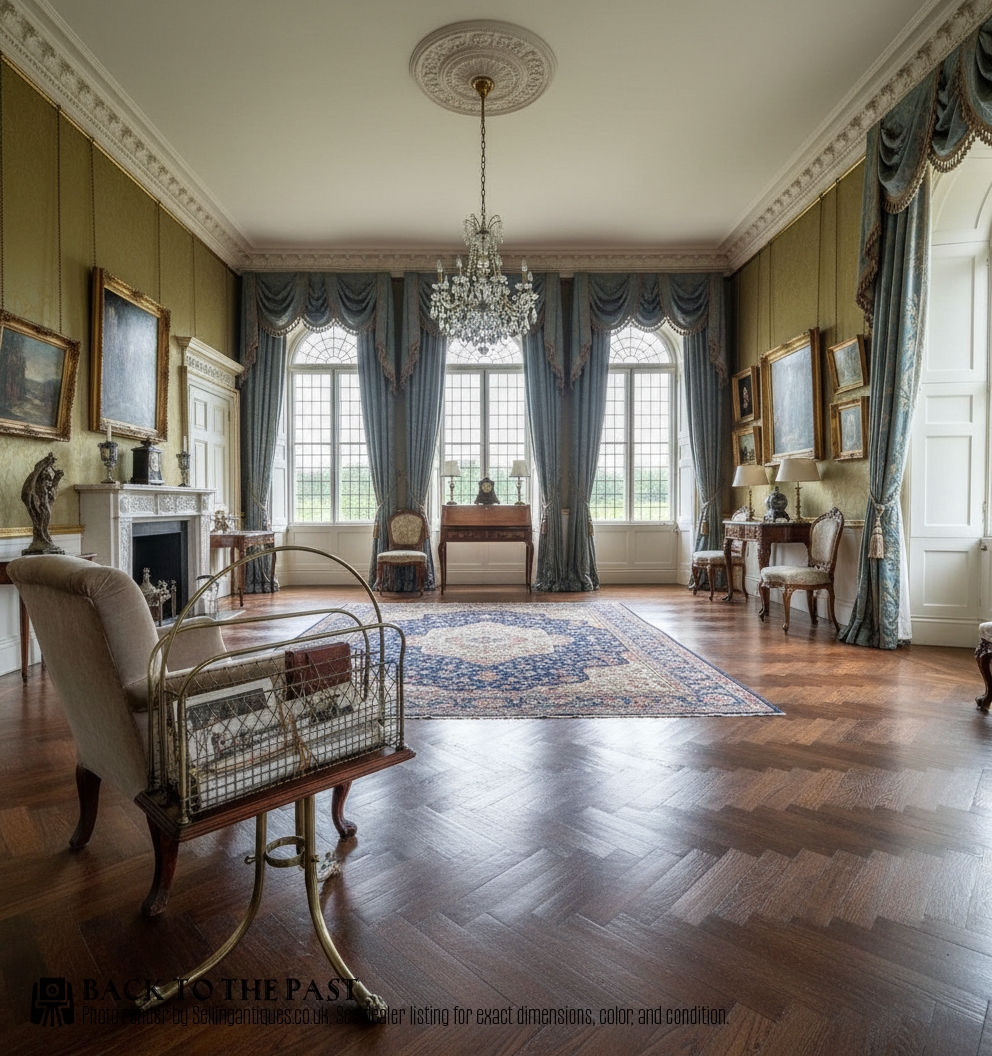
Brass Canterbury Rack
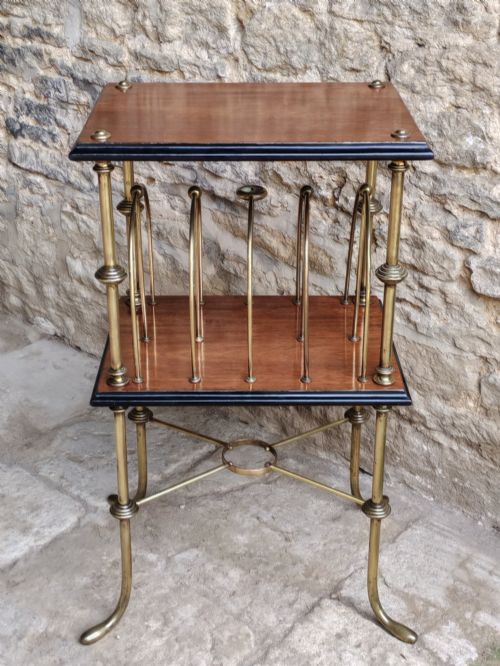
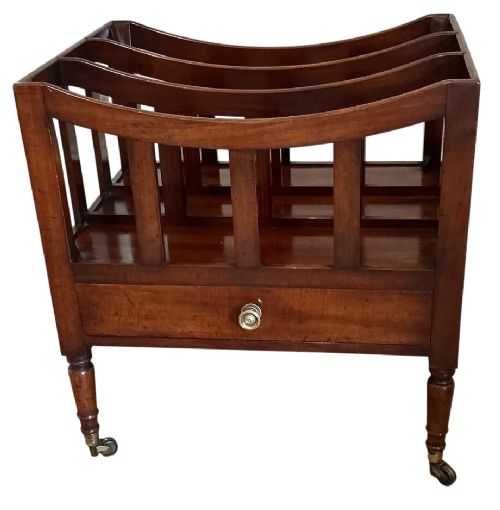
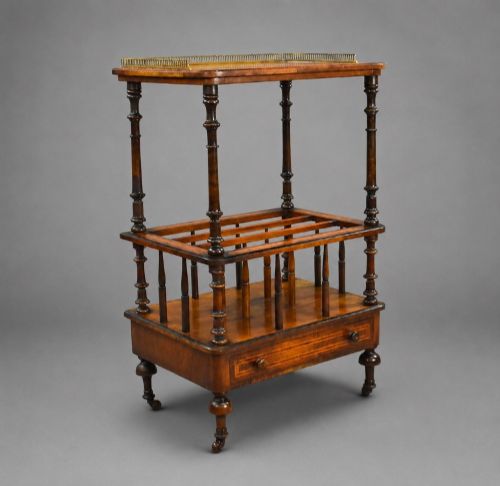
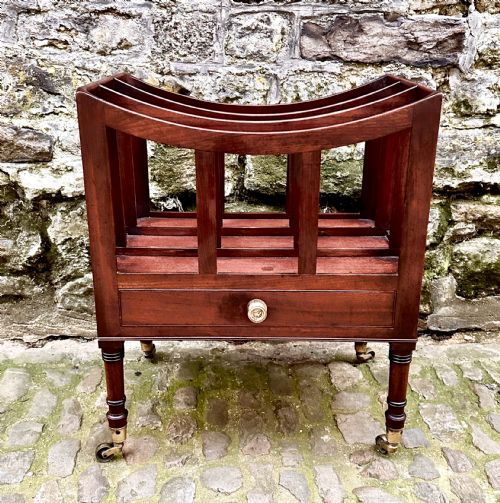
When you search for a brass canterbury rack, you are looking at items designed to hold sheet music, newspapers, and periodicals. The selections here span the Regency, Victorian, and Edwardian periods, taking forms such as traditional partitioned canterburys, revolving book stands, and magazine tables.
The materials paired with brass in these listings include mahogany, burr walnut, rosewood, oak, and copper. Pieces range from boat-shaped Regency designs to late Victorian revolving stands and Arts and Crafts copper racks.
You will most frequently encounter mahogany and burr walnut frameworks integrated with brass handles, spindle dividers, or castors. These items served as portable storage beside seating areas or pianos in period drawing rooms.
How they were made
Cabinet makers constructed the primary framework of these pieces using dense timbers such as mahogany, rosewood, and walnut, often applying intricate inlays or burr walnut veneers. Metal components in brass and copper form the dividing slats, handles, and castors that allow the stands to be moved easily.
Joinery techniques involve precise framing for the slatted partitions, while turning and casting shape the brass rods and feet. Ormolu mounts and fine turning distinguish the more elaborate examples from simpler utility pieces.
Some nineteenth-century models feature built-in trays just right for losing your reading glasses.
What varies in quality
The grade of timber and the crispness of the brass casting separate standard items from finer examples. Richness in the burr walnut grain, the complexity of string inlay, and the weight of the brass spindles dictate the standing of a piece.
Proportion and execution also define the standard. Pieces exhibiting balanced boat-shaped frames, well-turned uprights, and integrated drawer bases demonstrate superior craftsmanship by the cabinet maker.
Gillows of Lancaster·J.C.Loudon
The Brass Canterbury Rack Glossary
- Canterbury
- A low stand fitted with partitions for holding sheet music or periodicals. It typically includes a low carrying handle and sometimes a small drawer beneath.
- Folio stand
- A large rack designed to hold loose prints, drawings, or large music books. These often feature adjustable sides.
- Whatnot
- An open set of tiered shelves used for displaying ornaments or books. Examples in the evidence combine this shelving with a canterbury base.
- Ormolu
- Gilded bronze or brass applied as a decorative mount on furniture. It adds a bright metallic accent to the timber body.
- Revolving stand
- A rack or bookcase mounted on a central pivot allowing it to turn freely. This format appears frequently in Victorian and Edwardian iterations.
Brass Canterbury Rack: Frequently Asked Questions
What is a brass canterbury rack used for?
These pieces were originally designed to hold sheet music, folios, and daily newspapers close to the piano or seating area. Today they serve equally well for modern magazines and books.
Their compartmentalised frames keep reading material tidy while adding period character to a sitting room or study.
How do I date a canterbury?
Dating relies on the primary timber, secondary woods, and stylistic cues of the frame. Regency models often feature boat-shaped frames and sabre legs, while Victorian versions incorporate burr walnut veneers and turned brass spindles.
Edwardian pieces tend to show lighter construction, sometimes utilising oak combined with pressed brass panels.
Where should I place it at home?
A canterbury fits well beside a sofa, armchair, or desk where periodicals and books accumulate. Revolving stands work effectively beside reading chairs or in open corner spaces.
Their compact footprints allow them to sit unobtrusively in drawing rooms, hallways, or studies.
What woods were used?
Makers predominantly employed mahogany during the Georgian and Regency eras, transitioning to burr walnut and rosewood during the Victorian period. Oak and ebonised finishes also appear in later designs.
Brass and copper are integrated throughout as structural rods, castors, and decorative mounts.