
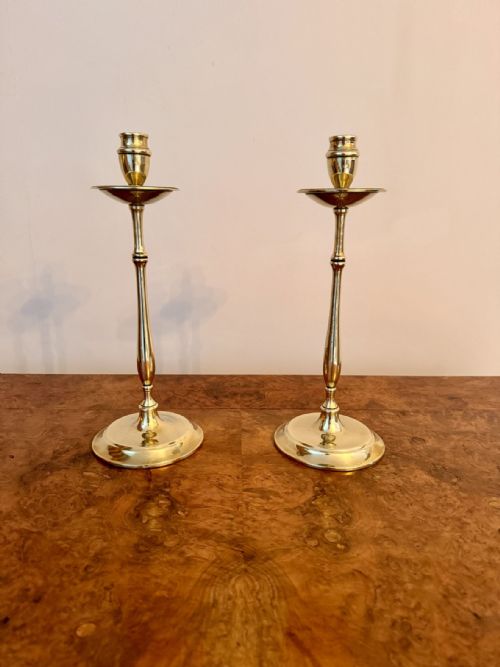
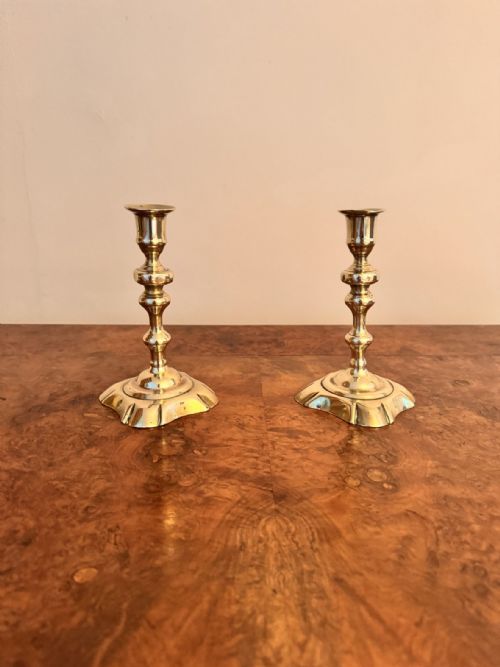
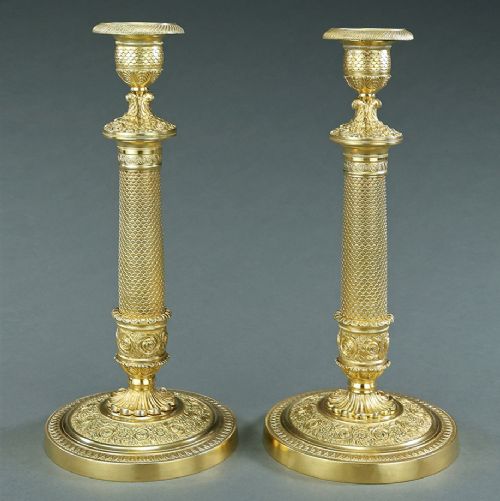
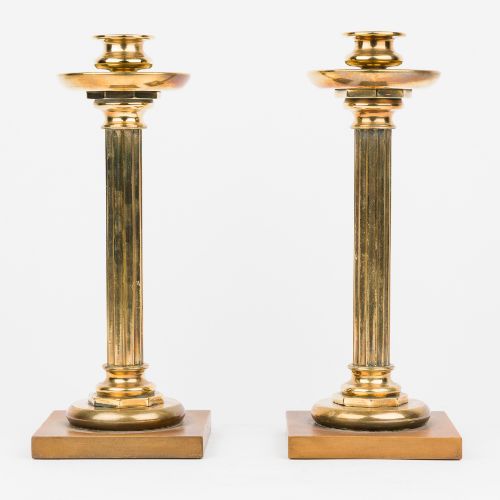
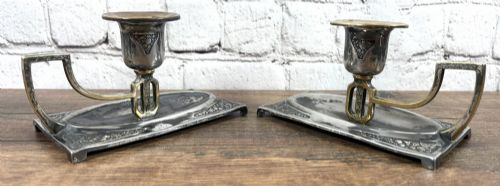
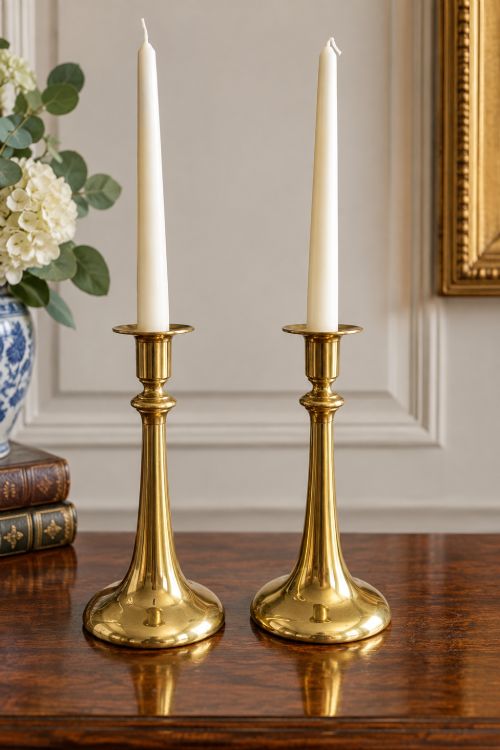
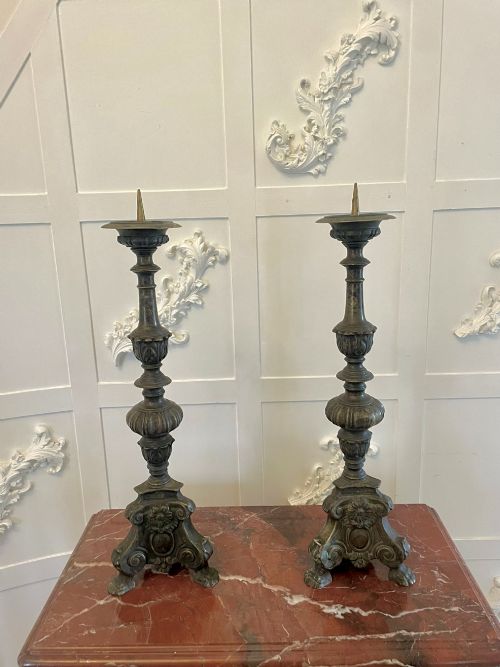
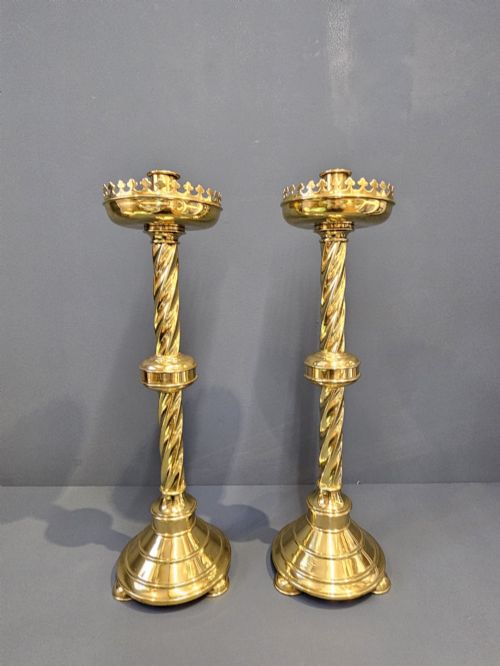
Brass Candlestick Holders Pair
Brass candlestick holders pair selections offer functional illumination cast in durable metal, uniting domestic history with lighting design.
Brass Candlestick Holders Pair
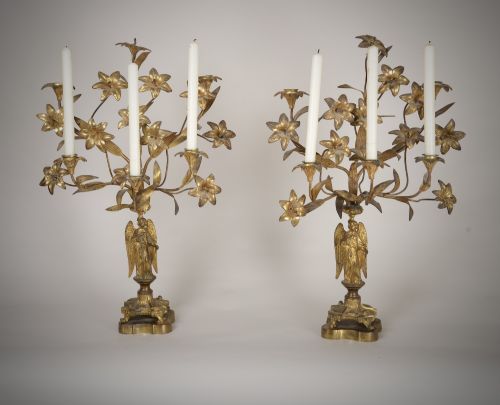
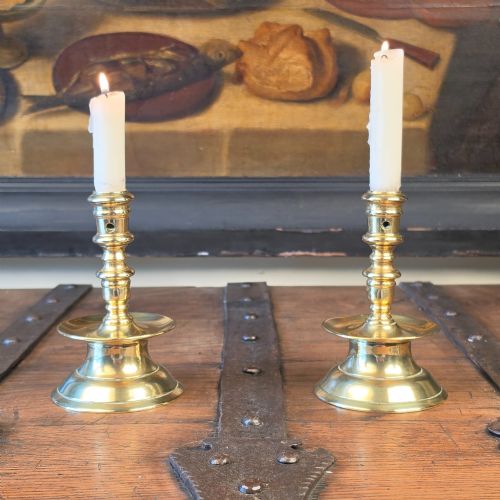
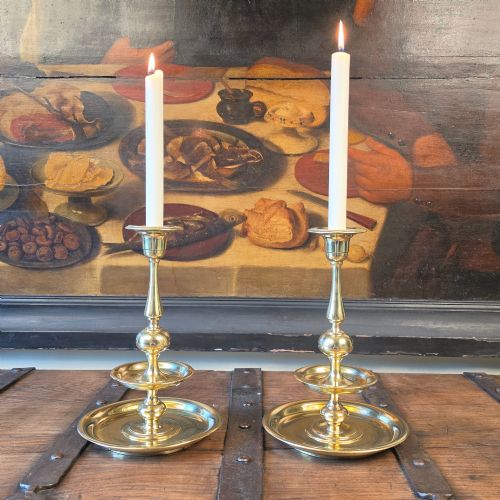
A brass candlestick holders pair serves as a matched set designed for domestic or ecclesiastical illumination, originating from periods spanning the eighteenth through the early twentieth century. Buyers encounter forms ranging from Georgian seamed brass and telescopic designs to ornate Victorian church candlesticks and figural pieces.
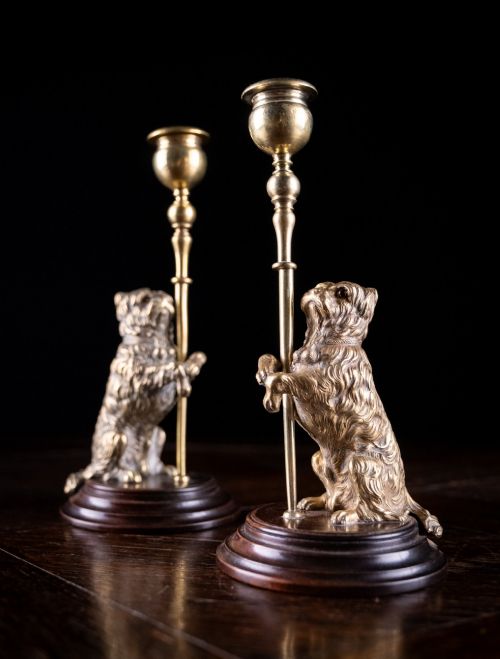
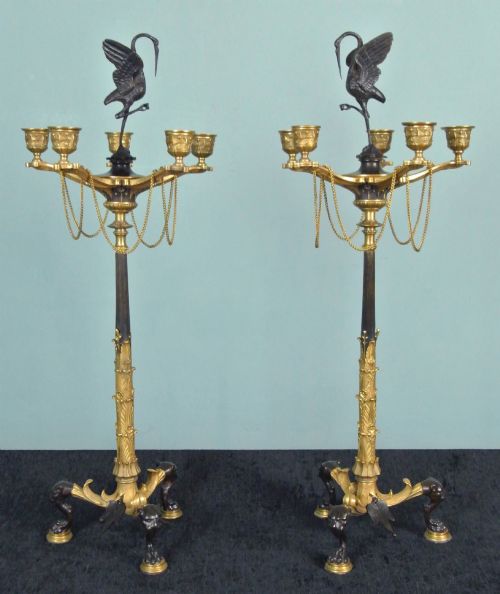
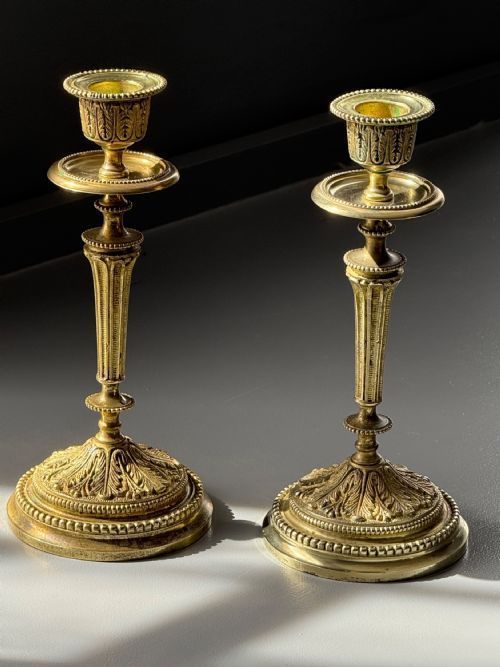
The selection includes specialised variations such as chambersticks with fitted extinguishers, ejector mechanisms for removing spent candles, and sculptural animal or figural subjects. Stylistic influences span George III, Gothic Revival, Louis XVI, and Arts and Crafts movements, reflecting the decorative shifts of each era.
Materials and construction
Construction relies heavily on cast brass, seamed sheet brass, ormolu, and bronze, often combined with secondary elements like wood, marble, glass, and champleve enamel. Seamed examples utilise folded and soldered sheet metal construction typical of mid-eighteenth-century production.
Heavier items employ sand-casting techniques where molten alloy is poured into moulds, followed by hand-finishing, turning on a lathe, or chasing to sharpen surface detail. Gilt bronze and ormolu pieces receive surface gilding to create a bright metallic finish.
Listings feature brass, bronze, gilt metal, wood, glass, and enamel across Georgian, Victorian, and Edwardian periods.
Judging quality
Quality rests upon the crispness of the casting and the integrity of the original joints, where hand-chased details remain sharp rather than smoothed by excessive polishing. The weight of the metal and the presence of working mechanisms, such as functional side ejectors or telescopic stems, distinguish superior examples.
Materials integrated into the design, including genuine onyx bases, hand-cut glass drops, or champleve enamel panels, elevate the standing of a pair. Proportions and symmetry between the two items determine the visual balance expected in a matched set.
Barbedienne·J.T. & Co·Harrison Patent
The Brass Candlestick Holders Pair Glossary
- Ejector
- A concealed internal mechanism operated by a side lever designed to push the candle stub upward for easy removal.
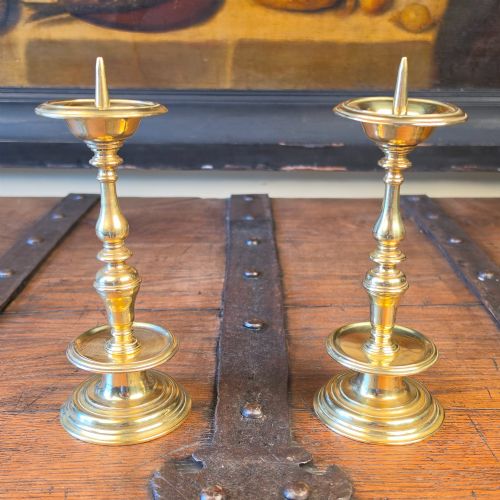
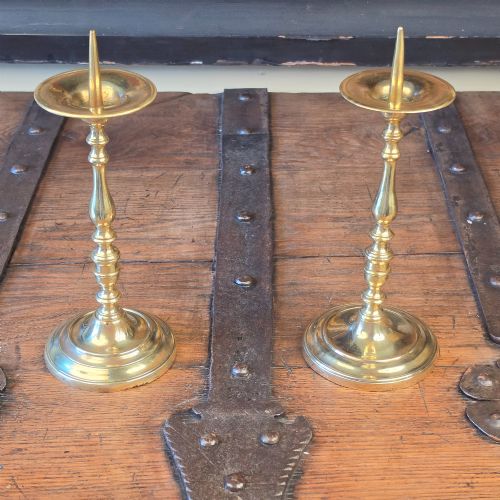
- Pricket
- A sharp metal spike set in the drip pan to impale a candle, commonly found on church or altar candlesticks.
- Ormolu
- Finely ground high-carat gold applied to a bronze base, creating a rich golden surface finish.
- Chamberstick
- A low, portable candleholder fitted with a broad drip pan and a loop handle for carrying through rooms.
- Champleve
- An enamelling technique where troughs are dug into a metal surface and filled with vitreous paste before firing.
Brass Candlestick Holders Pair: Frequently Asked Questions
How do I date a brass candlestick?
Dating relies on construction methods, such as seamed joints versus solid casting, alongside prevailing stylistic indicators from Georgian or Victorian periods.
Foot rims, base weights, and patination patterns also help establish the chronological origin of the metalwork.
Are chambersticks meant for dining tables?
Chambersticks were originally designed for lighting hallways and bedrooms during nighttime movement around the house.
Their wide saucer bases caught melting wax drips while being carried by the attached side loop.
How should antique brass be cleaned?
Antique brass requires minimal intervention to preserve the natural oxidation and dark patination accumulated over centuries.
Avoid harsh chemical dips or abrasive metal polishes that strip away historical surface character.